
DHS shutdown strains US security and disaster systems
TSA says World Cup travel surge cannot be staffed in time, monopoly agencies turn budget brinkmanship into nationwide choke points
Images
 nbcnews.com
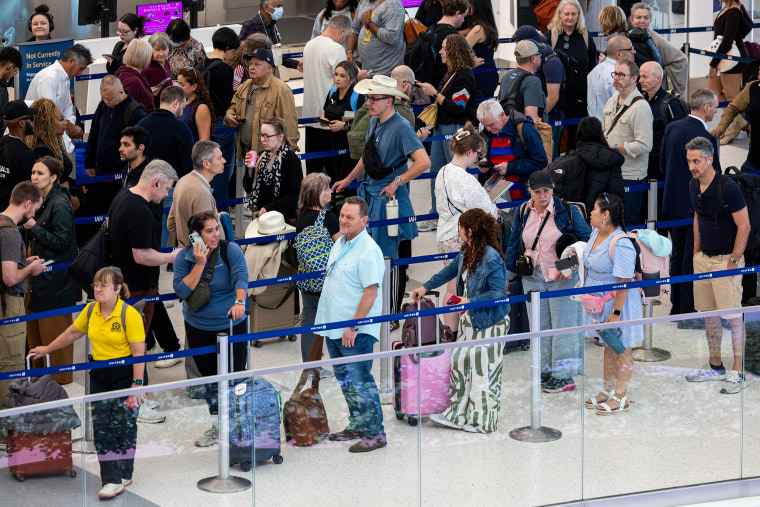 Travelers wait in line at George Bush International Airport on March 19 in Houston.Antranik Tavitian / Getty Images
nbcnews.com
Travelers wait in line at George Bush International Airport on March 19 in Houston.Antranik Tavitian / Getty Images
nbcnews.com
 White House press secretary Karoline Leavitt takes questions during a news briefing at the White House on 25 March. Photograph: Chip Somodevilla/Getty Images
theguardian.com
White House press secretary Karoline Leavitt takes questions during a news briefing at the White House on 25 March. Photograph: Chip Somodevilla/Getty Images
theguardian.com
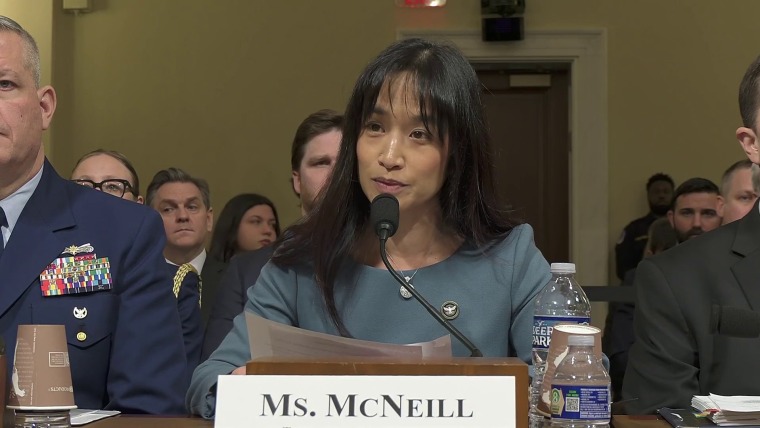
A 40-day partial shutdown at the US Department of Homeland Security is now spilling beyond airport queues into disaster relief, maritime licensing and cyber defence, according to testimony to the House Homeland Security Committee. Acting TSA administrator Ha Nguyen McNeill told lawmakers that even if funding resumes soon, new screeners hired after the shutdown would not be trained in time for the summer travel surge around the FIFA World Cup. FEMA officials warned that the Disaster Relief Fund is “rapidly depleting”, while the Coast Guard said it cannot pay thousands of utility accounts and has stopped processing merchant mariner credentials.
The hearing underscored a familiar pattern in Washington: when a service is organised as a national monopoly, budget politics turns it into a single point of failure. TSA checkpoint staffing, Coast Guard port-state functions and CISA’s coordination work are not easily substituted when pay stops and hiring freezes. The Coast Guard vice commandant, Adm. Thomas Allen, said the service has operated without enough funding for 85 of the past 176 days and that it takes roughly two and a half days to recover for every day in shutdown—an admission that backlogs are not a side effect but an accumulating stock of risk.
The costs land far from Capitol Hill. Travelers pay in missed flights and longer connections; airlines absorb knock-on delays; ports and shipping firms wait for credentials and inspections; local governments lose access to FEMA preparedness training that Barton said affects around 40,000 people, many of them first responders. CISA’s Nicholas Andersen described the agency’s posture as triage: immediate incident response continues, but longer-term work—assessments, planning, partner engagement—has been scaled back. That is the unglamorous layer that prevents emergencies from compounding.
The White House is trying to redirect blame. In comments carried by The Guardian, press secretary Karoline Leavitt labelled the impasse “the Democrat shutdown” and said nearly 500 TSA officers have quit. She also defended the administration’s decision to deploy ICE agents to airports to relieve pressure at checkpoints, a stopgap that blurs agency roles while leaving the underlying staffing and training pipeline unchanged.
Repeated shutdowns also create their own labour market. Officials described employees missing rent and taking on unreimbursed costs; experienced staff leave; recruitment becomes harder; institutional knowledge drains. When agencies respond by warning that “risk is accumulating across the system,” it is also a funding argument: the only entity allowed to provide the service is the one testifying that it cannot.
At George Bush Intercontinental Airport in Houston, travelers have been standing in lines that stretch beyond the usual stanchions. The DHS witnesses told Congress that the queue is the visible part; the unpaid bills, paused training and growing credential backlog are what remains after the cameras move on.