
Lukashenko visits North Korea to sign cooperation treaty
Belarus and Pyongyang deepen ties under sanctions pressure, pariah networks turn isolation into logistics
Images
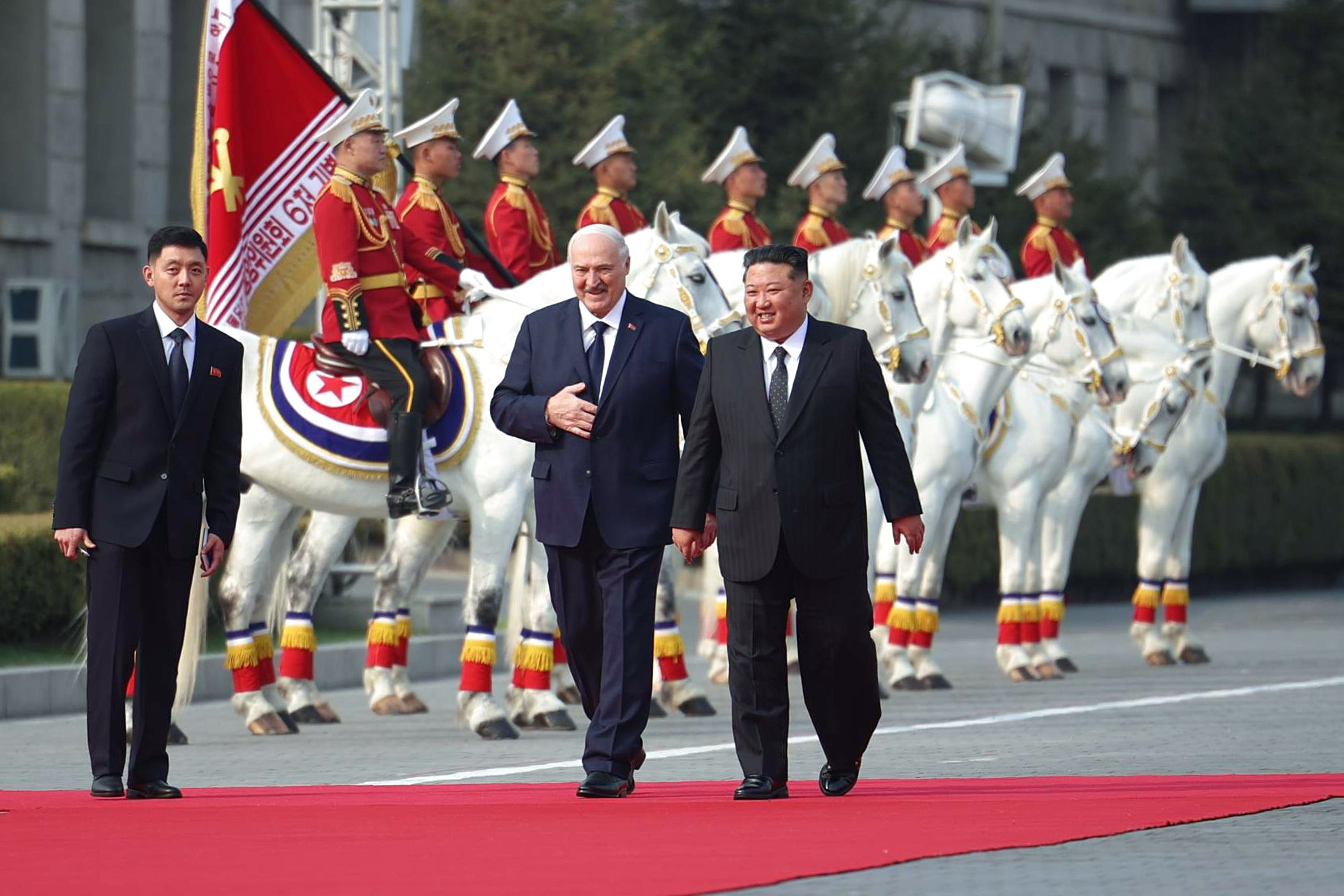 North Korea's leader Kim Jong Un and Belarusian President Alexander Lukashenko are expected to hold talks (AP)
independent.co.uk
North Korea's leader Kim Jong Un and Belarusian President Alexander Lukashenko are expected to hold talks (AP)
independent.co.uk
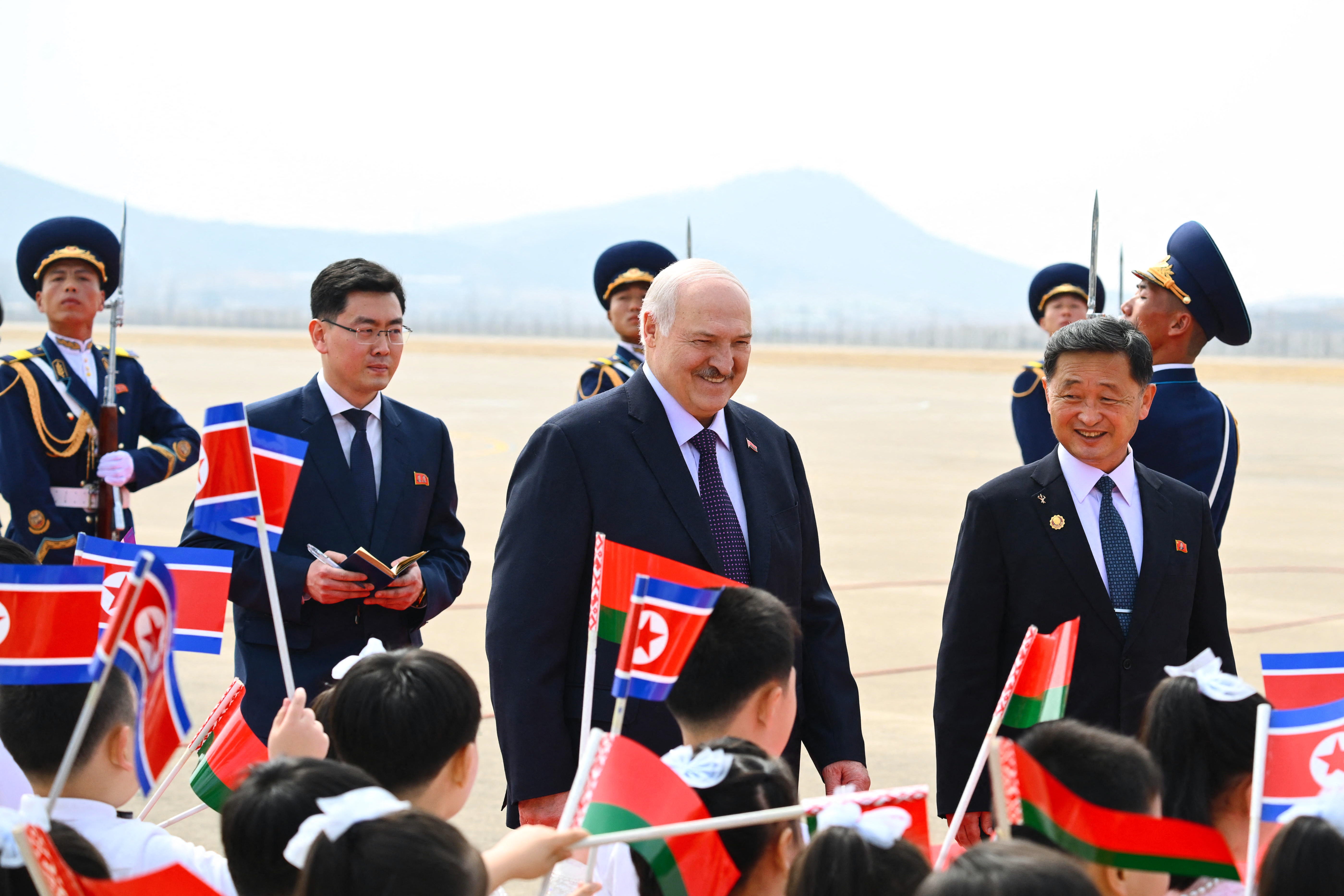 Belarus' President Alexander Lukashenko's trip to North Korea comes just six days after he met Trump's envoy John Coale and announced the freeing of 250 more detainees (Belarusian presidential press se)
Belarusian presidential press se
Belarus' President Alexander Lukashenko's trip to North Korea comes just six days after he met Trump's envoy John Coale and announced the freeing of 250 more detainees (Belarusian presidential press se)
Belarusian presidential press se
Belarusian president Alexander Lukashenko arrived in Pyongyang to begin his first visit to North Korea, greeted with a red-carpet ceremony that included soldiers, cavalry and a gun salute. The Independent reports that Lukashenko is expected to meet Kim Jong Un and sign a “friendship and cooperation” treaty during the two-day trip, with Belarusian officials talking up potential trade in food and pharmaceuticals.
The choreography matters because both regimes sit inside overlapping sanctions regimes and have learned to treat isolation as a routing problem. North Korea has supplied Russia with millions of rounds of ammunition for the war in Ukraine and has sent troops to help Moscow push Ukrainian forces out of Russia’s Kursk region, according to the report. Belarus, for its part, served as a launchpad for Russia’s February 2022 invasion and later agreed to host Russian tactical nuclear missiles, putting NATO’s eastern flank one border away from Russian warheads.
Sanctions do not end commerce; they change counterparties and raise the value of “pariah connectivity”. When access to Western finance, insurance and logistics is restricted, the remaining channels—state-to-state barter, opaque shipping, third-country intermediaries—become strategic assets. A friendship treaty is not just symbolism; it can provide the legal and diplomatic cover for transactions that would otherwise be harder to insure, clear or explain.
The visit also intersects with a separate diplomatic track: Washington has started easing some sanctions on Belarus in exchange for releases of political prisoners, and Lukashenko met a Trump envoy days before flying to Pyongyang, The Independent notes. That sequencing underlines how sanctioned states can arbitrage great-power attention—offering prisoner releases to one side while deepening security ties with another.
For Europe, the practical consequence is that the enforcement burden grows over time. Each new workaround network creates its own suppliers, transport routes and political patrons, and every additional node makes sanctions less like a switch and more like a permanent customs-and-intelligence program.
Lukashenko’s delegation began the trip with a visit to the Kumsusan Palace of the Sun, where North Korea displays the preserved bodies of Kim Il Sung and Kim Jong Il.
The treaty signing, if it happens, will add another formal link in a sanctions economy that already spans Pyongyang, Minsk and Moscow.