
Denmark begins coalition talks after Frederiksen resigns
Caretaker government stays as king appoints negotiator, minority arithmetic turns seats into bargaining chips
Images
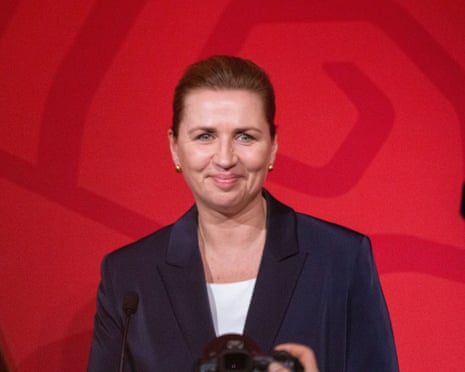 Denmark’s prime minister, Mette Frederiksen, speaks during an election event for the general election at the Danish Parliament in Copenhagen, Denmark. Photograph: Kristian Tuxen Ladegaard Berg/NurPhoto/Shutterstock
Shutterstock
Denmark’s prime minister, Mette Frederiksen, speaks during an election event for the general election at the Danish Parliament in Copenhagen, Denmark. Photograph: Kristian Tuxen Ladegaard Berg/NurPhoto/Shutterstock
Shutterstock
Mette Frederiksen handed her resignation to King Frederik on Tuesday after Denmark’s election left the outgoing three-party government short of a parliamentary majority. According to The Guardian’s live coverage, Frederiksen will remain as caretaker prime minister while parties meet to begin coalition talks and appoint a “royal investigator” to test possible majorities.
The mechanics are routine in Copenhagen but the incentives are not. Denmark’s 179-seat Folketing needs 90 seats for a majority, and the government that just lost its majority held only 70 seats. That arithmetic turns a close election into a market for pivotal votes, where small parties can trade support for ministries, policy carve-outs and budget commitments. The bargaining rarely follows campaign slogans: what matters is who can assemble a working majority that survives confidence votes and passes finance bills.
In practice, coalition formation shifts decision-making away from voters and toward negotiators who can price their leverage. A party that cannot plausibly lead a government can still dictate terms if it sits at the narrow bridge between blocs. The concessions tend to land in areas that are easiest to package as “responsible compromise” but expensive or irreversible in implementation—migration rules, welfare eligibility, climate and energy levies, and Denmark’s posture inside the EU.
That creates a familiar Scandinavian paradox. Denmark’s politics is marketed as consensus-driven, yet the most consequential decisions are often made in closed rooms after election night, when the marginal seat becomes more valuable than the median voter. Voters get clear branding during campaigns; after the count, parties trade pieces of the state.
Frederiksen’s resignation is the formal trigger for that process, not its outcome. The first concrete milestone is the 1pm meeting of party leaders to decide who will be tasked with exploring a majority.
Denmark’s next government will be negotiated seat by seat, and the price will be written into the first budget.