
US Justice Department seeks House records on John Brennan
House Intelligence Committee votes to send classified transcripts, Trump-era accountability drive turns oversight into evidence
Images
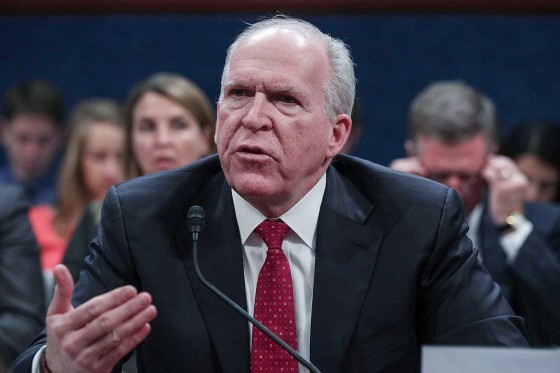 Former Director of the U.S. Central Intelligence Agency (CIA) John Brennan
nbcnews.com
Former Director of the U.S. Central Intelligence Agency (CIA) John Brennan
nbcnews.com
The US Justice Department has asked the House Intelligence Committee to hand over classified records tied to former CIA director John Brennan, a longtime target of President Donald Trump. NBC News reports that the committee voted Tuesday night to transmit classified hearing transcripts after the DOJ request, linking the move to an “ongoing investigation” connected to a 2017 Republican committee report and other matters related to the Trump–Russia investigation.
The procedural detail matters because it shows how a political fight becomes a case file. The committee’s Republican spokesperson said the goal was to advance an accountability process over what they described as the “Trump-Russia collusion hoax.” Brennan’s lawyers have previously said prosecutors told them he is a target of a grand jury investigation tied to the 2017 intelligence community assessment of Russian interference in the 2016 election — an assessment produced as the Obama administration was ending and Trump was arriving.
Brennan’s position in the story is unusual: he is not only a former senior intelligence official, but also a paid contributor to NBC News, the outlet reporting the new DOJ step. His attorneys have argued there is no legally justifiable basis for the investigation and that prosecutors have not explained what statute he is alleged to have violated. Rep. Jim Jordan, chair of the House Judiciary Committee, has separately referred Brennan for prosecution, alleging he gave false testimony in 2023; Brennan’s lawyers deny the allegation.
The DOJ’s request also highlights a dependency that cuts both ways. A criminal case built on intelligence-era conduct often requires Congress to declassify or “report out” sensitive testimony, which forces legislators to decide whether they want to protect institutional secrecy or enable prosecution. Once those records move, the incentives for future oversight shift: witnesses talk with an eye to how transcripts could later be used by an incoming administration.
NBC notes that federal grand juries in Washington, DC have been skeptical of politically charged cases brought during Trump’s second term. In February, grand jurors unanimously rejected an attempt to indict six sitting members of Congress over a social media video urging the military not to follow illegal orders. That recent failure raises the stakes for venue and sequencing: if prosecutors believe a hostile jury pool is a recurring obstacle, they will look for jurisdictions, theories of the case, or evidentiary paths that reduce reliance on DC’s consent.
For the House Intelligence Committee, sending classified transcripts is a concrete escalation: it turns prior closed-door testimony into material that can be parsed for contradictions, intent and timing. For Brennan, it increases exposure to a process in which the same institutions that once shielded intelligence work can be used to litigate it.
The committee vote took place Tuesday night. The next step is not a televised hearing but a chain-of-custody transfer of documents from Capitol Hill to prosecutors.