
NASA cancels Lunar Gateway in favor of Moon base
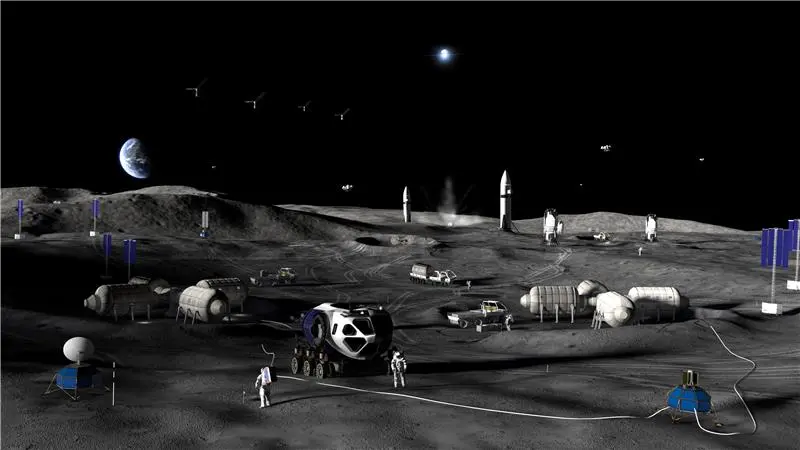
Isaacman shifts Artemis toward $20 billion surface infrastructure plan, sunk hardware and partner commitments get repackaged as leverage
Images
 Credit:
NASA
Credit:
NASA
 Photo of Eric Berger
arstechnica.com
Photo of Eric Berger
arstechnica.com
 Nasa abandons orbiting lunar station plan in favor of $20 billion ‘moon base’
independent.co.uk
Nasa abandons orbiting lunar station plan in favor of $20 billion ‘moon base’
independent.co.uk
NASA Administrator Jared Isaacman says the agency will scrap the Lunar Gateway—an orbiting outpost planned for near-lunar space—and instead build a roughly $20 billion Moon base over the next seven years, according to Ars Technica and The Independent. The shift was unveiled at NASA headquarters in Washington during an “Ignition” event aimed at industry and international partners, with closed-door briefings promised on new contract opportunities.
Gateway was designed as the connective tissue of Artemis: a staging post where crews would transfer to landers, and a platform for research and logistics in lunar orbit. Killing it does not just change a diagram; it reroutes money and power through a different set of contractors, technologies, and congressional interests. Isaacman framed the new plan as a “great power” race, warning that failing to establish a sustained presence would “cede the Moon to China,” Ars reports. That language is an appropriations strategy as much as a geopolitical claim: it makes the project legible as national security, not just exploration.
Isaacman’s critique of NASA is also a critique of its procurement habits. He argued the agency has “an expense problem,” pointing to inspector general reports and “billions of dollars wasted” on programs that slip schedule and exceed budgets. He singled out the long-running Orion spacecraft and Space Launch System effort as an example of high spend with limited flight cadence. The promise now is “uncomfortable action” if contractors miss milestones, with NASA offering to embed experts and relax requirements—carrots paired with the threat of sharper oversight.
The reorganization has immediate collateral damage. Gateway hardware is “largely already built” with Northrop Grumman and Vantor (formerly Maxar), The Independent reports, and Isaacman said NASA would attempt to “repurpose equipment and international partner commitments” for surface objectives. In practice, sunk costs do not disappear; they become arguments for new spending to avoid writing off partially completed modules and to keep partner agencies—who signed up for an orbital station—inside a revised program.
A lunar base, unlike an orbital waypoint, is a budgetary lock-in device. Permanent habitats, power systems, communications, manufacturing and “long-range drones,” as Ars summarizes, imply recurring logistics and maintenance—and therefore recurring appropriations—rather than a discrete build-and-launch milestone. It also shifts the center of gravity toward cargo delivery and surface infrastructure, where commercial providers can bid, but where the government’s requirements and timelines still define what counts as success.
NASA is not building a station in lunar orbit anymore. It is promising a permanent settlement on the surface, and inviting contractors into the room to price the new map.