
Qatar LNG hub Ras Laffan faces years-long disruption
Iranian strike hits infrastructure that supplies much of Asia, gas scarcity travels through contracts and equipment not just prices
Images
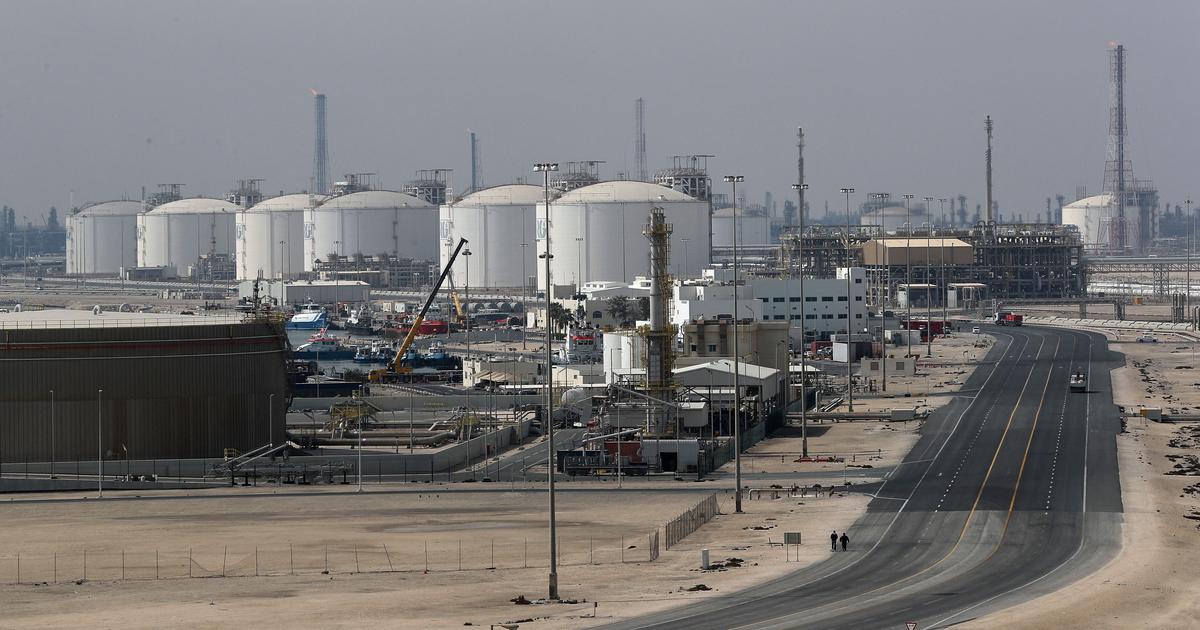 Ras Laffan Industrial City, Qatar's principal site for production of liquefied natural gas and gas-to-liquid, 80 km north of Doha, in February 2017.
|
AFP
scroll.in
Ras Laffan Industrial City, Qatar's principal site for production of liquefied natural gas and gas-to-liquid, 80 km north of Doha, in February 2017.
|
AFP
scroll.in
Ras Laffan’s damaged liquefaction trains are turning a Middle East war into an Asian gas problem. Qatar’s main LNG export hub, which handles roughly a fifth of global liquefied natural gas, was hit on March 19 by Iranian missiles and drones, and QatarEnergy has warned that long-term contracts could be disrupted for years.
According to Scroll.in, the strike set fires in Ras Laffan’s gas-to-liquids facilities and damaged about 17% of Qatar’s LNG infrastructure. CEO Saad Sherida al-Kaabi said force majeure may be necessary and that supplies to customers including Italy, Belgium, South Korea and China could be affected “for up to five years”. The bottleneck is not the gas in the ground—Qatar’s North Field and Iran’s South Pars sit on the same reservoir—but the machinery that chills methane to minus 162°C, moves it through specialized alloys, and loads it into a fleet that is both expensive and slow to expand.
The immediate effect is a bidding war for molecules that cannot easily be rerouted. Unlike crude oil, which can be shipped, stored, blended and resold with relative flexibility, LNG is tied to liquefaction trains, storage tanks and shipping slots that take years to build and months to restart safely. Plants must be warmed down and cooled up gradually to avoid cracking pipes and bending joints; key components such as compressors, turbines and heat exchangers are oversized, custom-built and logistically awkward. When one terminal goes offline, the shortfall does not show up as a neat price adjustment in one country—it ripples through contract clauses, cargo diversions, and the quiet return to coal where governments can get it.
For Asia, the exposure is structural. Scroll.in notes that roughly three-quarters of Qatar’s LNG ends up in Asian markets—China, India, Taiwan, South Korea and Pakistan among them—while much of the remainder goes to Europe. Even countries that buy little Qatari gas still face higher global spot prices as cargoes chase the highest bidder. In practice, “global” LNG prices are set by who can pay, who has regasification capacity, and who can secure shipping and credit when the Gulf becomes a war-risk zone.
That is where the second-order effects begin. Utilities and industrial buyers hedge with long-term contracts, but force majeure clauses and disrupted deliveries push them back into spot markets at the worst moment. Governments then face a choice between letting prices spike—forcing conservation and rationing by wallet—or intervening with caps and subsidies that keep demand artificially high while scarcity reappears as queues, rolling blackouts, or factory shutdowns. The region has already seen fuel rationing and emergency measures triggered by the Hormuz risk premium; gas adds another constraint because the infrastructure is less substitutable.
The war’s leverage, in other words, is increasingly exercised through chokepoints that look like industrial assets rather than naval blockades. A damaged liquefaction plant, an insurer’s exclusion clause, or a bank’s refusal to finance a voyage can decide who gets energy long before any government declares an embargo.
At Ras Laffan, the repair timeline is measured in years and specialized metal, not in press statements about “stability” and “secure supply”.