
Rescuers try to refloat stranded humpback whale off Timmendorfer Strand
Boats and drones cannot change shallow seabed geometry, the clock is set by stress and tides not intentions
Images
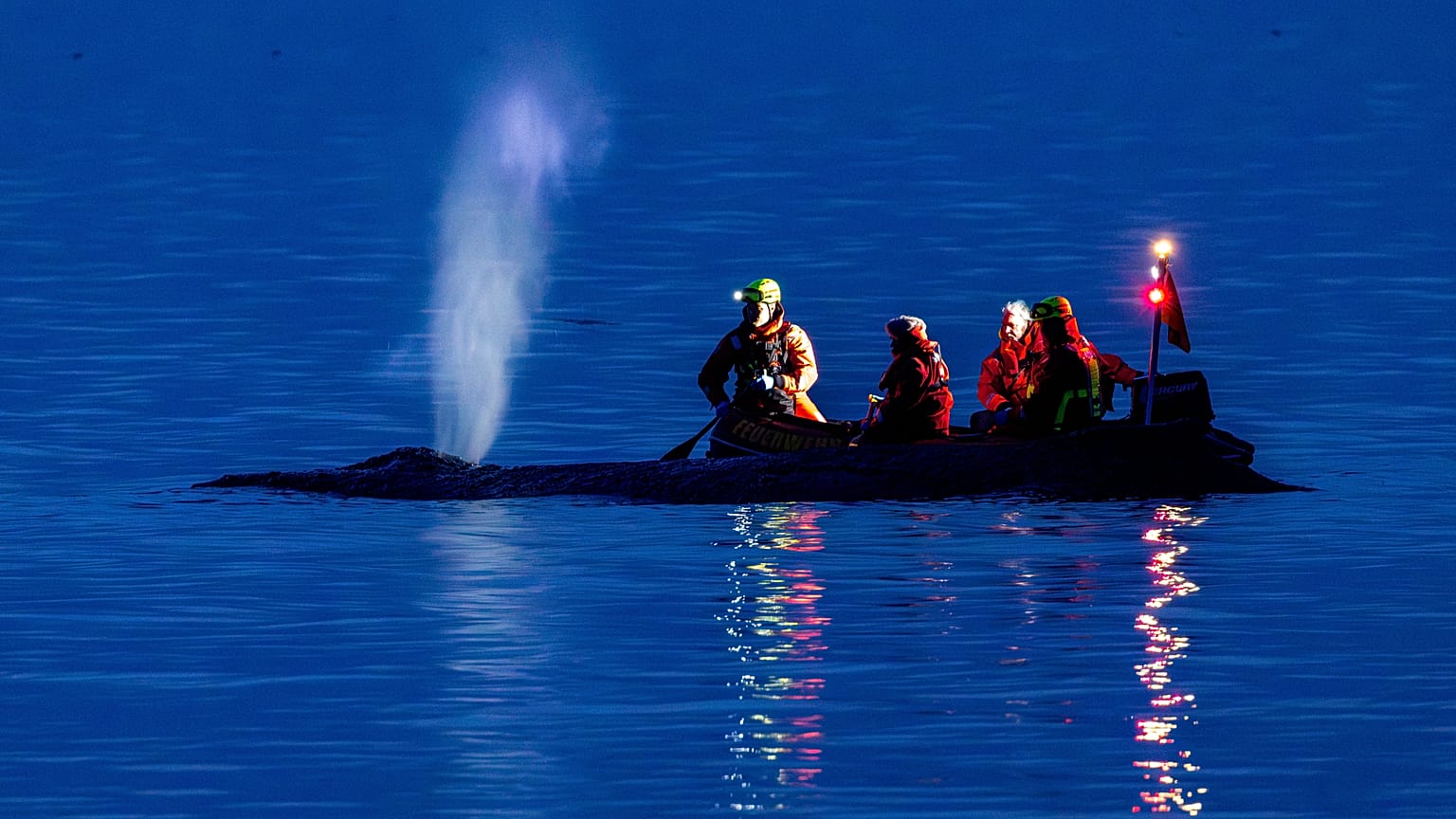 Rescue workers try to bring a whale stranded on the Baltic Sea coast back into deep water, near Timmendorfer Strand, Germany, Monday, March 23, 2026
euronews.com
Rescue workers try to bring a whale stranded on the Baltic Sea coast back into deep water, near Timmendorfer Strand, Germany, Monday, March 23, 2026
euronews.com
A humpback whale roughly 10 metres long remained stranded in shallow water off Timmendorfer Strand on Germany’s Baltic coast after multiple attempts to refloat it failed, according to Euronews citing German news agency dpa. Rescue teams used police boats and inflatable craft to generate waves, while drones helped guide the operation, but high tide overnight was not enough for the animal to swim free.
Whale rescues look like a straightforward contest between goodwill and gravity, but the outcome is usually decided by a narrower set of variables: time, water depth, temperature, and the animal’s stress load. In this case, rescuers faced a geometry problem as much as a biological one. Dr Stephanie Groß of the Institute for Terrestrial and Aquatic Wildlife Research told dpa that the water in front of the whale was even shallower than the water behind it, limiting the usefulness of wave-making and making towing risky. A stranded whale’s own weight can compress organs and restrict breathing; every additional hour on the bottom compounds the problem, while repeated disturbance can increase stress and oxygen demand.
There is also a logistics constraint that rarely appears in the first wave of coverage: the equipment needed to move a multi-ton animal without injuring it is specialised and often distant. Boats can create motion, but they cannot change the seabed. Heavy lift gear, pontoons, slings and trained teams take time to mobilise, and coastal conditions do not pause while they arrive. The public sees a dramatic attempt; responders see a diminishing window in which the animal can survive the intervention itself.
The incident also hints at the entanglement between wildlife and human industry in the Baltic. Rescuers found parts of a fishing net wrapped around the whale’s body and managed to cut it off, Euronews reports, though it was not clear whether the net contributed to the stranding. Even when the immediate hazard is removed, the episode becomes an accountability puzzle: which actors are responsible for debris, how it is tracked, and what enforcement exists in practice in a busy, shallow sea.
By Tuesday morning, experts were still searching for a method that could move the whale into deeper water before the next tide cycle ran out.