
US senators weigh partial DHS funding deal
Airport security queues expose federal single point of failure, ICE redeployed as stopgap while pay and staffing become leverage
Images
 globalnews.ca
 Click to play video: '‘Rein in ICE’: Democrat lawmakers block DHS funding bill, prompting partial shutdown'
globalnews.ca
Click to play video: '‘Rein in ICE’: Democrat lawmakers block DHS funding bill, prompting partial shutdown'
globalnews.ca
 Click to play video: 'U.S. government shutdown ends, starting clock on ICE talks'
globalnews.ca
Click to play video: 'U.S. government shutdown ends, starting clock on ICE talks'
globalnews.ca
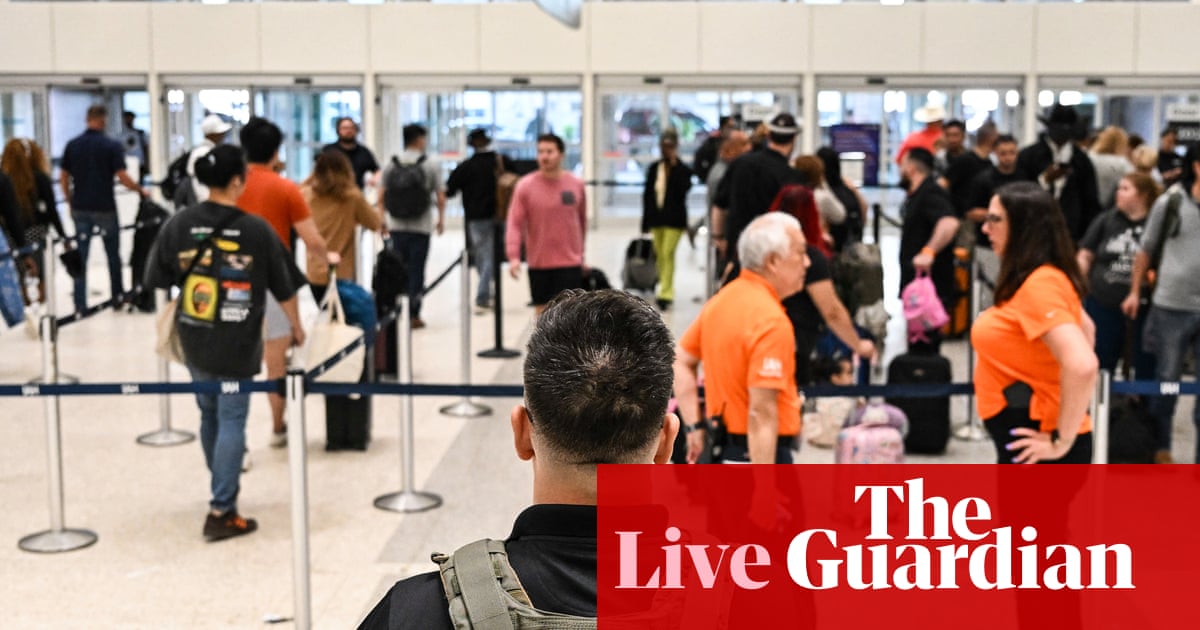 Trump reportedly open to deal on DHS funding as shutdown sees ICE agents deployed to US airports – US politics live
theguardian.com
Trump reportedly open to deal on DHS funding as shutdown sees ICE agents deployed to US airports – US politics live
theguardian.com
US senators are negotiating a partial fix to the Department of Homeland Security funding standoff after airport security lines stretched for hours and federal agencies began improvising roles that were never designed to substitute for one another.
According to Global News, the proposal under discussion would restore funding for most of DHS functions, including the Transportation Security Administration, while leaving out Immigration and Customs Enforcement’s enforcement and removal operations — the part Democrats have targeted amid disputes over deportation tactics. The same reporting says negotiators are also considering operational “guardrails”, including requirements for body cameras and identification, and limits on using other DHS components for immigration roundups.
The immediate symptom of the standoff has been visible to anyone trying to fly: TSA staffing and pay uncertainty colliding with spring travel demand, producing queues that function like a rolling shutdown of the passenger economy. When the normal flow of screeners, supervisors and support staff becomes a bargaining chip, airports stop behaving like infrastructure and start behaving like a call centre during a strike.
The political workaround has been equally revealing. The Guardian reports that Donald Trump has signalled openness to funding DHS now while pursuing additional immigration enforcement money later through budget reconciliation — effectively splitting the department’s operations into tranches that can be fought over on different calendars. Global News reports that ICE officers were ordered to provide airport security, a move that alarmed some lawmakers and underlined how quickly federal functions can be repurposed when the budget process breaks.
This is what “continuity of government” looks like in a service economy: not a dramatic collapse, but a slow conversion of public time into private cost. Every hour spent in a security line is an unpriced tax on travellers and employers; every missed connection is a downstream cost for airlines, hotels and logistics. Yet the institutions that control the bottlenecks do not bear those costs directly. They optimise for leverage in appropriations talks, not for resilience in day-to-day operations.
Even the emerging compromise reflects that logic. Excluding ICE’s enforcement and removal operations while funding the rest of DHS is not a theory of how to run border policy; it is a way to reopen airports without conceding the larger fight. And the promise of a “second bill” later is not a schedule for governance so much as a schedule for the next round of brinkmanship.
On Monday night, Republican senators went to the White House to sell a parallel-track deal.
On Tuesday morning, travellers were still paying for the gap between a budget strategy and an operating plan.