
Japan begins biggest-ever strategic oil release
80 million barrels sent to refiners as Hormuz disruption fear rises, price shock still runs through insurance and credit not storage tanks
Images
 Sanae Takaichi, Japan’s prime minister, said the release of state-owned reserves would begin on Thursday. Photograph: Jiji Press/AFP/Getty
theguardian.com
Sanae Takaichi, Japan’s prime minister, said the release of state-owned reserves would begin on Thursday. Photograph: Jiji Press/AFP/Getty
theguardian.com
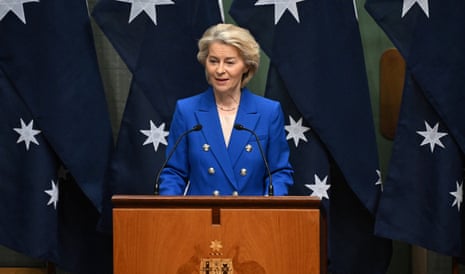 Ed chief Ursula von der Leyen addressing Australia’s parliament in Canberra on Tuesday. Photograph: Lukas Coch/Reuters
theguardian.com
Ed chief Ursula von der Leyen addressing Australia’s parliament in Canberra on Tuesday. Photograph: Lukas Coch/Reuters
theguardian.com
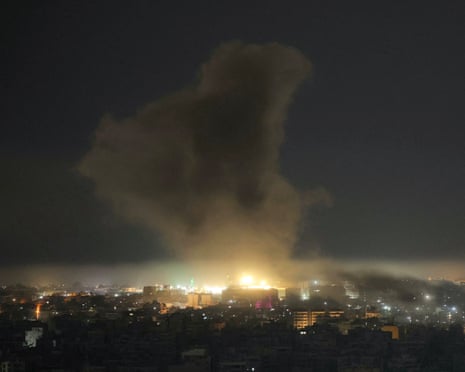 Smoke rises from the site of an Israeli airstrike in Beirut’s southern suburbs on Tuesday. Photograph: Ibrahim Amro/AFP/Getty Images
theguardian.com
Smoke rises from the site of an Israeli airstrike in Beirut’s southern suburbs on Tuesday. Photograph: Ibrahim Amro/AFP/Getty Images
theguardian.com
Japan will begin its largest-ever release of oil from strategic reserves on Thursday, making about 80 million barrels available to domestic refiners—roughly 45 days of demand—after the US-Israeli war on Iran pushed markets into a new phase of supply anxiety. Prime minister Sanae Takaichi said the drawdown follows a government decision last week to tap 15 days’ worth of private-sector stocks, amid concern that tanker traffic through the Strait of Hormuz could remain disrupted, according to The Guardian.
The size of Japan’s move is designed to signal control as much as to add supply. Tokyo says it held about 470 million barrels in reserves at the end of last year—around 254 days of consumption—giving it room to act quickly, while also reminding voters that the government is “doing something” as petrol prices hit record levels. Alongside the release, Japan introduced fuel subsidies intended to cap gasoline prices at around ¥170 per litre after the average retail price rose to ¥190.8, with the subsidy recalculated weekly based on oil prices.
But the immediate constraint in this crisis is not simply the number of barrels in storage. The frontpage in this section has repeatedly pointed to the same choke point: shipping becomes scarce when insurers, banks and commodity financiers refuse to underwrite voyages through a war zone. If tankers cannot be insured, or if letters of credit become more expensive or unavailable, physical oil can sit in the wrong place while prices rise in the right one. A state release can bridge a short-term gap for refineries already connected to domestic logistics, yet it does little to lower the risk premium embedded in global trade finance.
Japan’s domestic politics show how quickly an energy shock becomes a generalised panic-management problem. The trade ministry felt compelled to tell consumers not to hoard toilet paper after social-media rumours linked household paper supplies to Middle East oil flows. Industry groups responded with basic facts—most toilet paper sold in Japan is produced domestically and largely from recycled material—yet the government still had to spend attention and credibility on discouraging stockpiling. It is an echo of earlier episodes, from Covid-era shortages to the 1973 oil shock that still shapes Japanese political memory.
For Europe, Japan’s reserve release is a reminder that the marginal price is increasingly set by finance, not geology. Even if OECD countries collectively inject barrels into the system, the price Europe pays will still be driven by whether tankers sail, whether cargoes clear compliance checks, and whether insurers and lenders decide that the war risk is worth the premium.
Japan says the oil will start flowing from state reserves on Thursday. The same week, its government is also asking citizens to buy toilet paper normally.