
Kalshi tightens trading rules for politicians and athletes
Insider-trading fears shadow prediction markets, Congress moves to treat sports contracts as gambling
Images
 newsweek.com
 Who Were the Air Canada Pilots Killed in the LaGuardia Runway Crash?
newsweek.com
Who Were the Air Canada Pilots Killed in the LaGuardia Runway Crash?
newsweek.com
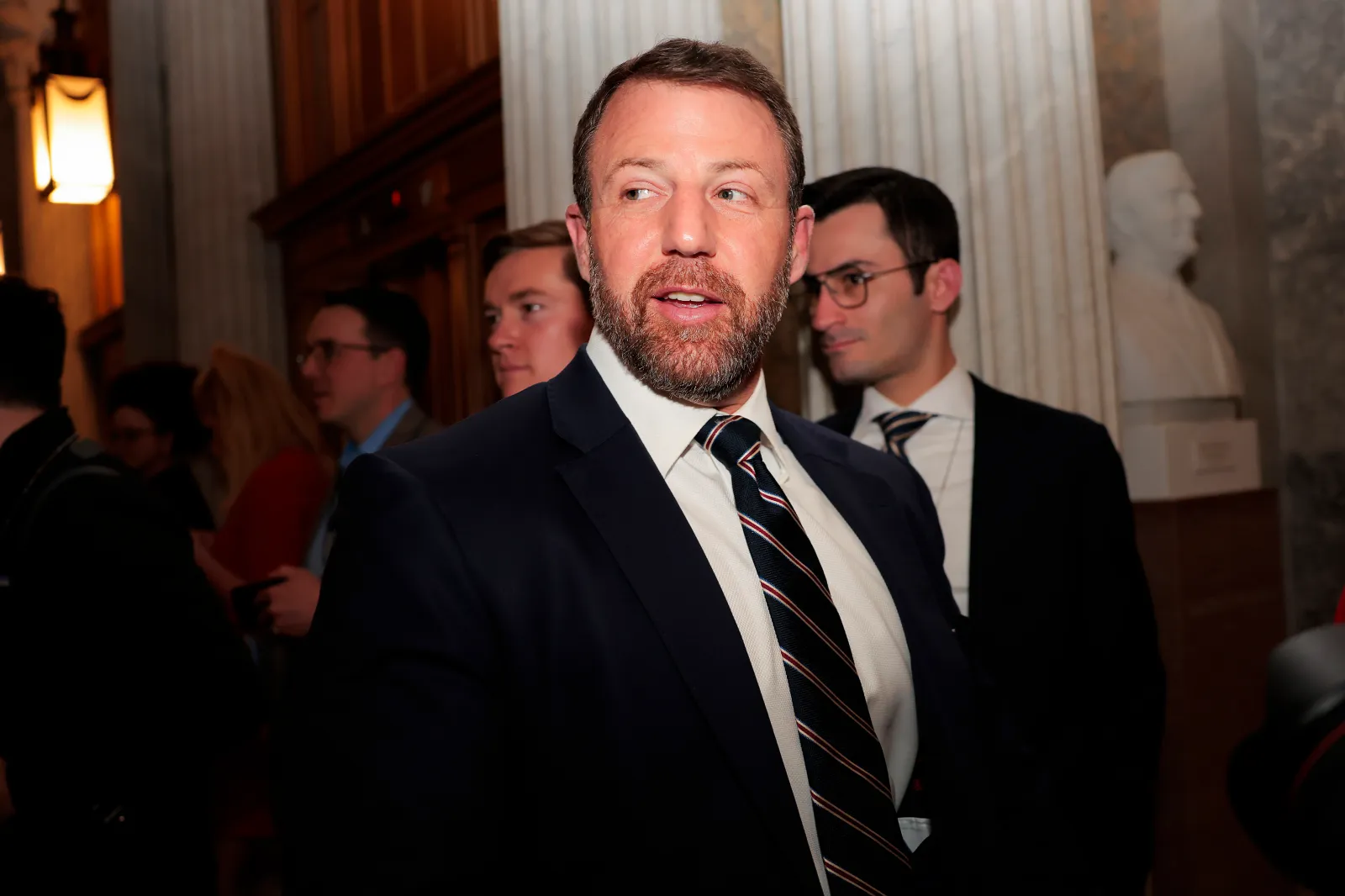 Democrats Who Voted With Republicans to Confirm Markwayne Mullin
newsweek.com
Democrats Who Voted With Republicans to Confirm Markwayne Mullin
newsweek.com
 LaGuardia Plane Crash Video Shows Moment of Impact
newsweek.com
LaGuardia Plane Crash Video Shows Moment of Impact
newsweek.com
 Port Arthur Valero Explosion Prompts Shelter in Place: What We Know
newsweek.com
Port Arthur Valero Explosion Prompts Shelter in Place: What We Know
newsweek.com
Kalshi says it will block politicians from trading on their own campaigns and bar athletes and others tied to sports from betting on contracts connected to their competitions, as scrutiny grows over whether prediction markets are simply monetising privileged information. The move comes as US lawmakers push legislation that would prohibit prediction markets from offering sports-related contracts, a category that has been driving volume and attention, according to Newsweek.
The timing is not subtle. Both Kalshi and Polymarket have faced public questions after traders appeared to profit from early knowledge of US military actions, with critics arguing that the platforms turn government decision-making into a tradable signal. Newsweek reports that Representatives and senators have cited national security concerns and the risk of manipulation, while several states have moved to classify the products as illegal gambling and block access.
Kalshi’s new restrictions are framed as pre-emptive “insider trading” controls: candidates cannot trade their own races, and sports participants are blocked from markets linked to their sport. Polymarket, which operates offshore, has updated its terms to prohibit trading on contracts where users have confidential information or could influence outcomes. The platforms are trying to show they can police conflicts of interest without being forced into the compliance architecture of securities markets.
But the business model makes self-policing hard to sell. These markets earn fees on volume; volume spikes when an event is contentious, thinly sourced, or politically sensitive—exactly the environments where information is unevenly distributed. A rulebook that bans “bad actors” still relies on the platform to identify who those actors are, what information they hold, and whether they are acting on it. In the case of politics, the circle of potential insiders is large by design: staff, consultants, donors, agency officials, and family members can all have advance knowledge without being formal decision-makers.
The political optics are also tightening. Newsweek notes that Donald Trump Jr. has invested in Polymarket through a venture vehicle and serves as a strategic adviser to Kalshi, creating an additional layer of conflict when federal regulators consider how aggressively to treat the sector. Market participants reacted to the prospect of restrictions: shares linked to traditional sports betting operators reportedly rose on the day lawmakers introduced a bill targeting prediction-market sports contracts, suggesting incumbents see regulation as a competitive moat.
If Congress succeeds in reclassifying large parts of the product as gambling, the platforms’ pitch as “information markets” will collide with the reality that much of the demand comes from entertainment-style wagering. If Congress fails, the platforms will still have to convince users and regulators that a market can profit from asymmetric information without becoming dependent on it.
Kalshi’s announcement is, at minimum, a public acknowledgement that the people most able to move an outcome are also the people most tempted to trade on it.