
Kitchen sponges shed measurable microplastics, University of Bonn study finds up to several grams per person each year
Most dishwashing impact still comes from running water
Images
 newsweek.com
 LaGuardia Plane Crash Updates: Passenger Praises Pilot’s Actions as Airport Reopens
newsweek.com
LaGuardia Plane Crash Updates: Passenger Praises Pilot’s Actions as Airport Reopens
newsweek.com
 Can MAGA Go Global If It Can’t Hold Hungary?
newsweek.com
Can MAGA Go Global If It Can’t Hold Hungary?
newsweek.com
 LaGuardia Plane Crash Video Shows Moment of Impact
newsweek.com
LaGuardia Plane Crash Video Shows Moment of Impact
newsweek.com
 Why the Gold Price Is Falling During the Iran War—and What it Means
newsweek.com
Why the Gold Price Is Falling During the Iran War—and What it Means
newsweek.com
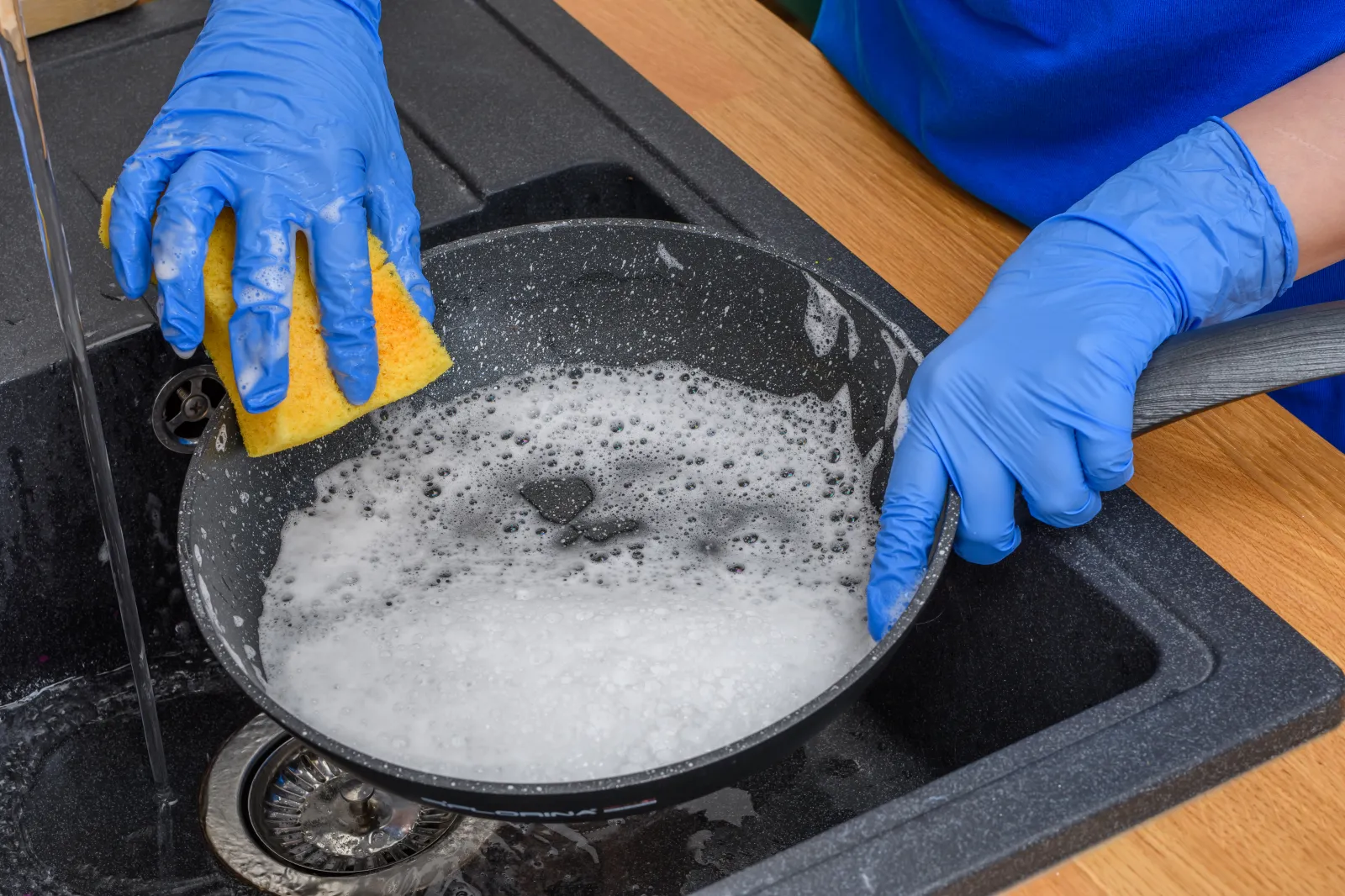
A kitchen sponge used for routine dishwashing can shed roughly 0.68 to 4.21 grams of microplastics per person per year depending on its material, according to a study led by the University of Bonn. Researchers combined lab tests using an automated “SpongeBot” with a citizen-science component in which households in Germany and North America used three sponge types under normal conditions, then logged usage while the sponges were weighed to measure material loss.
The study’s basic message is awkward for the modern consumer: the plastic problem exists, but the bigger footprint of handwashing is usually water. When the researchers ran a life-cycle assessment of manual dishwashing, water consumption accounted for an estimated 85% to 97% of the total environmental impact, while microplastic release was a comparatively small share. That matters because household habits and product choices are often sold as a moral drama about “toxins” and “plastics,” even when the dominant variable is something as banal as how long the tap runs.
Still, the plastic numbers scale quickly. Newsweek notes the team estimated that if one sponge type were used in every German household, it could amount to as much as 355 tonnes of microplastics released per year. Wastewater treatment plants retain much of it, but not all: several tonnes annually were still estimated to reach aquatic environments or soils.
The ‘captured’ part is not necessarily gone. Harry Macpherson, a senior associate at Deep Science Ventures, told Newsweek that wastewater sludge can be spread on fields as fertiliser, shifting the burden from rivers to farmland. That is a familiar pattern in modern sanitation: the system is designed to meet discharge rules at the pipe, and the residue becomes somebody else’s problem downstream.
For households trying to minimise impact, the study suggests two levers that are rarely marketed together: choose lower-plastic sponges to reduce shedding, and reduce water use to cut the bulk of the footprint. A 2017 report cited by Newsweek found handwashing can use up to 3.5 times more water than a modern dishwasher, and that nearly one in five Americans with dishwashers use them less than once a week.
The sponge, in other words, is not a single villain. It is a small, cheap consumable that turns into plastic dust, while the running tap quietly dominates the ledger.
In the Bonn team’s accounting, the grams of shed polymer were measurable; the litres of hot water were decisive.