
EU signs migrant returns pact with Nigeria
Kaja Kallas links readmission to healthcare funding and defence cooperation, deportation policy shifts from law enforcement to paid partnerships
Images
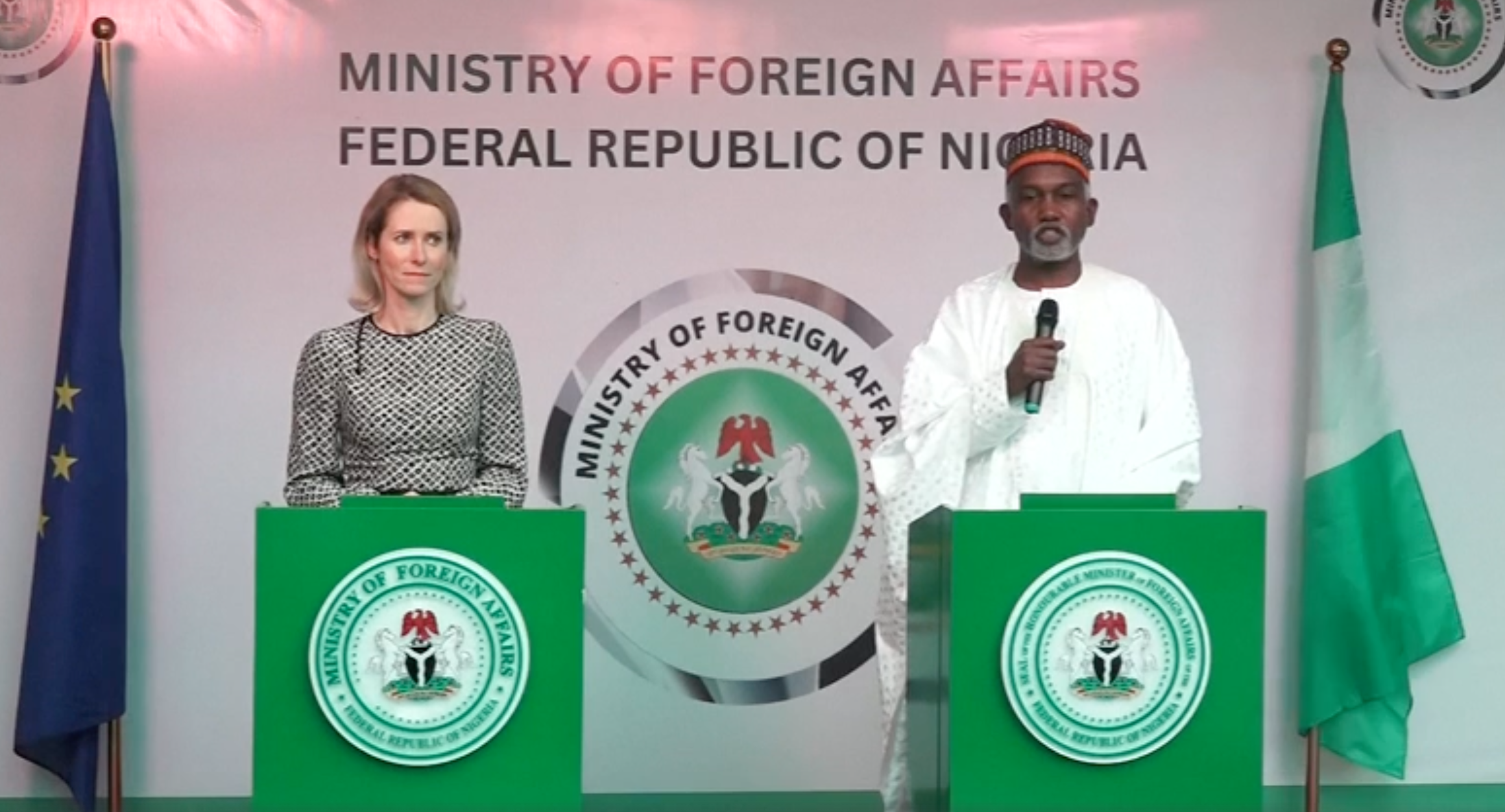 EU foreign affairs chief Kaja Kallas and Nigeria's foreign minister Yusuf Tuggar at a joint press conference in Abuja on Monday
euobserver.com
EU foreign affairs chief Kaja Kallas and Nigeria's foreign minister Yusuf Tuggar at a joint press conference in Abuja on Monday
euobserver.com
EU foreign affairs chief Kaja Kallas and Nigeria’s foreign minister Yusuf Tuggar unveiled a readmission and return agreement in Abuja on Monday aimed at sending Nigerians back from Europe after failed asylum claims, according to EUobserver. Alongside the returns pact, Kallas announced a €288m healthcare funding package and pointed to wider cooperation on trade, investment and security, including a new EU–Nigeria “peace, security and defence dialogue” that could lead to a formal defence deal.
Brussels has been trying for years to raise deportation rates, but the leverage is rarely in the legal text of asylum decisions; it is in the willingness of origin countries to issue travel documents and accept return flights. EUobserver notes that, as early as 2023, EU officials warned in an internal paper that Nigeria viewed the EU as a “closed space” focused on “return and readmission” with little openness on legal migration — a perception that would complicate any partnership. The agreement announced this week suggests the EU has decided to pay for cooperation it cannot compel.
The package on offer is broad enough to show what the EU thinks moves the needle. Nigeria is being offered closer market access, investment promises in energy and transport infrastructure, and a pathway into EU research funding via Horizon Europe, EUobserver reports. Kallas also raised the prospect of a ‘critical minerals’ partnership — the EU’s increasingly common model of trading money and investment for access to resources — and said the bloc has an interest in finding a solution on minerals.
The security element is central. Kallas said Nigeria faces “heightened risk from Islamic terrorism” and that cooperation with the EU makes “tactical and strategic sense”, according to EUobserver. The timing is not accidental: European influence in the Sahel has shrunk after military regimes in Mali, Niger and Burkina Faso ordered out a French-led European force, while EU engagement with those juntas has been minimal. A returns pact with Nigeria, the region’s largest economy and now a member of an expanded BRICS grouping, offers Brussels a more stable counterpart — and a way to show progress on migration without relying on regimes that openly resent European pressure.
For Nigeria, readmission can become a durable revenue stream: development funding, security cooperation and investment pledges tied to a function that is, in theory, a basic attribute of statehood — taking back one’s own citizens. The harder question is measurement. EUobserver does not describe enforcement benchmarks, independent verification, or penalties if return numbers fall short. In practice, the EU’s problem is not signing agreements; it is making sure they translate into consistent issuance of documents, scheduled flights, and arrivals that do not quietly turn into re-migration.
The deal was presented in Abuja as the start of a “new era” of cooperation. The first test will be whether Europe’s rejected asylum decisions now come with seats on planes, rather than another round of negotiations.