
Emmanuel Grégoire wins Paris mayoralty
Socialist-Green coalition extends left control as National Rally falls short, anti-RN unity turns local offices into the prize
Images
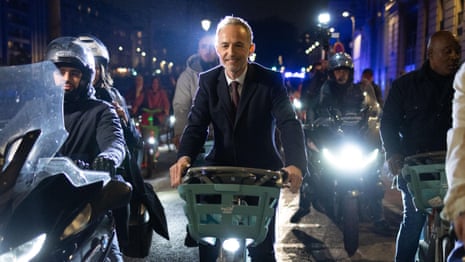 Socialist Emmanuel Grégoire arrives on bicycle after being elected mayor of Paris – video
theguardian.com
Socialist Emmanuel Grégoire arrives on bicycle after being elected mayor of Paris – video
theguardian.com
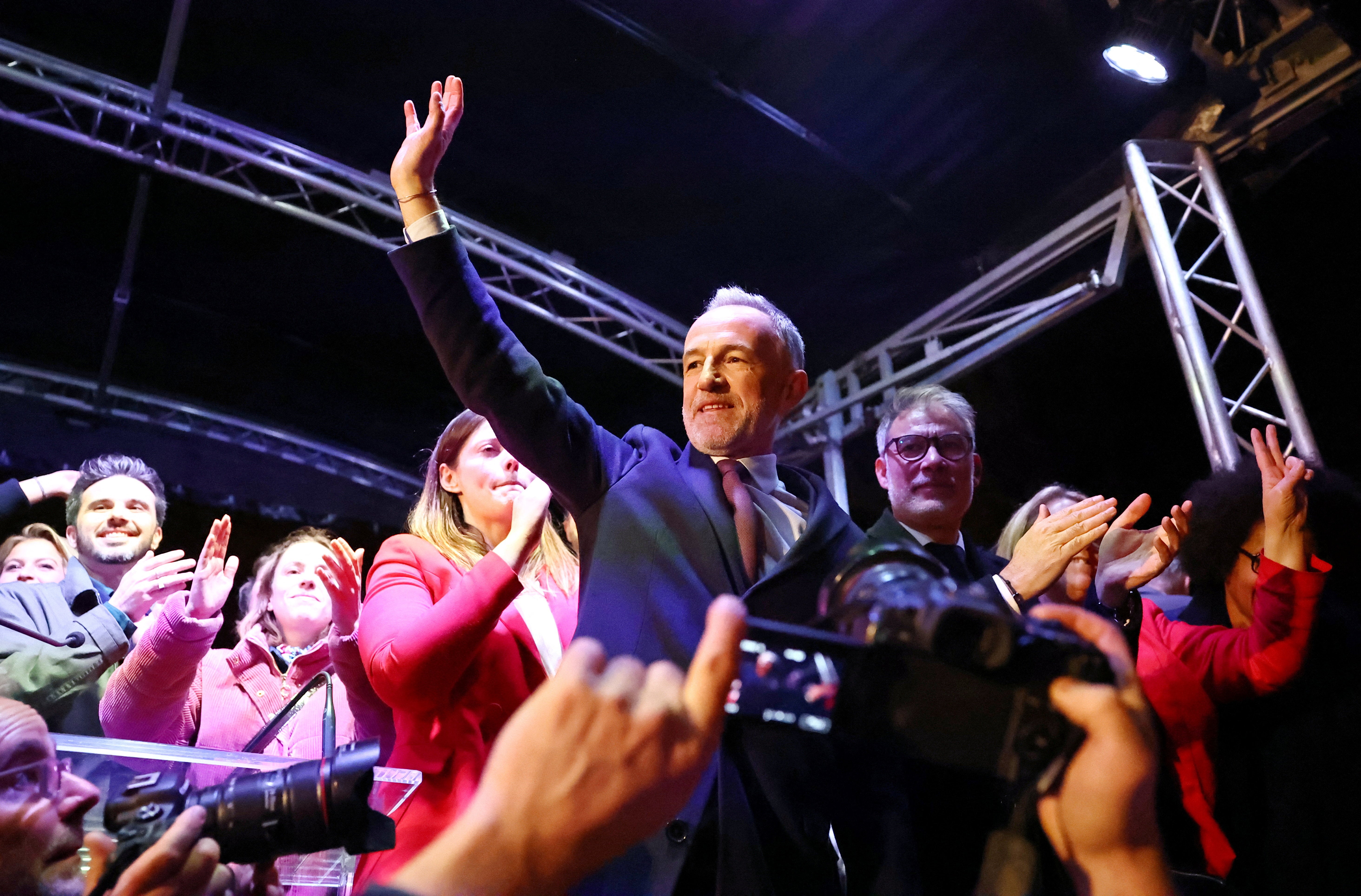 Emmanuel Gregoire reacts next to Olivier Faure, first secretary of the French Socialist Party, as they stand on a stage in front of the Paris City Hall after early results suggested he had won the second round of the mayoral election in Paris (REUTERS)
REUTERS
Emmanuel Gregoire reacts next to Olivier Faure, first secretary of the French Socialist Party, as they stand on a stage in front of the Paris City Hall after early results suggested he had won the second round of the mayoral election in Paris (REUTERS)
REUTERS
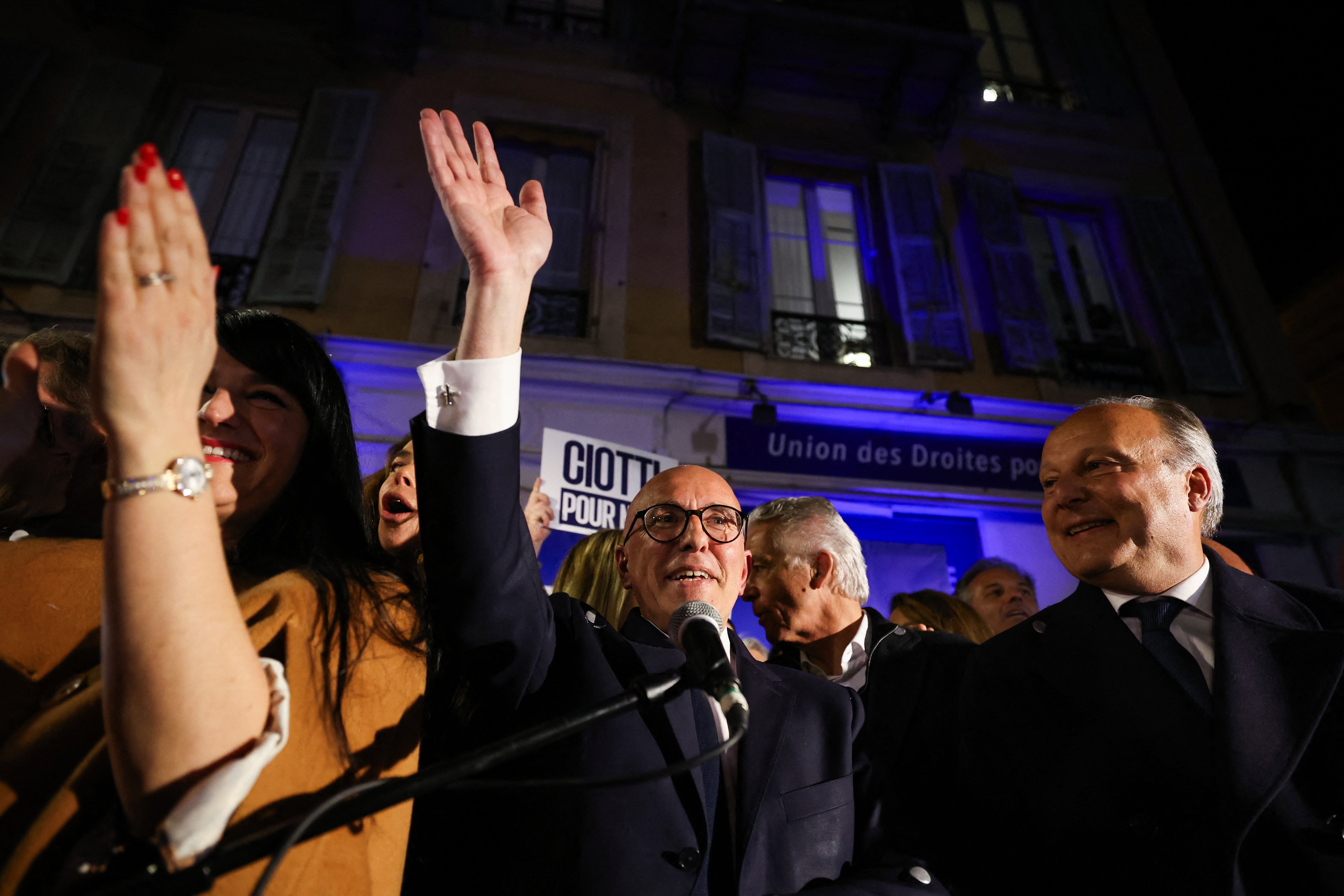 Emmanuel Gregoire, Paris mayoral candidate for Socialist party, reacts after early results suggested he had won the second round of the mayoral election in Paris (AFP via Getty)
AFP via Getty
Emmanuel Gregoire, Paris mayoral candidate for Socialist party, reacts after early results suggested he had won the second round of the mayoral election in Paris (AFP via Getty)
AFP via Getty
Emmanuel Grégoire won the Paris mayoralty on Sunday with an estimated 52 percent of the vote, extending left-wing control of the French capital into its third decade. The Socialist candidate, backed by a united left ticket including the Greens, defeated the conservative former minister Rachida Dati, while Marine Le Pen’s National Rally (RN) again fell short in several of the big-city targets it had flagged for the second round.
According to The Guardian, Grégoire framed the result as a statement of continuity: a pro-cycling, environmental Paris that would “start tomorrow morning,” arriving at city hall by bicycle and promising attention to homelessness and other urban welfare pressures. The same article notes that his campaign message leaned heavily on preventing a right–far-right convergence, warning that Dati would turn Paris into “a Trumpist laboratory” through an alliance with RN.
The municipal map that emerged from Sunday’s run-offs points to a political market shaped less by programmatic choice than by exclusion rules. In Paris, Marseille and Lille, mainstream coalitions held power by consolidating across party lines, while RN’s failure to win Marseille and Toulon—also reported by The Independent—kept the party outside the executive machinery of major cities. That exclusion has a mechanical effect: once a party is treated as untouchable, the decisive contest shifts from “who governs” to “which insiders divide the governing posts.” Mayoral offices, deputy mayoralties, committee chairs, procurement influence and the ability to allocate local subsidies become the currency used to keep coalitions intact.
The Independent reports that Socialist incumbents in several cities distanced themselves from the far left amid accusations of antisemitism within its ranks, a reminder that cordons are not fixed moral categories so much as flexible boundaries policed by reputation and electoral arithmetic. When the acceptable coalition is broad, the bargaining space is internal: voters can replace a mayor, but they are often choosing between adjacent factions that will still need each other the day after the vote.
RN benefits from this structure even when it loses. A party that is systematically blocked from office can present itself as the only opposition not implicated in municipal compromises—especially when turnout is under half, as The Independent notes was the case at 5pm with just over 48 percent. Meanwhile, the parties that promise to stop RN must keep offering proof of unity, which in local politics often means visible projects, symbolic measures and spending decisions that are easier to announce than to reverse.
In Le Havre, former prime minister Édouard Philippe’s re-election as mayor is expected to accelerate his 2027 presidential ambitions, The Guardian reports, turning a municipal victory into a national audition. Paris, for its part, will now be run by a city hall veteran whose mandate was built as much on who must be kept out as on what must be built.
Grégoire celebrated his win by cycling through Paris toward city hall. The next budget will be written by a coalition that campaigned on being the last line of defence against an opponent it still refuses to govern with.