
US State Department issues worldwide security alert
Iran war drives open-ended travel risk management, public still says war goals not clearly explained
Images
 bnonews.com
 bnonews.com
 bnonews.com
 bnonews.com
 bnonews.com
 (AFP via Getty Images)
AFP via Getty Images
(AFP via Getty Images)
AFP via Getty Images
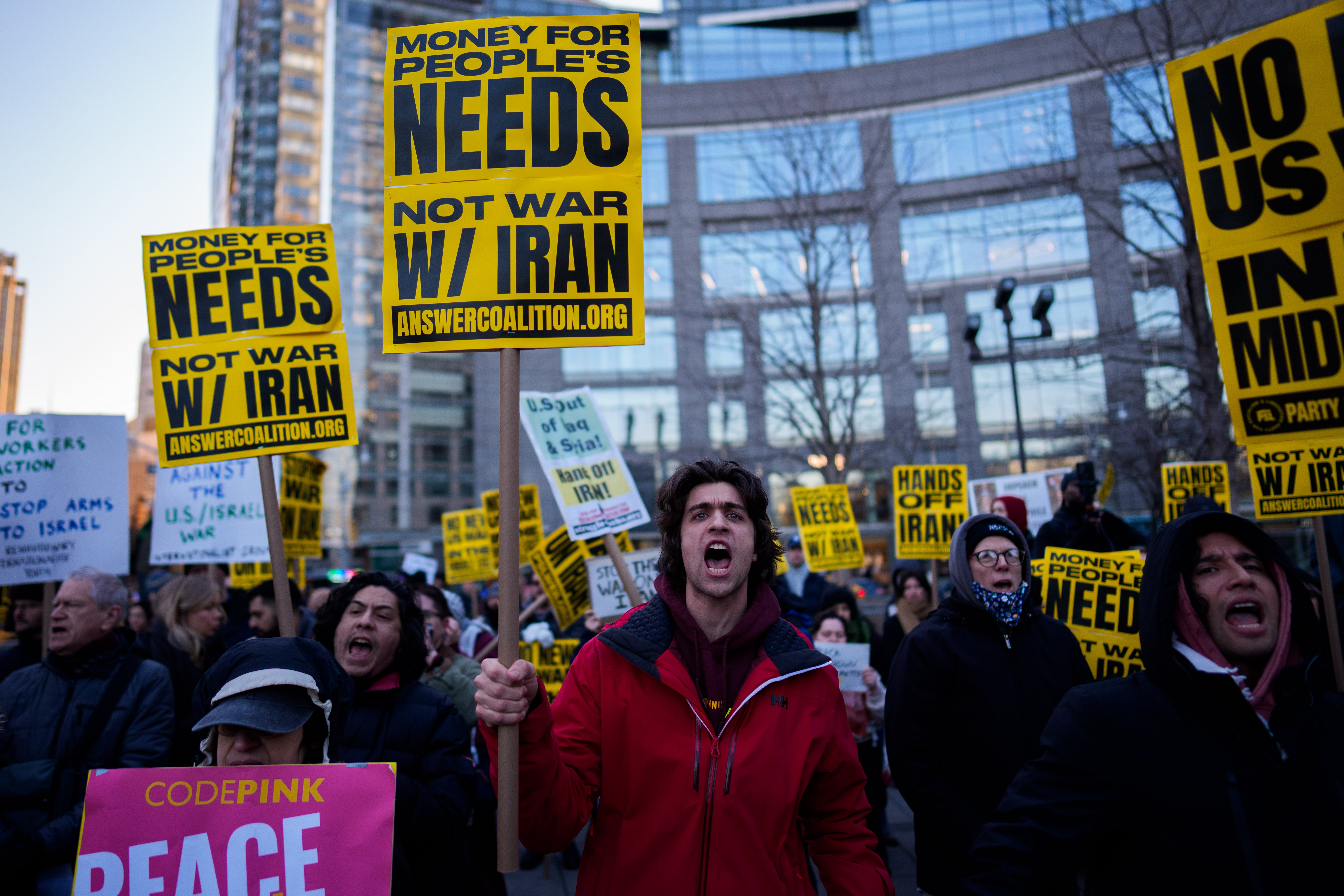 Polling has found that Americans are largely disapproving of Trump's decision to go to war with Iran (Getty Images)
Getty Images
Polling has found that Americans are largely disapproving of Trump's decision to go to war with Iran (Getty Images)
Getty Images
The US State Department issued a worldwide security alert on Sunday warning Americans abroad to “exercise increased caution” as the war with Iran continues and airspace closures ripple across international travel, according to BNO News.
The advisory does not cite a specific, credible plot. Instead it sketches a broad risk environment: groups “supportive of Iran” may target US interests, American-linked sites, or Americans themselves. That formulation is familiar to anyone who has watched Washington’s post‑9/11 warning system mature into a standing service. Once the federal government switches to global alerts, embassy notices, threat bulletins and layered travel guidance, those products become the default operating mode for airlines, insurers, corporate security teams, universities, NGOs and tour operators. The costs—rerouted flights, canceled conferences, higher premiums, security contractors, and a permanent “assume disruption” posture—are borne largely outside the agencies issuing the warnings.
The alert lands as public understanding of the war’s objectives appears to be eroding. A CBS News/YouGov survey cited by The Independent found that 68% of respondents said the Trump administration had not clearly explained its goals in attacking Iran, up from 62% in an earlier poll conducted shortly after the strikes began. The same reporting notes that Trump has described shifting endpoints—neutralising Iran’s navy, preventing a nuclear weapon, demanding “unconditional surrender,” and at times hinting at leadership change—while senior officials have offered conflicting timelines.
That mismatch matters because the risk apparatus does not require clarity about end states; it requires only the possibility of retaliation. BNO News points to a scatter of incidents that authorities have linked, or are examining for links, to the conflict: an FBI terrorism probe after a bar shooting in Austin; protests in Karachi that breached a perimeter at the US consulate; an improvised explosive device at the entrance to the US embassy in Oslo; and gunfire that struck the US consulate in Toronto. Even if none of these are ultimately tied to Iran, the pattern is enough to justify continued alerts—and enough for private actors to price in a higher baseline of danger.
The practical effect is that “wartime footing” becomes a durable administrative setting. Embassies issue rolling guidance; airlines build schedules around sudden closures; companies restrict travel; and insurers adjust terms. Rolling it back is harder than issuing it: the reputational penalty for under-warning is immediate, while the economic drag of over-warning is diffuse.
On Sunday the State Department again told Americans to monitor local embassy and consulate updates. The war’s objectives remain contested at home, but the global warning machine is already running on schedule.