
Texas meteor triggers sonic booms over Houston
NASA radar points to possible debris field between Willowbrook and Northgate Crossing, roof-damage claims start before fragments are verified
Images
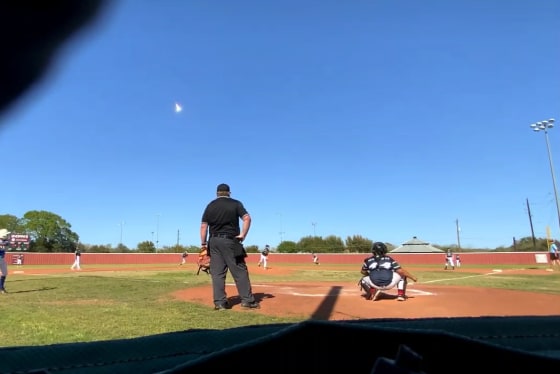 A meteor flies through the sky during a baseball game
nbcnews.com
A meteor flies through the sky during a baseball game
nbcnews.com
A bright fireball streaked across southeastern Texas on Saturday afternoon, producing sonic booms and at least one report of debris punching through a roof in the Houston area. NASA said the object was first visible at 4:40 p.m. local time near Stagecoach northwest of Houston, travelling roughly 35,000 mph before breaking apart about 29 miles above Bammel, west of Cypress Station, according to NBC News.
The first stage of any “something fell from the sky” episode is always the same: witness video arrives before the paperwork. In this case it was a Little League game, doorbell footage and dashcam clips, followed by residents describing a shock wave and a second, dull impact. One homeowner, Sherrie James, told NBC News she heard a loud boom and then a thud in her daughter’s room, then found a hole in the roof, a dent in the floor and a black rock about the size of a baseball.
Only after that does the event become measurable. The American Meteor Society logged more than 140 reports across south-central and southeastern Texas, spanning Houston, Katy, College Station, San Antonio and Austin. NASA said Doppler weather radar indicated potential meteorite fall between Willowbrook and Northgate Crossing—an unusually modern handoff from social-media sightings to instrument traces.
Then comes the administrative chain: confirmation, search areas, and—if property damage is plausible—insurance claims and evidence handling. A suspected meteorite is not just a curiosity; it is an object whose value and liability depend on provenance. Homeowners want a clear statement that the damage was not “wear and tear,” insurers want a documented cause, and agencies want to avoid declaring certainty before fragments are recovered and analysed.
The Texas incident also follows a similar daytime fireball reported earlier in the week over Ohio and parts of Pennsylvania, which NASA officials said likely involved a small asteroid fragmenting high in the atmosphere. The pattern is less that large impacts are common than that the detection and reporting pipeline is now routine: phones, dashboards, local emergency calls, online logging, radar signatures, then a public update from NASA.
For most people, the practical question is not the difference between a meteor and “space junk,” but whether anything reached the ground. NASA’s early estimate put the Texas meteor at roughly three feet across and about a ton—large enough to generate sonic booms as it disintegrated, but still small by the standards of objects that survive intact.
In the end, the story will likely turn on something as mundane as a piece of rock in a plastic bag, a roof repair invoice, and a lab result confirming whether the “big, black rock” came from space or from somewhere closer to home.