
Iran threatens regional desalination and energy sites
Trump ultimatum on Strait of Hormuz shifts war into insurance pricing, Europe pays through gas and freight premiums
Images
 Smoke rises above Tehran after an Israeli airstrike on Sunday evening. Photograph: Anadolu/Getty Images
theguardian.com
Smoke rises above Tehran after an Israeli airstrike on Sunday evening. Photograph: Anadolu/Getty Images
theguardian.com
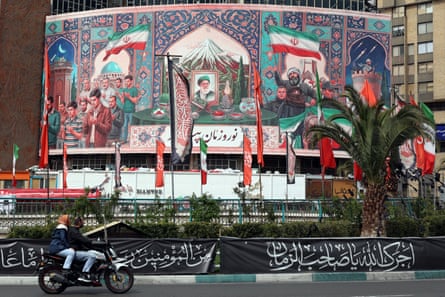 A Tehran billboard featuring a portrait of the late supreme leader Ayatollah Ali Khamenei. Photograph: AFP/Getty Images
theguardian.com
A Tehran billboard featuring a portrait of the late supreme leader Ayatollah Ali Khamenei. Photograph: AFP/Getty Images
theguardian.com
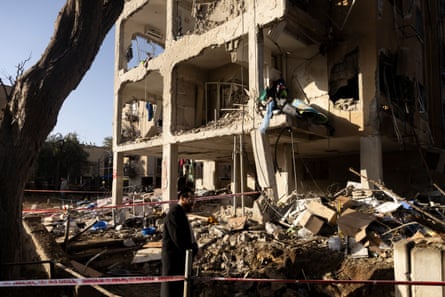 Bomb damage in Arad, Israel. Photograph: Amir Levy/Getty Images
theguardian.com
Bomb damage in Arad, Israel. Photograph: Amir Levy/Getty Images
theguardian.com
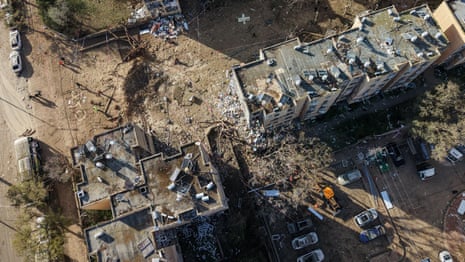 Drone footage shows damage to two Israeli cities after Iranian missile strikes – video
theguardian.com
Drone footage shows damage to two Israeli cities after Iranian missile strikes – video
theguardian.com
Iran’s parliament speaker Mohammad Bagher Ghalibaf said Tehran would treat regional “energy and desalination facilities” as legitimate targets if the United States attacks Iran’s power plants, after Donald Trump issued a 48-hour ultimatum demanding the Strait of Hormuz be “fully opened”, according to The Guardian. Iran’s Khatam al-Anbiya operational command threatened strikes on “energy, information technology and desalination infrastructure” linked to the US and Israel, and said Hormuz would be “completely closed” until damaged Iranian power plants were rebuilt.
The warning is less a declaration of a new battlefield than a description of how this war is already being priced. The strait is a narrow chokepoint for roughly a fifth of global oil and liquefied natural gas flows, and the Guardian reports that only a small fraction of prewar vessel traffic is moving, largely from countries Tehran considers friendly. That gap is not enforced by a single naval blockade so much as by insurers, shipowners and traders who decide what risk premium they can tolerate. When missiles and drones make the probability distribution fat-tailed, the “closure” happens through cancelled cover, rerouted voyages, delayed cargoes and margin calls upstream in energy derivatives.
Infrastructure threats fit the economics. Power plants, desalination units and port energy terminals are large, fixed, and difficult to harden comprehensively; they are also politically salient because disruption is immediate and visible. For an attacker, the cost of threatening or striking such assets can be lower than the cost of defending every node, especially when the objective is not territorial control but coercion. For defenders, the bill arrives as redundancy, air defence saturation, emergency repairs, and the secondary costs of outages—costs that can be shifted onto civilians and foreign consumers.
Europe’s exposure is mechanical. Gulf energy risk transmits into European gas benchmarks, then into electricity pricing, industrial shutdown decisions, and household bills. It also transmits through inputs that are priced off gas: ammonia and nitrogen fertiliser, which sit upstream of crop yields and food prices. Even when physical supply is not fully cut, the financing layer can seize: higher collateral requirements and tighter credit for commodity traders can reduce liquidity and amplify price spikes.
The Guardian notes Iran’s representative to the International Maritime Organization said the strait remained open to all shipping except vessels linked to “Iran’s enemies”, with passage possible via coordination with Tehran. In practice, that turns transit into a permissions market where flags, ownership structures and counterparties matter as much as geography.
Trump’s deadline expires shortly before midnight GMT on Monday. By then, the most decisive actor may not be a navy in the Gulf but an underwriter deciding whether a voyage is insurable at any price.