
AuroraWatch issues red alert for UK auroras
Met Office flags CME and fast solar wind as geomagnetic activity stays elevated, space weather tests navigation and power systems as much as cameras
Images
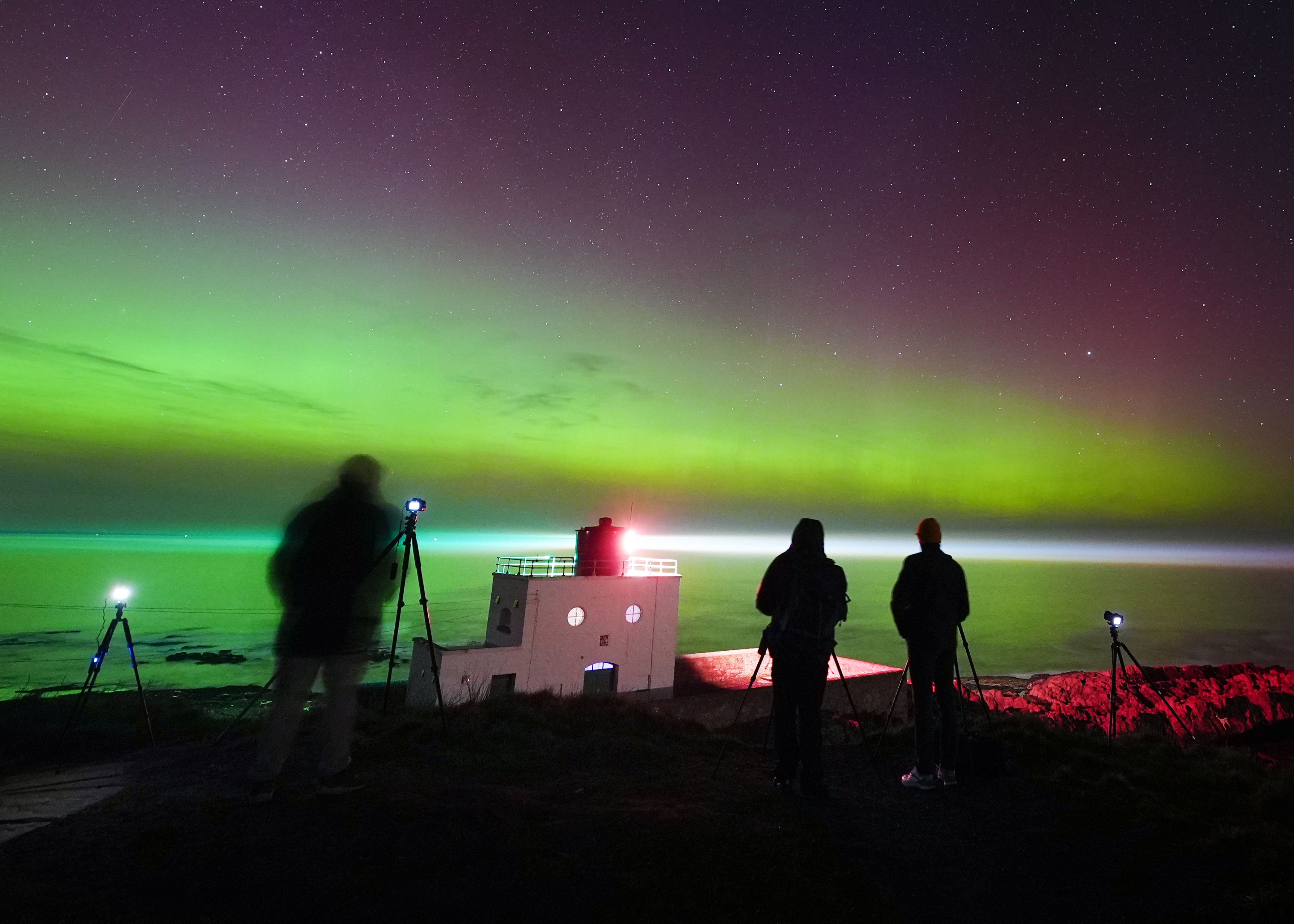 Photographers and stargazers watch as the aurora borealis, commonly known as the Northern Lights, light up the skies above Bamburgh lighthouse in Northumberland (Owen Humphreys/PA Media Assignments)
Owen Humphreys/PA Media Assignments
Photographers and stargazers watch as the aurora borealis, commonly known as the Northern Lights, light up the skies above Bamburgh lighthouse in Northumberland (Owen Humphreys/PA Media Assignments)
Owen Humphreys/PA Media Assignments
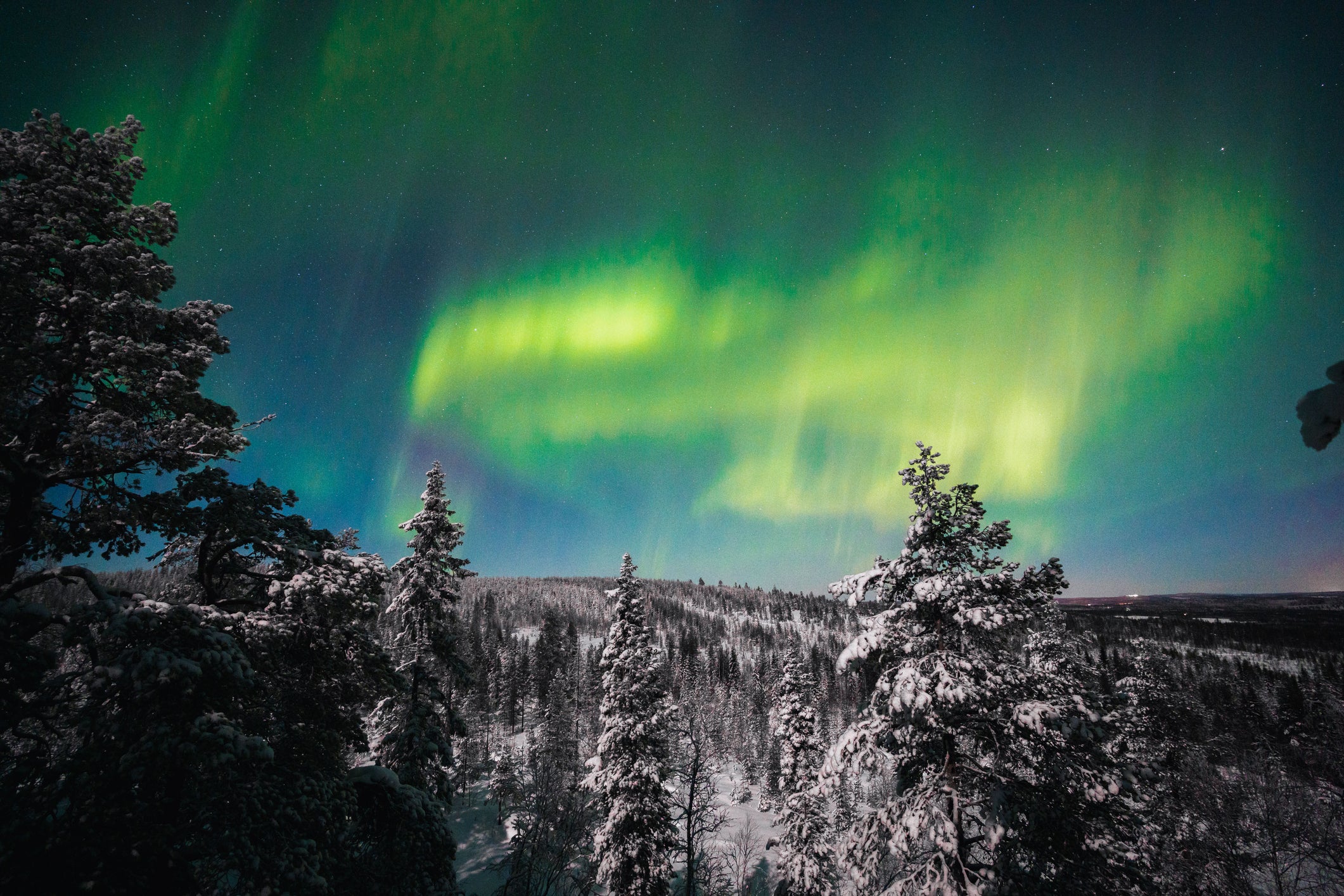 Northern lights in Rovaniemi, Finnish Lapland (Getty/iStock)
Getty/iStock
Northern lights in Rovaniemi, Finnish Lapland (Getty/iStock)
Getty/iStock
Northern Lights forecast for UK follows geomagnetic storm alert, AuroraWatch issues red status as CME effects extend beyond photography
AuroraWatch UK issued a red alert for Sunday night after auroras were seen across Britain on Friday and Saturday, with sightings reported as far south as Norfolk. The Independent reports the strongest likelihood of visibility is in Scotland and possibly the far north of England and Northern Ireland, contingent on cloud cover.
The aurora itself is a visible side effect of a chain of events that begins on the sun. Coronal mass ejections (CMEs) eject charged particles that, when they reach Earth, disturb the planet’s magnetic field and funnel energy into the upper atmosphere. Collisions with oxygen and nitrogen at roughly 100 to 200 kilometres altitude produce the familiar greens, reds and purples, the paper notes.
What tends to get lost in “northern lights tonight” coverage is that the same geomagnetic disturbance that pushes the auroral oval south can also push on infrastructure. Rapid changes in Earth’s magnetic field can induce currents in long conductors such as transmission lines, stressing transformers and protection systems. At the same time, increased ionospheric irregularities can degrade radio propagation and satellite navigation signals, affecting GNSS accuracy and timing—inputs that modern logistics, aviation and even parts of financial and telecom systems rely on.
Forecasting these impacts is probabilistic. The public shorthand often uses indices such as Kp, a global measure derived from magnetometer readings that reflects how disturbed the geomagnetic field is over a three-hour window. High Kp values correlate with auroral visibility at lower latitudes, but they do not specify local cloud cover, the direction of the auroral arcs, or the precise intensity of ionospheric scintillation over a given region. A red alert is therefore closer to “conditions are favourable” than a guarantee.
The Independent cites the UK Met Office space-weather outlook describing “residual CME influence” followed by fast solar wind from a coronal hole, maintaining enhanced geomagnetic activity over 22–23 March. That sequencing matters: CME-driven storms can produce sharp, short-lived spikes, while coronal-hole streams can sustain elevated disturbance for longer periods, turning a one-night spectacle into a multi-day operational concern for grid operators and satellite users.
For observers, the advice remains practical—seek dark skies, avoid light pollution, look north. For operators, the same alert is a reminder that space weather is one of the few hazards that can simultaneously affect navigation, communications and power systems without touching the ground.
On Friday night, people photographed green skies over Bamburgh lighthouse in Northumberland. The next question, as the alert persists, is whether the event stays confined to the horizon or shows up in the error margins of the systems that keep lights on and aircraft on track.