
US gas prices absorb bigger tax refunds
Iran war-driven oil shock shifts household cash from retail to fuel, stimulus narrative collides with the pump
Images
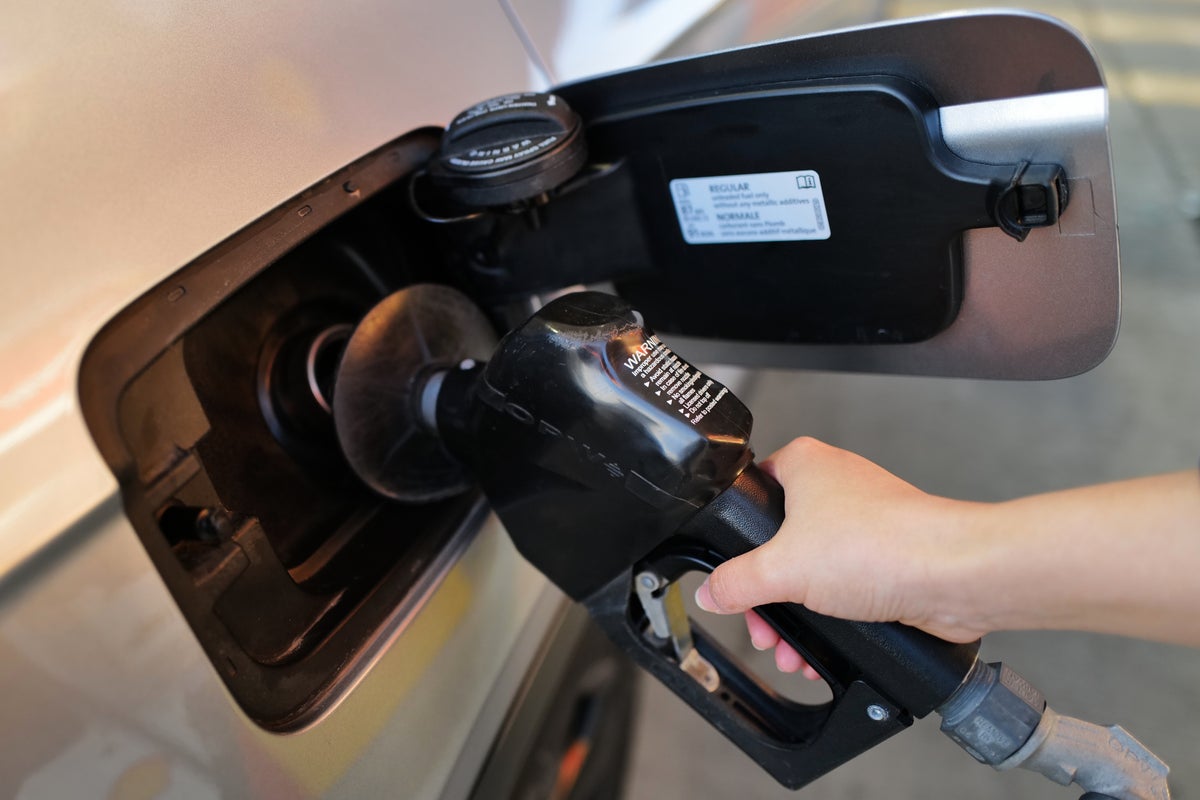 Trump touted bigger tax refunds this year, but Americans will likely spend them on gas
independent.co.uk
Trump touted bigger tax refunds this year, but Americans will likely spend them on gas
independent.co.uk
US gasoline prices have risen by more than a dollar in roughly a month, and economists now say the jump is positioned to absorb much of the extra cash many households expected from this year’s larger tax refunds. The Independent reports that the national average pump price reached $3.94 a gallon on Sunday after the Iran war began on Feb. 28, undercutting a White House message that refunds from President Donald Trump’s tax-cut legislation would help kick-start consumer spending.
The mechanics are straightforward: a refund is a one-off cash injection, while higher fuel costs are a recurring claim on paycheques. Neale Mahoney of Stanford’s Institute for Economic Policy Research told the newspaper that, based on Goldman Sachs oil forecasts, pump prices could peak around $4.36 a gallon in May before drifting down only slowly. Economists have a name for that asymmetry — prices rise like a rocket and fall like a feather — but the practical effect is that households feel the hit immediately and the relief late.
Several estimates in the report converge on the same conclusion. Pantheon Macroeconomics calculates that the average household could pay about $740 more for gasoline this year, roughly matching the Tax Foundation’s estimate of a $748 increase in average refunds. Oxford Economics puts the transfer at scale: if gas averages $3.70 a gallon through the year, consumers would spend roughly $70 billion more at the pump, exceeding the estimated $60 billion boost from bigger refunds.
That money does not vanish; it changes hands. Fuel spending is less likely to show up in restaurant tabs, clothing purchases or entertainment, which is why analysts quoted by The Independent expect slower growth this spring and over the year. The burden is also uneven. Pantheon estimates the bottom tenth of earners spend nearly 4% of their income on gasoline, versus about 1.5% for the top tenth — a gap that matters when hiring is “nearly at a standstill” and household saving rates have been falling, after years of consumers leaning on credit cards and buy-now-pay-later to maintain living standards.
The government can advertise a larger refund season, but it cannot stop energy markets from repricing risk when shipping lanes, production and insurance costs are disrupted. In the meantime the refund becomes less a stimulus than a timing device: cash arrives, and a higher weekly fuel bill quietly claims it.
Through March 6, IRS data cited by The Independent show average refunds at $3,676, up $352 from a year earlier. At today’s pump prices, that increase is already being measured in miles driven rather than goods bought.