
Unclaimed Baggage markets lost suitcases as retail pipeline
Company report lists $43,400 earrings and a meteorite fragment, the resale market begins where airline tracing ends
Images
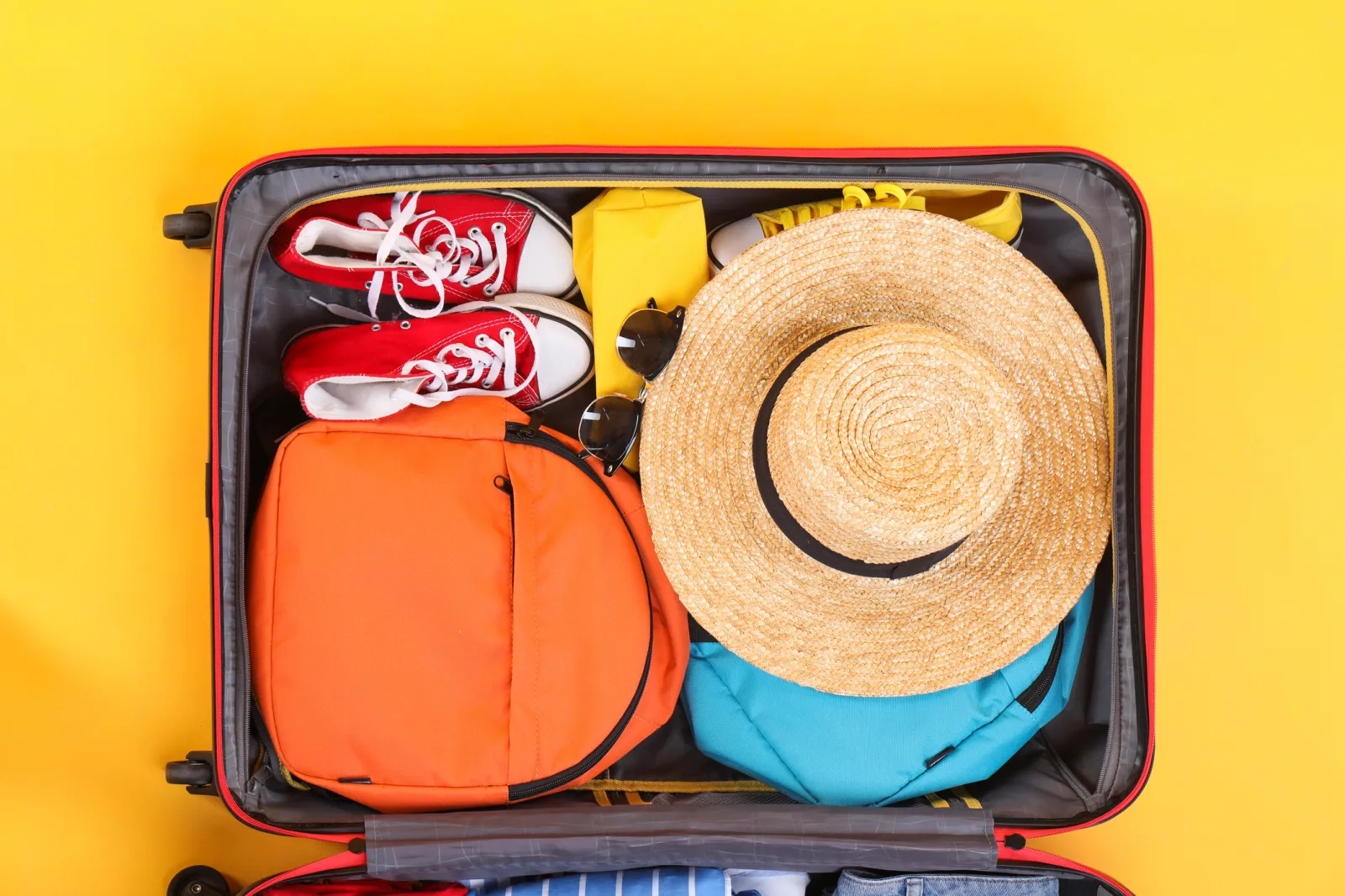 An open suitcase filled with different items.
newsweek.com
An open suitcase filled with different items.
newsweek.com
 What Trump’s World War II Mindset Reveals About His Iran Policy
newsweek.com
What Trump’s World War II Mindset Reveals About His Iran Policy
newsweek.com
 Donald Trump Reacts to Former FBI Director Robert Mueller’s Death: ‘Good’
newsweek.com
Donald Trump Reacts to Former FBI Director Robert Mueller’s Death: ‘Good’
newsweek.com
 Cuba Hit by Third Blackout This Month as Energy Crisis Worsens
newsweek.com
Cuba Hit by Third Blackout This Month as Energy Crisis Worsens
newsweek.com
 Trump Says ICE to Run Airport Security If No TSA Deal Reached
newsweek.com
Trump Says ICE to Run Airport Security If No TSA Deal Reached
newsweek.com
Unclaimed Baggage says it sold about 7,000 unique items a day from “orphaned” airline suitcases, after US domestic air travel approached one billion passengers in 2025. In its newly released 2026 “Found Report”, the Alabama-based reseller lists some of the most valuable and strange items it says staff pulled from luggage that never made it back to owners, including diamond earrings valued at $43,400, a stainless-steel-and-gold Rolex, a powered prosthetic knee, and a small fragment of an iron meteorite that fell to Earth in 1576.
The report is packaged as travel curiosity, but it also describes the end of a logistics chain that airlines and airports rarely discuss in public. According to the company, more than 99.9% of checked bags are ultimately reunited with passengers; the remainder move from “delayed” to “unclaimed” and are then transferred to a commercial buyer that opens, catalogs, resells and repurposes the contents. The existence of a mature downstream market turns mishandled baggage into an asset class: every bag that ages out of the tracing system becomes inventory, while the owner is pushed toward standardized compensation rules and time limits.
That matters because baggage recovery is not a moral question but a cost question. Reuniting a bag can require manual searches, cross-airport coordination, and last-mile delivery—work that competes with other operational priorities and is hard for passengers to observe. Once a bag is written off, the economics flip: the airline’s remaining obligation is typically capped by policy and treaty-based liability frameworks, while the physical goods can be sold on. A secondary market does not have to cause neglect to benefit from it, but it does change what “good enough” looks like when systems fail.
The list of finds in Unclaimed Baggage’s report also hints at why the market can be lucrative. The company describes items tied to high-end retail (jewellery, luxury watches), specialized equipment (robotic components, an advanced prosthetic joint), and collectibles (meteorite fragments), alongside the kind of bulky oddities that are expensive to ship back and easy to abandon. It also highlights the information asymmetry: the buyer sees the contents; the original owner often cannot prove what was inside, especially when receipts and serial numbers are missing.
Unclaimed Baggage portrays the process as circular thrift—“lost items into treasured finds”—and the store’s daily volume suggests a steady pipeline. But the report also functions as marketing for a business model that depends on a small fraction of failures in a very large transport system.
A powered prosthetic knee and a $43,400 pair of earrings can both disappear in the same way: as one more tag in a warehouse, waiting for the clock to run out.