
Pakistan airstrike hits Kabul rehab centre killing hundreds
UN counts 143 dead while Taliban claim more than 400, families search unmarked graves during Eid
Images
 Victims were buried in unmarked graves marked only by a stone and without names. Photograph: Wakil Kohsar/AFP/Getty Images
theguardian.com
Victims were buried in unmarked graves marked only by a stone and without names. Photograph: Wakil Kohsar/AFP/Getty Images
theguardian.com
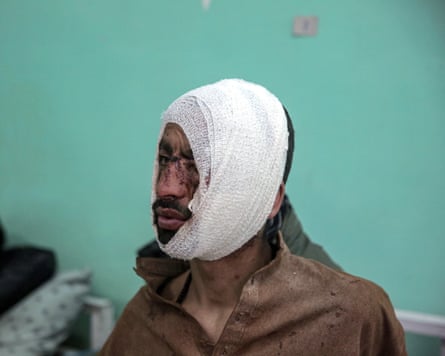 A victim of the deadly strike receives treatment. Photograph: Samiullah Popal/EPA
theguardian.com
A victim of the deadly strike receives treatment. Photograph: Samiullah Popal/EPA
theguardian.com
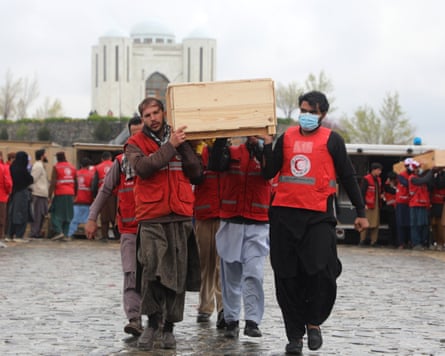 Red Crescent volunteers carry a coffin during a funeral ceremony for those who lost their lives in the airstrike. Photograph: Anadolu/Getty Images
theguardian.com
Red Crescent volunteers carry a coffin during a funeral ceremony for those who lost their lives in the airstrike. Photograph: Anadolu/Getty Images
theguardian.com
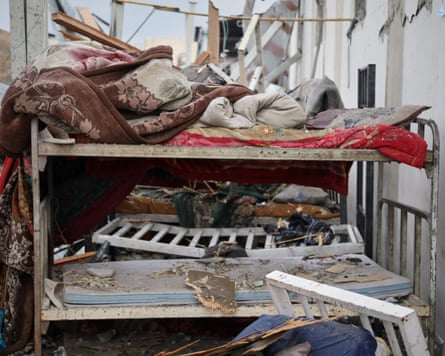 A bunkbed covered in debris after the strike on the hospital caused an ‘unthinkable’ fire. Photograph: Siddiqullah Alizai/AP
theguardian.com
A bunkbed covered in debris after the strike on the hospital caused an ‘unthinkable’ fire. Photograph: Siddiqullah Alizai/AP
theguardian.com
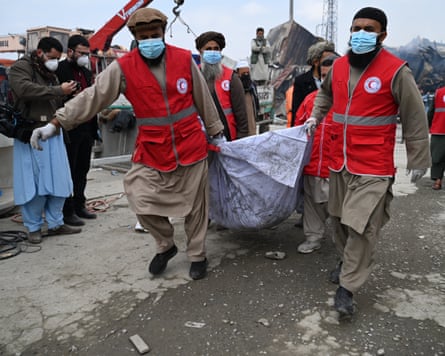 Afghan Red Crescent Society volunteers carry victims’ bodies at the site. Photograph: Wakil Kohsar/AFP/Getty Images
theguardian.com
Afghan Red Crescent Society volunteers carry victims’ bodies at the site. Photograph: Wakil Kohsar/AFP/Getty Images
theguardian.com
 ipsnews.net
Families in Kabul spent Eid searching for relatives after a Pakistani airstrike hit a drug rehabilitation centre and triggered a mass burial with unmarked graves. The Guardian reports that the UN’s preliminary death toll is 143 while the Taliban administration claims more than 400 were killed, after an attack on the Omid (“Hope”) facility on Monday night.
The strike is part of what Pakistan describes as a bombardment campaign against “terrorist and military infrastructure” in Afghanistan. But the reported target—a rehab centre for drug addicts—puts Islamabad in a familiar bind: cross-border force is sold domestically as security policy, yet the operational risk lands on civilians and becomes a diplomatic liability.
The mechanics of the aftermath show how quickly a military incident becomes an administrative crisis. According to the report, victims were buried in rows without names, marked only by stones, leaving families to identify graves through videos of the burial. Survivors described fire spreading through dormitories after evening prayers, with shrapnel tearing through walls. Afghan Red Crescent staff said the blaze could be seen for miles and was impossible to control.
The competing casualty figures also matter. A lower UN estimate and a higher Taliban claim create room for each side to frame the event: Pakistan can argue limited collateral damage; the Taliban can mobilise anger and recruitment. One injured survivor quoted by the Guardian demanded “revenge” and asked for weapons if the government could not deliver it—language that turns a humanitarian disaster into a political resource.
The strike lands in a region already stressed by energy disruption and supply insecurity tied to the wider Middle East conflict. Pakistan, heavily dependent on imported fuel, is simultaneously looking for ways to reduce exposure through rapid solar adoption, according to IPS. Those two stories—decentralised energy as household self-help and air power as state signalling—can run in parallel without resolving any of the underlying constraints.
At the hillside cemetery outside Kabul, Sohrab Faqiri located his brother’s burial place only after recognising him in footage of the mass grave. He still could not identify the exact plot because none of the stones had names.