
South Korea auto parts plant fire kills at least 14
Daejeon explosion injures dozens and forces robot-assisted searches, reactive chemicals found as cause remains unclear
Images
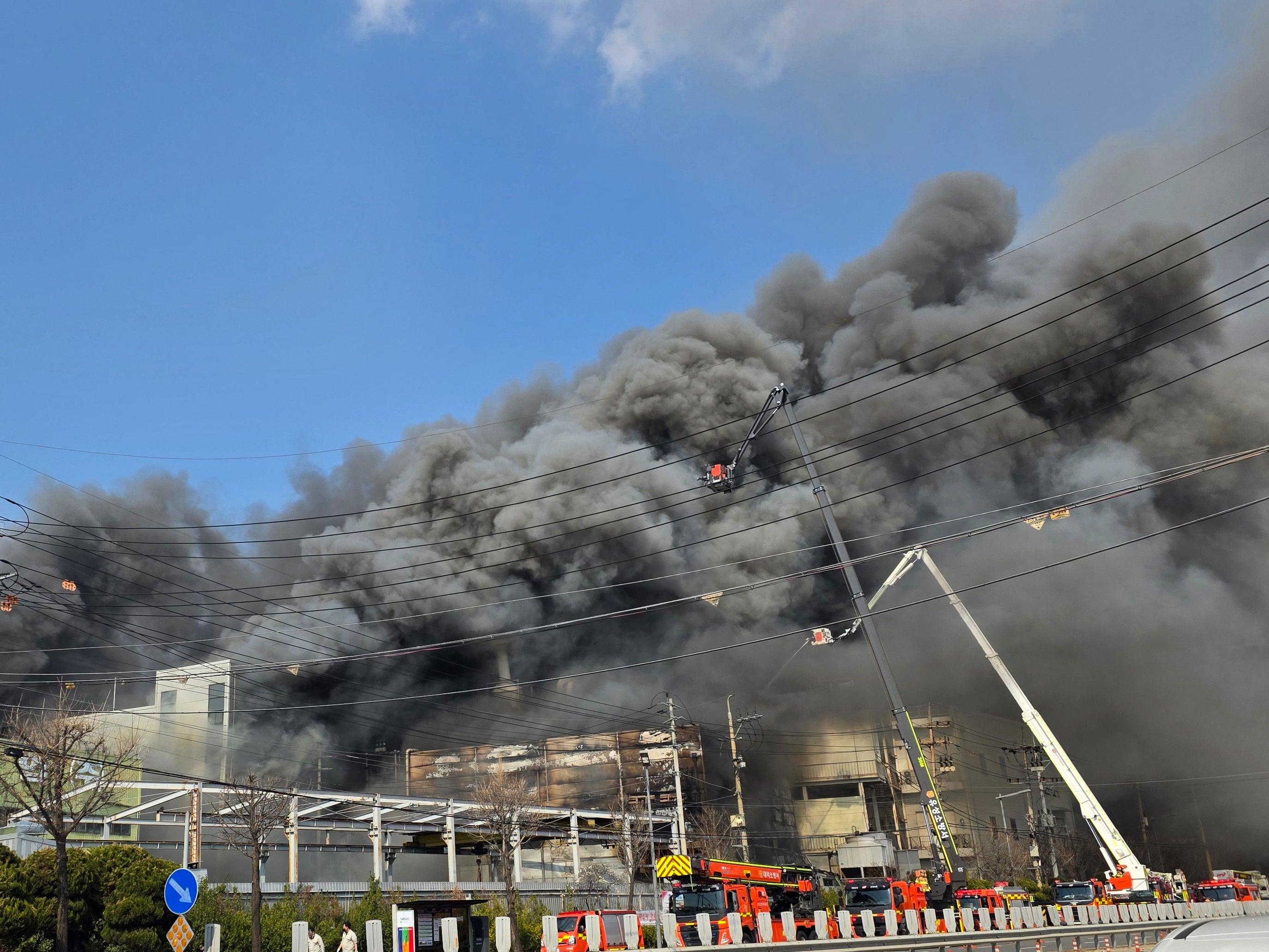 Black smoke rises from an auto parts plant in Daejeon, South Korea, Friday, 20 March 2026
independent.co.uk
Black smoke rises from an auto parts plant in Daejeon, South Korea, Friday, 20 March 2026
independent.co.uk
At least 14 people were killed and at least 59 injured after an explosion and fire tore through an auto parts factory in Daejeon, South Korea, with nine bodies found in what officials believe was a third-floor gym, according to the Associated Press via the Independent. More than 500 firefighters, police and emergency personnel were deployed, and officials said the missing had been accounted for by Saturday.
The fire broke out early Friday afternoon, but rescue crews initially could not enter one of the buildings because of collapse fears. Fire officials said unmanned firefighting robots were used to cool the structure before searches began late Friday, a sequence that underlines how quickly an industrial incident becomes a structural engineering problem: the building has to be made safe before victims can be reached.
Authorities said workers recovered more than 100 kilograms of “highly reactive chemicals” from the site, while firefighters focused on preventing the blaze spreading to an adjacent facility and isolating explosive materials. The cause was not immediately known, but witnesses reported an explosion and images from the scene showed thick smoke and workers jumping from the building to escape.
South Korean president Lee Jae Myung visited the site and urged safety measures to prevent the damaged structure from collapsing during search operations. By Saturday morning, 28 people remained hospitalised and four had undergone surgery for broken bones and other injuries, the report said.
Factories like this sit inside tightly scheduled supply chains: the plant was identified as part of an auto parts complex, and the damage included a destroyed building and extensive fire response operations involving specialised equipment such as unmanned water cannon vehicles and robots for hard-to-reach areas. When a facility goes offline abruptly, the immediate accounting is deaths and injuries; the next wave is production delays, substitute sourcing and insurance disputes over what was preventable.
The fire was reported at about 1.18pm on Friday. By the time crews could safely search inside, the building had already burned through enough that officials were counting bodies by floor and by room.