
Brent climbs as Gulf energy sites take direct hits
Strikes on Ras Laffan and Mina al‑Ahmadi turn Hormuz risk into an insurance and working-capital squeeze, physical flows depend on underwriters and margin clerks
Images
 Smoke rises from a fire near Dubai International Airport after a drone-related incident. Photograph: AFP/Getty Images
theguardian.com
Smoke rises from a fire near Dubai International Airport after a drone-related incident. Photograph: AFP/Getty Images
theguardian.com
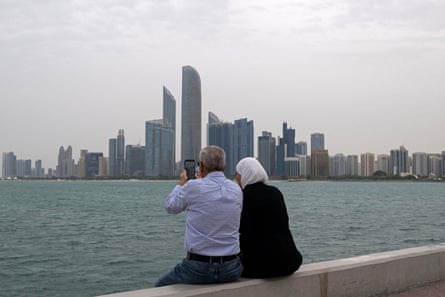 People sit by the water in Abu Dhabi in the UAE on Friday. Photograph: Ryan Lim/AFP/Getty Images
theguardian.com
People sit by the water in Abu Dhabi in the UAE on Friday. Photograph: Ryan Lim/AFP/Getty Images
theguardian.com
 Saudi foreign minister Prince Faisal bin Farhan (C) participates in the consultative ministerial meeting on the regional developments in Riyadh, Saudi Arabia, on Thursday. Photograph: Xinhua/Shutterstock
theguardian.com
Saudi foreign minister Prince Faisal bin Farhan (C) participates in the consultative ministerial meeting on the regional developments in Riyadh, Saudi Arabia, on Thursday. Photograph: Xinhua/Shutterstock
theguardian.com
 Fotografía de archivo de trabajadores
infobae.com
Fotografía de archivo de trabajadores
infobae.com
 Donald Trump, presidente de Estados
infobae.com
Donald Trump, presidente de Estados
infobae.com
 Israel abatió a Ismail Ahmadi,
infobae.com
Israel abatió a Ismail Ahmadi,
infobae.com
 El submarino de la clase
infobae.com
El submarino de la clase
infobae.com
 Pedro Sánchez (REUTERS/Yves Herman/File Photo)
infobae.com
Pedro Sánchez (REUTERS/Yves Herman/File Photo)
infobae.com
Brent crude traded around $105 a barrel on Friday as the Iran war spread from airbases and ports to the Gulf’s gas and refining assets, while insurers and ship operators continued to treat the Strait of Hormuz as “open only on paper”. The Guardian reported that Qatar’s Ras Laffan complex—central to the world’s LNG trade—lost almost a fifth of its export capacity after strikes, while Abu Dhabi shut operations at Habshan and the Bab field and Kuwait said its Mina al‑Ahmadi refinery was hit.
The immediate market move looks like an oil supply shock, but the harder constraint is the price of moving molecules through a system that runs on credit. When missiles and drones force underwriters to reprice war risk, the cost is not just a higher freight bill. It shows up as higher margin requirements for hedges, tighter trade finance, and more working capital tied up in inventories that must be carried longer because voyages are rerouted, delayed, or cancelled. A cargo that can physically be loaded is not “available” to a refiner if the ship cannot get coverage, the bank will not confirm the letter of credit, or the trader cannot post collateral for the hedge.
That is why Gulf states’ defensive posture—shooting down roughly 90% of incoming ballistic threats, according to the Guardian—does not restore normality. Every interception still signals that the next one might not be intercepted, and insurance is priced on the tail risk. The result is a market where the marginal barrel is set by financing conditions and risk premia rather than by the number of barrels in the ground.
The distributional effects are immediate. Volatility is a revenue line for some actors and a cost for nearly everyone else. Trading desks that can warehouse risk and post margin at short notice get paid for making markets when others step back. Refiners with flexible crude slates and storage can profit from dislocations between grades and regions—if they can secure supply and shipping. Insurers and reinsurers collect higher premiums, but also decide, in practice, which routes count as commercially navigable.
For Europe, the mechanism matters as much as the headline oil price. The Guardian described a Gulf region absorbing repeated strikes on airports, ports, hotels and financial districts while trying not to be pulled into a wider war. That is precisely the environment in which shipping schedules become unreliable, hedges become more expensive, and inventories become a form of collateral. The “effective supply” shrinks without a formal blockade.
Brent was higher on the day, but the more durable change was that Gulf export infrastructure—from Ras Laffan to Mina al‑Ahmadi—had joined the target list, and the price of insurance began to function as the region’s de facto choke point.