
Hormuz traffic resumes selectively
European and Japanese governments offer to help secure passage, insurers and ship operators still decide what counts as open
Images
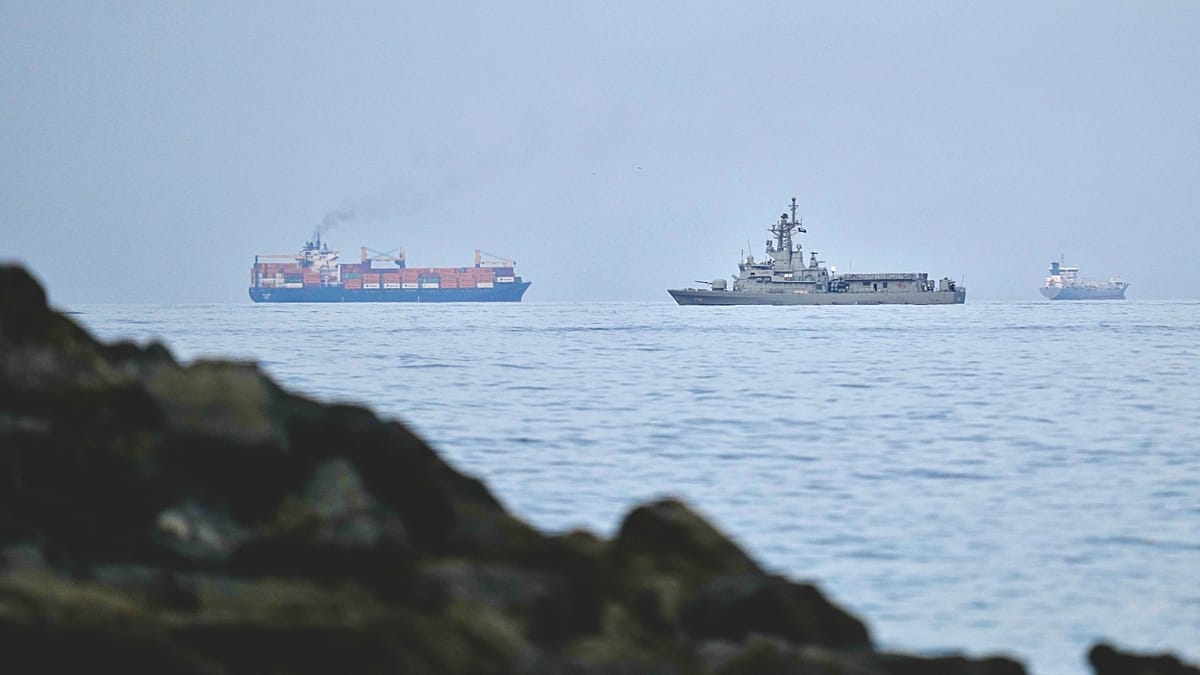 Europe, Japan back Hormuz security as shipping resumes selectively
euronews.com
Europe, Japan back Hormuz security as shipping resumes selectively
euronews.com
Roughly 90 vessels crossed the Strait of Hormuz in the first two weeks of March, according to maritime data cited by Euronews—far below normal traffic, but enough to show the chokepoint is not “closed” in a formal sense. Since the US and Israel struck Iran on 28 February, at least 20 ships have been attacked in the area, and operators have slowed, loitered, or rerouted while insurers and financiers reprice the risk. European countries and Japan now say they are ready to “help ensure safe passage” through the strait, without detailing what that role would look like.
The immediate constraint is not a declared blockade but the private plumbing of global trade. War-risk premiums rise first, then the cost of capital for a voyage rises with them, and only then do shipowners decide whether a transit is worth it. A tanker that is technically allowed through can still be commercially impossible to move if insurance is unavailable at any price, if charterers cannot get banks to finance cargo and freight, or if compliance teams decide the sanctions and security exposure is unquantifiable. Euronews describes the strait as operating “selectively”: ships linked to Iran or to countries maintaining ties with Tehran have been among those able to pass, while others depend on ad hoc diplomatic arrangements. That is a market filter with geopolitical consequences.
This selective flow lands hardest on Asia because the region sits at the end of the supply chain. When Gulf cargoes become scarce or expensive to insure, Asian importers face both higher prices and physical uncertainty—refineries cannot plan runs, utilities cannot plan fuel switching, and governments reach for rationing and price controls that further distort demand. The price signal does not disappear; it reappears as queues, allocation rules, and emergency subsidies. Meanwhile Iran can keep exporting to favoured buyers, and the “open strait” becomes a bargaining instrument rather than a commons.
The political response—talk of “securing Hormuz”—also runs into the same constraint. Naval presence can reduce certain risks, but it does not compel underwriters to write coverage or lenders to fund voyages if the probability of loss remains high and attribution remains murky. Shipping is a business of contracts: if a single clause trips—war-risk exclusions, force majeure, sanctions warranties—the ship may sail empty or not at all.
In March, Hormuz did not need to be shut by decree to function like a closure. It only needed enough uncertainty for insurers and financiers to do what they are paid to do: refuse the risk or charge for it.