
EU leaders clash with Orbán over blocked Ukraine loan
Unanimity veto turns into bargaining chip as Brussels vows to pay anyway, workaround politics grows alongside energy shock
Images
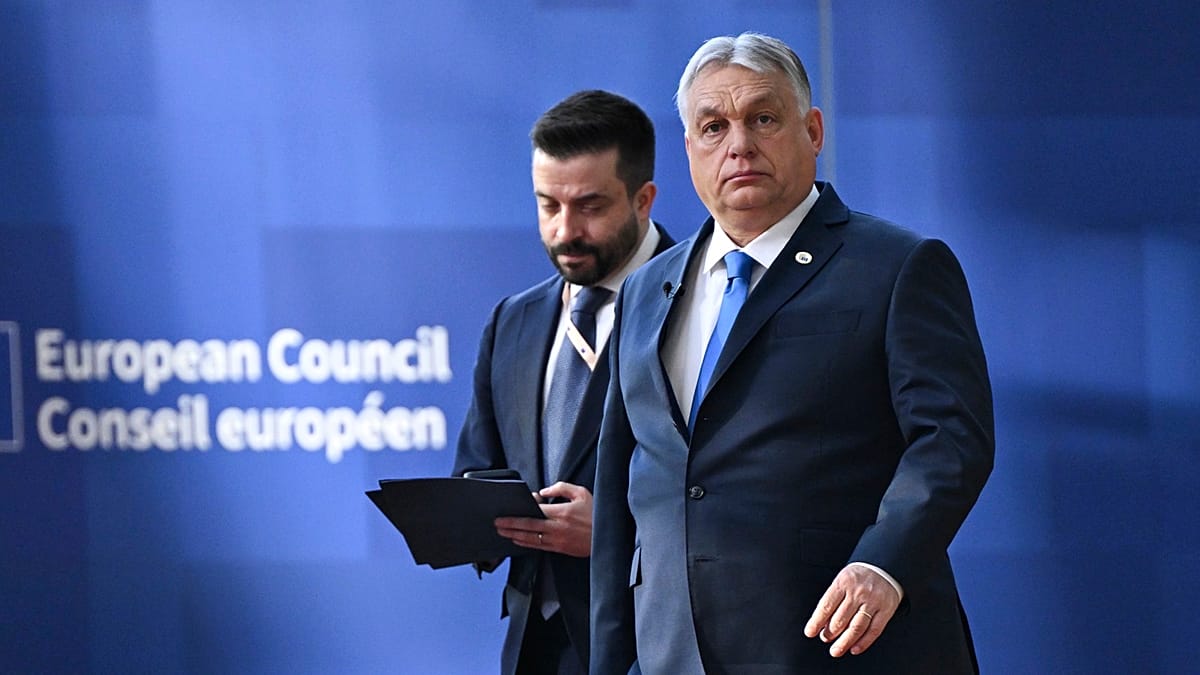 'Nobody can blackmail us': Leaders excoriate Orbán's veto
euronews.com
'Nobody can blackmail us': Leaders excoriate Orbán's veto
euronews.com
 EU Commission president Ursula von der Leyen following the European Union (EU) summit in Brussels Photograph: Anadolu/Getty Images
theguardian.com
EU Commission president Ursula von der Leyen following the European Union (EU) summit in Brussels Photograph: Anadolu/Getty Images
theguardian.com
European Union leaders have erupted at Viktor Orbán after Hungary vetoed a €90bn EU loan package for Ukraine, with the bloc’s top officials now openly discussing workarounds and rule changes. Euronews reports European Council president António Costa telling reporters that “nobody can blackmail” EU institutions, while Commission president Ursula von der Leyen said the money would be delivered “one way or the other.”
The immediate dispute is about Ukraine financing, but the mechanics are about how the EU makes decisions when unanimity is required. A veto is not simply disagreement; it is a tradable asset. The holder can demand side payments, exemptions, or unrelated concessions because the cost of delay is borne by everyone else—especially when the package is framed as urgent wartime support. Euronews describes a December deal in which Hungary, Slovakia and the Czech Republic agreed to the loan after receiving financial exemptions; von der Leyen argued that the condition “has been fulfilled” and that the loan remains blocked because “one leader is not honouring his word.”
Once a veto becomes a bargaining chip, the response tends to be procedural improvisation. Leaders at the summit floated changing voting rules “if necessary,” according to Euronews, with Germany’s chancellor Friedrich Merz calling Orbán’s move an “act of serious disloyalty.” France’s Emmanuel Macron warned against “instrumentalising” energy-security concerns, a pointed reference to Orbán’s claim that Ukraine sabotaged the Druzhba pipeline to trigger an energy crisis ahead of Hungary’s April election.
The Commission has already moved in that direction. Euronews reports Brussels announcing that Ukraine had allowed an external inspection and that the EU would provide funding to fix the pipeline—steps aimed at meeting Hungarian and Slovak demands. Costa argued the condition was impossible for the EU to guarantee because “only Russia” can decide whether it attacks the pipeline again, noting it has been hit more than 20 times since 2022.
This is how institutional credibility erodes in practice. If unanimity is enforced strictly, repeated vetoes invite ever-higher demands. If unanimity is bypassed through ad hoc mechanisms, the treaty framework becomes a suggestion rather than a rule, and the incentive to block grows because the cost is shifted into political and legal grey zones.
The timing is awkward. Europe is simultaneously absorbing an energy shock from the Iran conflict and watching inflation expectations jump as shipping risk and fuel costs rise. In that environment, a €90bn borrowing package is not just a foreign-policy statement; it is a financing commitment that competes with domestic fiscal pressures and higher debt-servicing costs.
At the Brussels summit, leaders denounced Orbán’s veto in public while promising to pay anyway. The loan is still blocked on paper.