
Netanyahu floats ground component in Iran war
Air campaign hits energy infrastructure as Qatar LNG capacity falls 17%, markets price years of repair into today’s fuel bills
Images
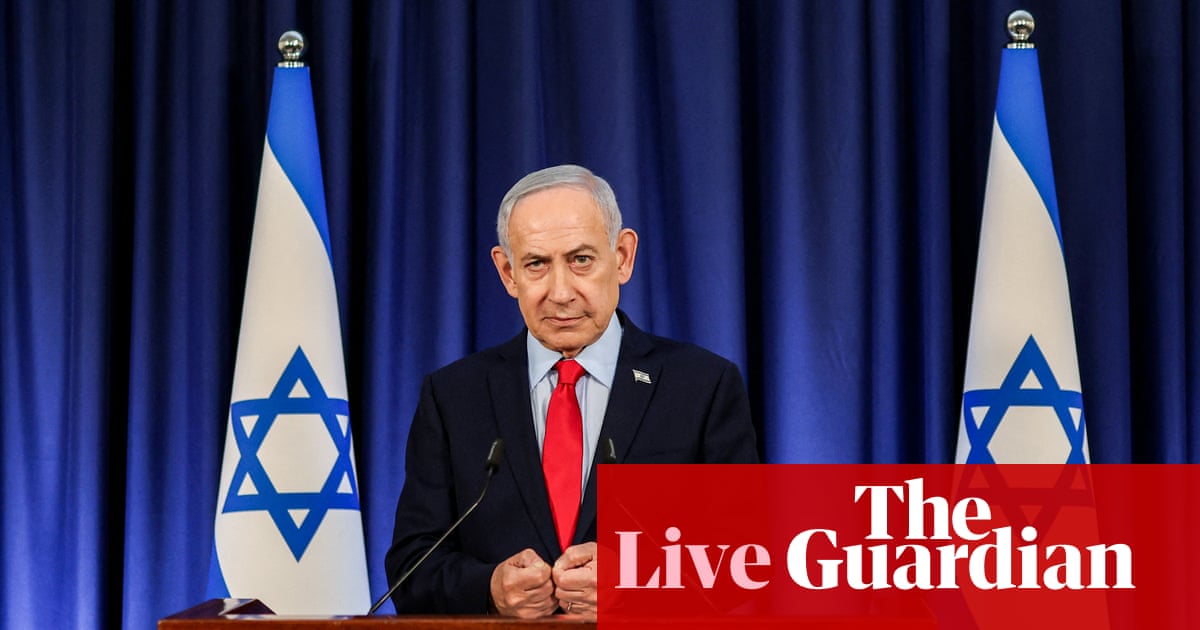 Middle East crisis live: Netanyahu suggests need for ‘ground component’ in Iran war
theguardian.com
Middle East crisis live: Netanyahu suggests need for ‘ground component’ in Iran war
theguardian.com
Israeli Prime Minister Benjamin Netanyahu has suggested a “ground component” may be necessary in the war with Iran, according to The Guardian’s live coverage of the conflict on Thursday. The remark comes as strikes on energy infrastructure in the Gulf have already pushed crude prices toward $110 a barrel and disrupted liquefied natural gas exports from Qatar.
Netanyahu’s comment is less a military plan than a statement about what air power cannot guarantee. Air campaigns can crater runways, collapse roofs and destroy above-ground equipment, but they struggle to prove that dispersed stockpiles, buried facilities and repairable industrial capacity have been neutralised. That is the logic behind the repeated emphasis on “degrading” rather than “ending” an adversary’s capabilities: it describes a contest over replacement rates and repair timelines, not a single decisive blow.
The energy system has become the most immediate scoreboard. QatarEnergy has estimated that Iranian strikes on Ras Laffan Industrial City have cut Qatar’s LNG export capacity by 17% and warned that repairing “extensive” damage could take up to five years, The Guardian reports. Even countries trying to reassure markets are forced to talk in percentages, alternative cargoes and contingency plans. South Korea—one of the world’s largest LNG importers—said it saw no immediate supply problem because only about 14% of its LNG imports come from Qatar and alternative sources are available, but added it would “closely monitor” prices and supply.
That kind of statement is itself part of the transmission mechanism. Energy markets do not need a full blockade to impose costs; they need enough uncertainty to tighten credit terms, widen insurance premiums and push buyers into precautionary bidding. The Strait of Hormuz sits behind much of that uncertainty. When shipping lanes are threatened and export terminals are hit, the price signal is driven by the possibility of prolonged disruption and the difficulty of rerouting physical molecules on short notice.
For Europe, the effect is familiar: war-risk premia show up as higher gas and power prices long before any formal rationing. For Washington, the political constraint is also familiar: avoiding a large ground commitment while accepting an escalation ladder in which energy infrastructure becomes a legitimate target set. For Israel, the pressure is operational: if strikes do not produce verifiable results, the remaining options are either sustained bombardment or a riskier attempt to control territory, sites or supply chains directly.
Netanyahu’s phrase—“ground component”—lands in a week when the war has already moved from military targets to the industrial systems that keep economies running. Qatar’s LNG hub is still damaged, and the repair timeline is being measured in years.