
FCC approves Nexstar purchase of Tegna
Waiver lifts US broadcast ownership cap to reach at least 60% of households, local news consolidation arrives through a rule meant to prevent it
Images
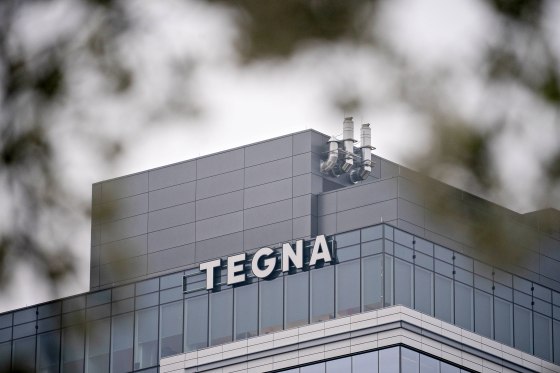 Byron Allen Is Said To Make $8.5 Billion Offer For Tegna
nbcnews.com
Byron Allen Is Said To Make $8.5 Billion Offer For Tegna
nbcnews.com
The US Federal Communications Commission has approved Nexstar Media Group’s $6.2 billion acquisition of Tegna, a deal that would create the largest owner of “local” television stations in the country. According to NBC News, the FCC waived its long-standing rule limiting a single broadcaster to stations reaching more than 39% of US households, allowing the combined company to reach at least 60%. The approval came as a coalition of attorneys general from eight states filed suit seeking to block the merger on antitrust grounds.
On paper, the argument for consolidation is survival: local broadcasters face shrinking audiences, a migration of advertising to platforms, and higher production costs. Nexstar’s CEO Perry Sook framed the tie-up as “essential to sustaining strong local journalism,” while FCC chairman Brendan Carr said the waiver would promote “competition, localism, and diversity,” NBC News reports. But the mechanics of a national station owner push in the opposite direction. When one company controls hundreds of outlets, “local” becomes a distribution label rather than an editorial model: scripts can be shared, formats standardised, and newsroom decisions optimised for scale. The savings are real and concentrated—fewer producers, fewer editors, fewer independent desks—while the cost is diffuse: a slow flattening of regional news ecosystems that is hard to measure until it is gone.
The market incentives also tilt toward national advertising and political spend. A larger footprint makes it easier to sell bundled campaigns across dozens of markets, which is attractive to political advertisers who value reach, predictable placement, and centralised buying. That demand is concentrated and time-sensitive; the downside—less pluralism in local coverage—shows up as a long-run externality with no single injured party able to price it. The FCC’s process itself became part of the story: commissioner Anna M. Gomez, the lone Democrat currently serving, said the merger was approved “behind closed doors” without a full commission vote or transparency for consumers, according to NBC News. Carr said Nexstar accepted “concrete conditions,” including divestitures and “localism” and affordability steps, but did not publicly detail them.
Regulators rarely have to defend what does not happen: the investigative series that never gets funded, the city hall beat that turns into a shared segment, the competitor that never forms because the ad market is now sold in bulk. If the deal survives the states’ lawsuit, the US will have a single company with the scale to set norms for how “local TV news” is produced—and the leverage to negotiate nationally while presenting itself locally.
Nexstar currently operates 201 stations in 116 markets and Tegna operates 64 full-power stations, plus radio assets. After the FCC waiver, the combined network will be “local” in name across most of the country, and national in ownership everywhere it matters.