
US warns small airports may shut during DHS shutdown
TSA officers work without pay and resignations mount, aviation security becomes a single chokepoint in budget fights
Images
 newsweek.com
 Will Lebanon Survive an Operation to Remove Hezbollah?
newsweek.com
Will Lebanon Survive an Operation to Remove Hezbollah?
newsweek.com
 US Ground Troops to Iran War: The 5 Scenarios
newsweek.com
US Ground Troops to Iran War: The 5 Scenarios
newsweek.com
 NATO Scrambles Reconnaissance Plane After Russian Fighter Jet Violation
newsweek.com
NATO Scrambles Reconnaissance Plane After Russian Fighter Jet Violation
newsweek.com
 Pete Hegseth Tells Son US Soldiers in Iran ‘Died For You’
newsweek.com
Pete Hegseth Tells Son US Soldiers in Iran ‘Died For You’
newsweek.com
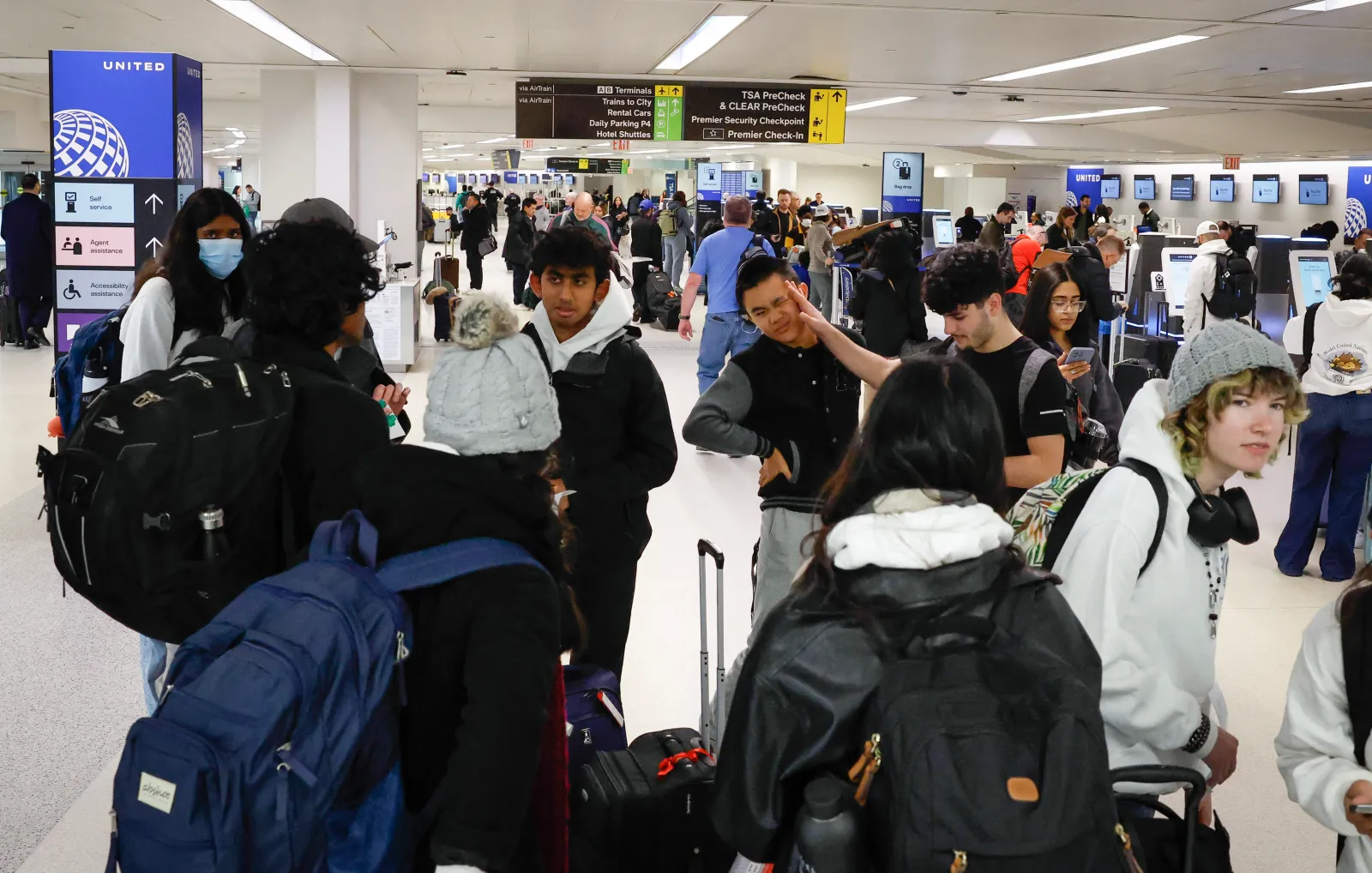
US officials are warning that some smaller airports could be forced to pause operations if the partial federal shutdown continues and Transportation Security Administration staff miss another paycheck.
Transportation Secretary Sean Duffy told CNBC that shutdown-driven staffing shortfalls could lead to closures at “small airports” as TSA officers go unpaid. Newsweek reports that about 50,000 TSA security officers have been working without pay during a shutdown now nearing five weeks, with the Department of Homeland Security attributing rising call-outs and resignations to financial strain.
The pressure point is payroll rather than equipment. DHS said more than 300 TSA officers have resigned since funding lapsed, and it cited spikes in unscheduled absences—more than 50% in Houston and more than 30% in New Orleans and Atlanta on March 15 and 16—leaving fewer screeners on duty as passenger volumes rise. When staffing drops below minimum levels, screening lanes close, lines grow, and the economic cost lands first on travellers and airlines.
Because TSA screening is a federal monopoly, the system has few built-in substitutes when Washington stops paying. Airports cannot easily hire alternative screeners, and airlines cannot route around checkpoints. That concentrates disruption into a single chokepoint: one budget fight in Congress can degrade operations across dozens of local facilities that have no authority over the dispute.
Newsweek notes that the Federal Aviation Administration classifies 74 airports as “small hubs”, each accounting for 0.05% to 0.25% of annual US passenger boardings, but still exceeding 10,000 boardings a year. Duffy did not name which airports would be at risk, but the category includes regional gateways such as Tucson, Palm Springs, Des Moines and Savannah, as well as airports in US territories.
The shutdown stems from a standoff over funding for the Department of Homeland Security and immigration enforcement policy. According to Newsweek, Democrats have pushed for changes after the deaths of two US citizens in Minneapolis, while the White House has circulated proposals including expanded body cameras, clearer identification requirements, limits on enforcement at “sensitive locations” such as schools and hospitals, and increased detention oversight.
Airline executives have urged Congress to end the shutdown, arguing that it is untenable for aviation security staff to work without pay. The last shutdown, in late 2025, lasted 43 days and forced the FAA to reduce traffic at major airports.
For now, the immediate constraint is the next missed paycheck. The TSA’s ability to keep airports open is being determined in congressional negotiations rather than at the checkpoint.