
Russia routes childless women to psychologists under new health guidance
Doctors told to probe fertility intentions during check-ups, demographic decline is treated as a counselling problem
Images
 newsweek.com
 Will Lebanon Survive an Operation to Remove Hezbollah?
newsweek.com
Will Lebanon Survive an Operation to Remove Hezbollah?
newsweek.com
 US Ground Troops to Iran War: The 5 Scenarios
newsweek.com
US Ground Troops to Iran War: The 5 Scenarios
newsweek.com
 Trump Makes Pearl Harbor Jab to Japan PM When Asked About Iran Attack
newsweek.com
Trump Makes Pearl Harbor Jab to Japan PM When Asked About Iran Attack
newsweek.com
 NATO Scrambles Reconnaissance Plane After Russian Fighter Jet Violation
newsweek.com
NATO Scrambles Reconnaissance Plane After Russian Fighter Jet Violation
newsweek.com
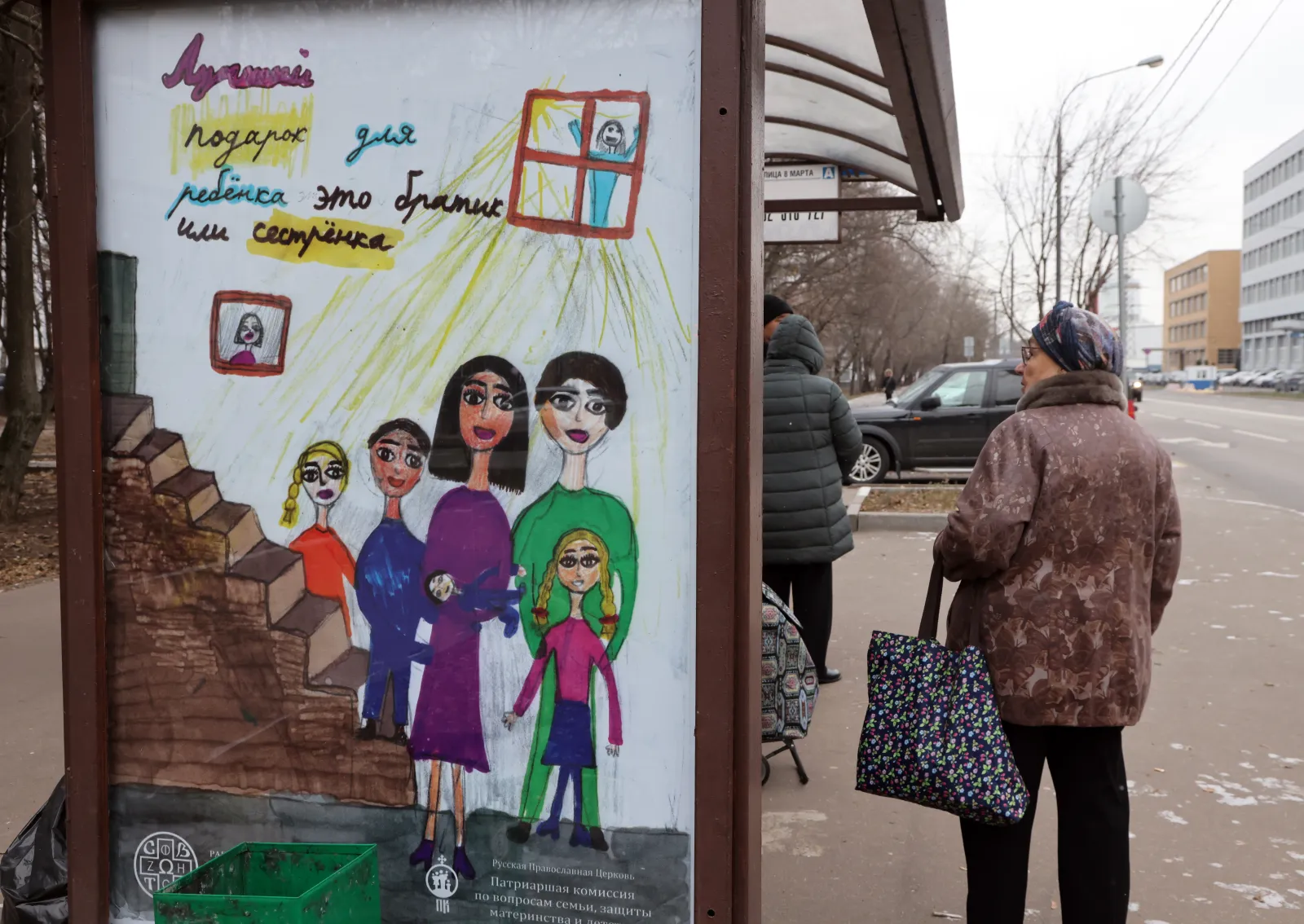
Russia’s health ministry has issued new guidance telling doctors to ask women how many children they want and to refer those who say “none” to a medical psychologist. According to Newsweek, the recommendations were approved in February but began circulating widely this week via state media, as Moscow searches for levers to raise a birth rate estimated at about 1.4 births per woman.
The mechanics are deliberately clinical. The guidance sits inside routine “reproductive health checks,” turning a preference into a screening result and a counselling pathway. The stated aim is to “form a positive attitude towards having children,” a phrase that treats reluctance as a correctable disposition rather than a rational response to costs, risk, and timing. In practice, the policy gives frontline clinicians a new box to tick and women a new reason to manage what they disclose.
The move fits a broader Russian pattern of trying to legislate demographics. Newsweek notes that abortion rules have been tightened in recent years and that lawmakers have moved to outlaw what officials describe as “child-free propaganda.” Each measure shifts pressure onto individuals while leaving the state’s own constraints—housing affordability, childcare availability, labour-market stability, and the long shadow of war—largely untouched. The invasion of Ukraine worsens the arithmetic in two directions at once: deaths and injuries reduce the cohort of potential fathers, while mobilisation risk and emigration raise the perceived downside of starting families.
There is also an administrative logic. A government can directly control clinics, licensing, and public messaging; it cannot directly compel stable pair-bonding, predictable incomes, or confidence in the future. When the policy toolset is mostly regulatory, the response to a falling birth rate tends to resemble compliance management. The likely second-order effect is not a baby boom but a rise in avoidance: fewer check-ups, more guarded answers, more informal routes for reproductive care, and a deeper distrust of medical confidentiality.
Russia is not alone in worrying about fertility. Newsweek points to pronatalist efforts elsewhere, including measures in the United States framed around IVF access and family formation. But Russia’s approach stands out for its coercive tone and its reliance on the health system as an enforcement channel.
The guideline does not create childcare places, reduce housing costs, or lower the private risk of raising a family in a country at war. It creates a new referral line in a medical form.