
Five Gallic skeletons found seated under Dijon school playground
Rare burial posture adds to city’s unusually dense Celtic record, European building schedules keep colliding with what lies beneath
Images
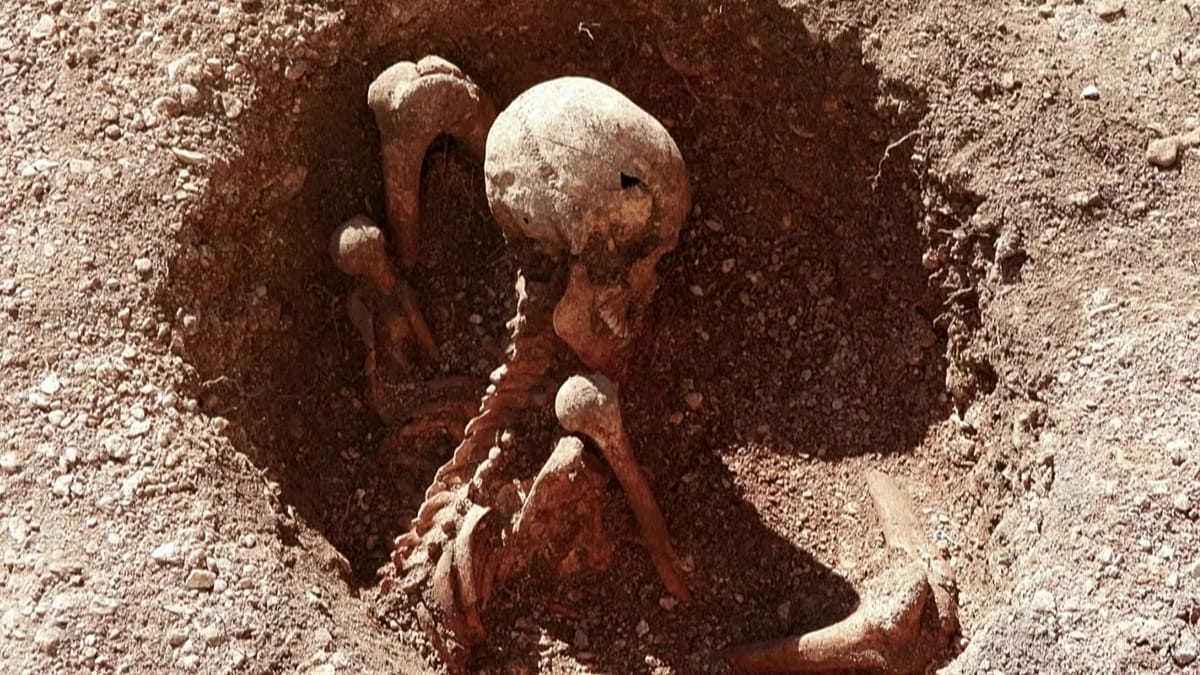 The Dijon five: 'Remarkable' Gallic burial site found at French school
euronews.com
The Dijon five: 'Remarkable' Gallic burial site found at French school
euronews.com
Five Gallic-era skeletons have been found buried in a seated position beneath the playground of Joséphine Baker primary school in central Dijon, according to Euronews. The discovery brings the number of known “seated burials” in the city to 20—an unusually high concentration given that fewer than 75 such burials have been documented worldwide.
Archaeologists from France’s National Institute for Preventive Archaeological Research (Inrap) have been excavating the site since January 2025 under France’s preventive archaeology rules, which require checks ahead of development work. The men were aged roughly 40 to 60 and were found in pits about a metre wide and around 40cm deep, positioned with backs against the eastern wall and facing west. Several show unhealed injuries, including cuts to arm bones and, in one case, two fatal blows to the skull.
The immediate story is macabre and specific, but the broader one is logistical. In dense European cities, “the ground is full” is not a metaphor; it is a constraint that can stop or reshape everyday projects. Preventive excavations are designed to prevent irreversible loss of evidence, but they also turn construction schedules into negotiations with stratigraphy. A schoolyard becomes a dig site; a timetable becomes a permit process; and a discovery with no grave goods and no clear explanation still has to be recorded, studied, and removed.
Dijon has repeatedly produced evidence of heavy Gallic occupation, including 13 skeletons found about 20 metres from this year’s burials, Euronews reports. That clustering is valuable for historians because much of what is known about the Gauls comes from Julius Caesar’s accounts, which were not written as neutral anthropology. But each new find also reinforces a practical reality for modern cities: archaeology is not an occasional interruption but a recurring cost of building.
For the school community, the facts are simpler. A playground that looks like any other has become a controlled excavation zone, and the city’s future construction plans now depend on what else is still in the soil.