
RVC study links popular poodle crossbreeds to more reported behaviour problems
PLOS One analysis draws on survey responses from more than 9000 UK dogs, designer-dog marketing outruns evidence on temperament
Images
 Cockapoos showed more undesirable behaviour than poodles and cocker spaniels, including for aggression. Photograph: Mint Images/Getty Images/Mint Images RF
theguardian.com
Cockapoos showed more undesirable behaviour than poodles and cocker spaniels, including for aggression. Photograph: Mint Images/Getty Images/Mint Images RF
theguardian.com
 Cavapoos scored differently to poodles on three of the scales, and worse than cavalier king charles spaniels on eight of the nine scales on which they differed. Photograph: Steve Clancy Photography/Getty Images
theguardian.com
Cavapoos scored differently to poodles on three of the scales, and worse than cavalier king charles spaniels on eight of the nine scales on which they differed. Photograph: Steve Clancy Photography/Getty Images
theguardian.com
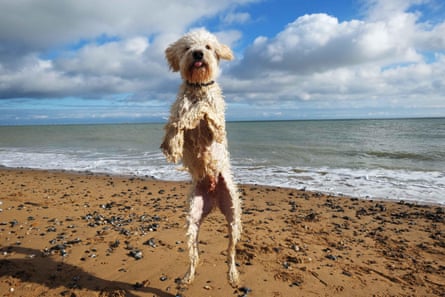 Labradoodles scored better than poodles, but worse than labradors on five of the scales. Photograph: Paul Grover/Alamy
theguardian.com
Labradoodles scored better than poodles, but worse than labradors on five of the scales. Photograph: Paul Grover/Alamy
theguardian.com
A study of nearly 9,400 dogs in the UK suggests popular “designer” crossbreeds—particularly poodle mixes such as cockapoos, cavapoos and labradoodles—show more owner-reported behavioural problems than the pure breeds they are derived from.
According to The Guardian, researchers at the Royal Veterinary College analysed survey data from 3,424 crossbreed and 5,978 purebred dogs, gathered through an online questionnaire. Owners answered questions about themselves, what they expected from their dog, how they trained it, and 73 behavioural items that were converted into 12 behavioural scales.
On several measures, cockapoos scored worse than both parent breeds. Compared with poodles, cockapoos showed more undesirable behaviour on six scales, including owner-directed aggression, stranger-directed aggression, dog rivalry, non-social fear (such as traffic or novel objects), separation-related problems and excitability. Compared with cocker spaniels, the same pattern appeared, with additional differences including dog-directed aggression and measures related to fear and trainability. Cavapoos differed from poodles on three scales and, where they differed from cavalier king charles spaniels, they scored worse on eight of nine scales.
Labradoodles were more mixed: they scored better than poodles on the scales where they differed, but worse than labrador retrievers on all five scales where differences were found.
The paper’s results are easy to misread as a genetic verdict on crossbreeding. Specialists quoted by The Guardian caution against that, pointing out that behaviour is shaped by environment as well as genetics, and that a survey study cannot separate the two. This is a dataset built on owner reporting, not standardised behavioural testing, and the sample is self-selected: people who choose a fashionable crossbreed may systematically differ in experience, expectations, tolerance for certain behaviours, or willingness to label something a “problem.” Training choices can also follow marketing narratives—buyers expecting a “good with children” or “easy” dog may invest less in early socialisation, or buy from breeders who prioritise appearance and demand over temperament.
Still, the study lands on a practical point: the market for poodle crosses has grown on claims of hypoallergenicity and robust health, while the evidence base is patchy and the breeding standards vary widely. When a dog turns out to be anxious, reactive or difficult to manage, the costs show up later as trainer fees, veterinary consultations, and sometimes rehoming—costs borne by owners and animal charities, not by the breeders who sold the promise.
The data do not show that crossbreeds are doomed. They do show that a cute portmanteau name is not a behavioural guarantee.