
Triple suicide bombing kills at least 25 in Maiduguri
Attacks hit market hospital gate and flyover in Borno capital, army victory claims struggle to translate into civilian safety
Images
 bnonews.com
 bnonews.com
 bnonews.com
 bnonews.com
 bnonews.com
 Nigerian soldiers repel an attack on a base and kill 80 Islamic militants, army says
independent.co.uk
Nigerian soldiers repel an attack on a base and kill 80 Islamic militants, army says
independent.co.uk
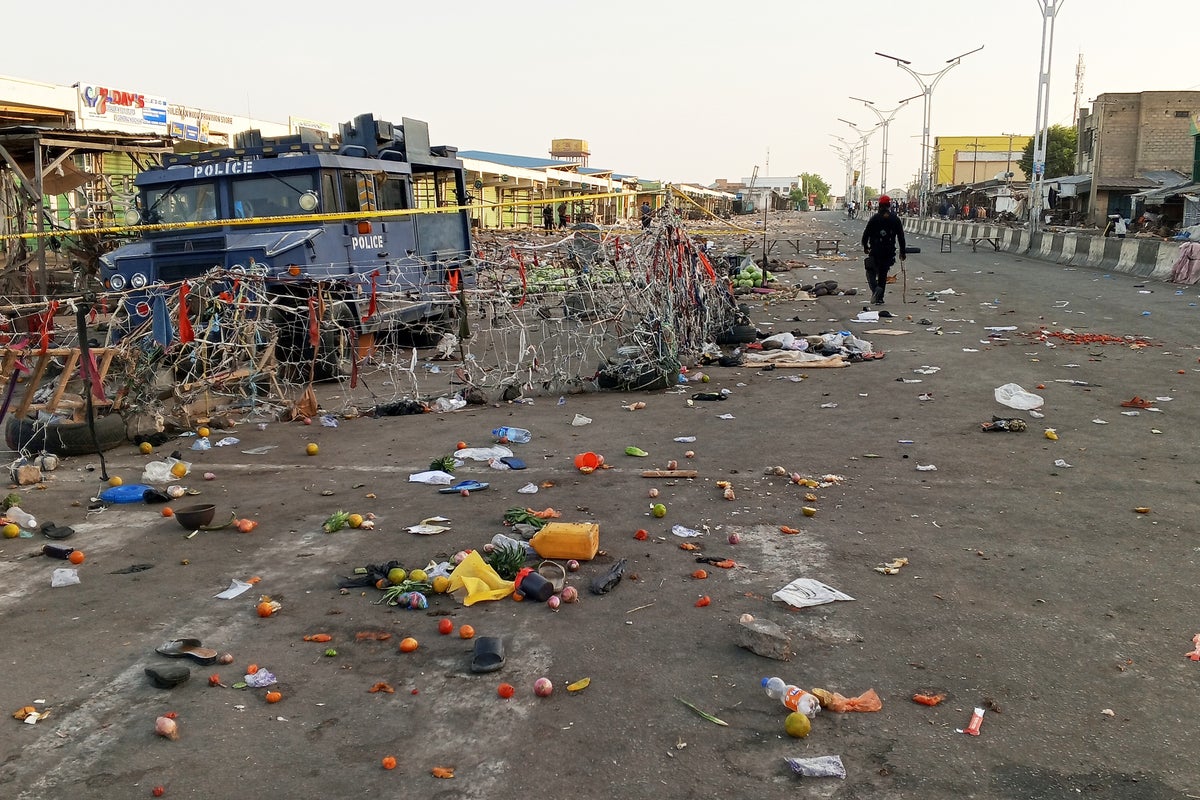
A triple suicide bombing hit Maiduguri on Monday evening, killing at least 25 people and injuring more than 100, according to Nigerian officials cited by BNO News. The blasts struck three separate sites in the Borno state capital: the Monday Market, the gate of the University of Maiduguri Teaching Hospital, and the Post Office flyover.
The attack landed in the middle of a familiar pattern in northeast Nigeria: official claims of battlefield success followed by civilian casualties in the rear. On Wednesday, the Nigerian army said it repelled an assault on a military base in Mallam Fatori, near the Niger border, killing at least 80 suspected Boko Haram or Islamic State West Africa Province (ISWAP) fighters, according to the Independent, which carried an Associated Press report. The army said the attackers used multiple armed drones and that troops had anticipated the assault, supported by air power; the AP noted the claims could not be independently verified.
The mismatch between “territory held” and “people safe” has hardened over a decade and a half of insurgency. Maiduguri is the region’s largest city and the political and logistical hub of the counterinsurgency; it has also been repeatedly targeted by bombings. The United Nations estimates more than 40,000 people have been killed since Boko Haram’s insurgency began in 2009, the AP report notes. Yet the operational incentives for the security apparatus point toward a different metric: enemy body counts, seized weapons lists, and press statements that justify budgets and external assistance.
After Monday’s bombings, police said “normalcy had been restored” and that security had been increased across Maiduguri and nearby areas, according to BNO News. That language is not cosmetic. It signals to Abuja that the situation is “under control,” to donors and partners that the state remains functional, and to residents that commerce should resume—while the underlying problem is that attackers can still reach a market, a hospital gate, and a major overpass in a single evening.
No group immediately claimed responsibility for the blasts, BNO News reported, though suspicion fell on Boko Haram. The absence of a claim does not change the economics of the campaign: it is cheaper to send bombers into a crowded city than to hold ground against air-supported forces at a border outpost.
The three blast sites are ordinary places—where people shop, seek treatment, and pass through traffic—now added to a map of security incidents that grows faster than official victory communiqués.