
CBS News 24/7 staff stage 24-hour walkout
WGA East says talks stalled after contract expiry, streaming news economics push costs toward wire and automation
Images
 LightShed partner Rich Greenfield analyzes the Paramount Skydance-Warner Bros deal on The Claman Countdown.
foxbusiness.com
LightShed partner Rich Greenfield analyzes the Paramount Skydance-Warner Bros deal on The Claman Countdown.
foxbusiness.com
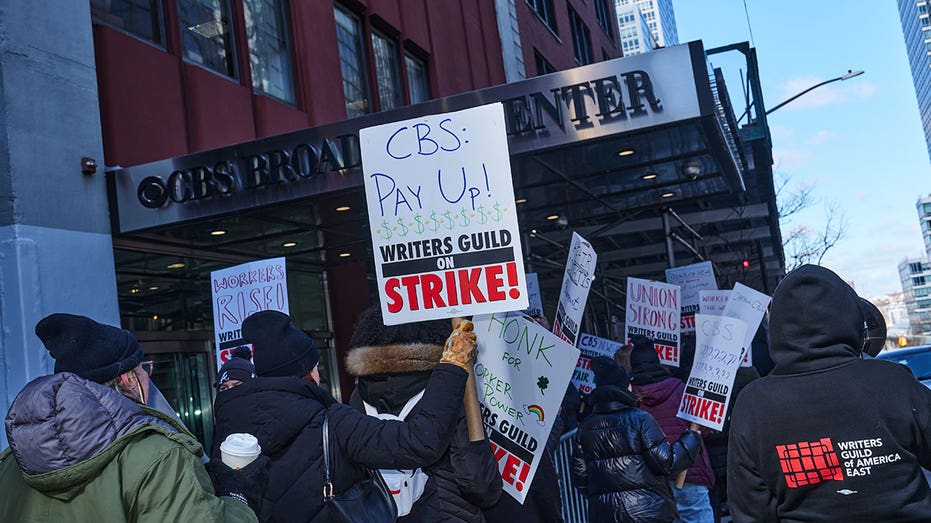 Workers and supporters picket
foxbusiness.com
Workers and supporters picket
foxbusiness.com
 Writers Guild of America East
foxbusiness.com
Writers Guild of America East
foxbusiness.com
 foxbusiness.com
CBS News’ 24/7 streaming staff walked off the job Tuesday for 24 hours after contract talks with management failed, according to Fox Business. The unit—about 60 employees represented by the Writers Guild of America East—says its contract expired on March 9 and that the company’s latest proposal would leave them worse off than the previous deal.
The dispute is small in headcount but unusually revealing about the economics of modern news. A linear TV network could once subsidise expensive reporting through bundled carriage fees and mass advertising; a free, always-on streaming channel has to compete with social platforms, wire copy, and cheap video from everywhere. When the product is “news” in the abstract, and the distribution is effectively infinite, the only lever left is cost: fewer people, less original reporting, more repackaging.
The union says it is trying to “protect livelihoods” during what it calls an existential period for broadcast news, citing layoffs, editorial interference and political pressure. Management says it is negotiating “in good faith.” Both statements can be true while the underlying constraint remains fixed: the revenue per viewer for a streaming news feed rarely matches the wage and staffing assumptions built for a 20th-century newsroom.
That gap tends to turn labour conflict into a technology roadmap. A strike that interrupts a 24/7 channel does not just encourage managers to shift work to other desks; it encourages them to design the operation so that fewer roles are indispensable next time. The easiest substitutes are centralisation and standardisation: more reliance on wire services, templated segments, remote production, and eventually automated clipping, scripting and translation. The more a newsroom is organised around repeatable formats rather than distinct reporters, the easier it is to treat staffing as a variable cost.
Fox Business links the walkout to uncertainty following corporate upheaval at Paramount, CBS’s parent. In that environment, unions bargaining for “work-life balance” and protections are negotiating not only with a newsroom manager but with a balance sheet that now prices news as a loss-leader or brand insurance. If news is kept at all, it is often to support a broader bundle—sports rights, entertainment subscriptions, or a corporate reputation—rather than because the reporting itself clears a profit-and-loss test.
The picket line outside CBS News offices in New York was temporary. The business model pressures that produced it are not.