
South Korean army suspends live-fire training after schoolgirl injured in Daegu
Investigation probes suspected stray bullet from range 1.4km away, safety barriers tested by rare civilian harm
Images
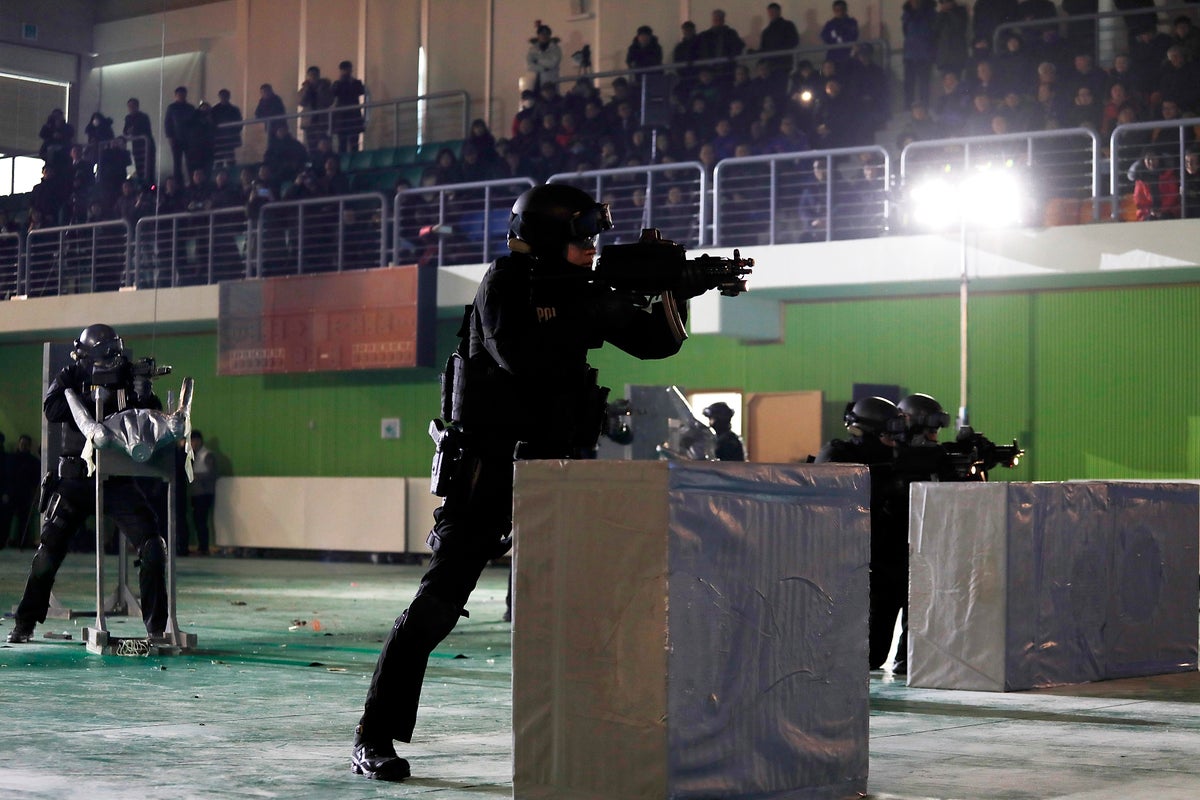 Girl injured by suspected stray bullet from South Korean army’s live fire drill
independent.co.uk
Girl injured by suspected stray bullet from South Korean army’s live fire drill
independent.co.uk
A schoolgirl in South Korea was injured at a playground in Daegu after being hit by a sharp object believed to be a stray bullet, in an incident that has halted live-fire training and reopened questions about military risk controls near civilian areas. The Independent reports the child was struck below the neck on Monday afternoon while an army unit was conducting rifle training at a range about 1.4km away; she was treated in hospital and later returned home.
The South Korean military has launched an investigation into whether the injury was caused by a round fired during the exercise. An army official told local media the service would conduct safety inspections at firing ranges and assess risks before resuming training, while a defence ministry briefing cited by The Independent said individual firearms training had been suspended. The range, built in 1995, is reported to have protective barriers designed to prevent rounds leaving the facility.
The episode lands in a country where readiness drills are routine and politically charged, justified by the permanent risk of escalation with North Korea and reinforced by large allied exercises. Yet the costs of that posture are not borne evenly. When training is conducted near populated areas, the residual risk is externalised onto whoever lives downrange, and the public only learns the parameters of that risk after an injury forces a pause.
The Independent notes that the military faced embarrassment last year after fighter jets accidentally dropped bombs on a residential area in Pocheon, injuring about 30 people. That incident led to a suspension of live-fire drills and highlighted how rare but high-impact accidents can cut through assurances that safety systems are adequate. In the Daegu case, the key question is not only whether the object was a bullet, but whether a training regime can credibly quantify and contain low-probability failures when exercises are frequent and dispersed across the country.
South Korea’s defence establishment is under pressure to demonstrate competence in public while sustaining an operational tempo that assumes mistakes will be exceptional. When an accident happens, the institutional response tends to be procedural—investigation, inspections, temporary suspension—because the underlying mission does not change. The political test is whether the next resumption of training comes with measurable changes to range placement, backstop design, and civilian buffer zones, or simply with a new assurance that barriers exist.
The girl was injured in a playground 1.4km from a firing range built three decades ago. Training has been paused while the army checks whether the range’s maximum distance could reach her location.