
Washington state gasoline tops five dollars a gallon
Prices run far above US average as taxes and fuel rules fragment supply, drivers pay for policy-designed scarcity
Images
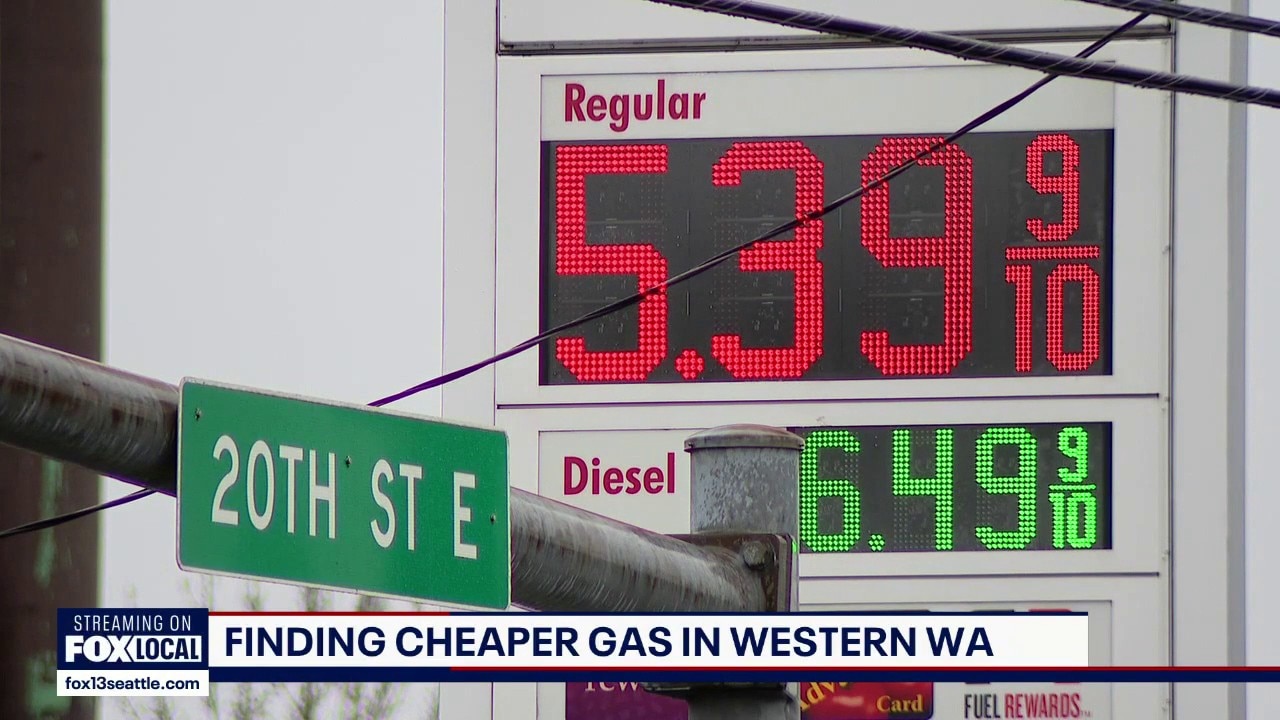 The search for the cheapest gas in western Washington
fox13seattle.com
The search for the cheapest gas in western Washington
fox13seattle.com
Washington state motorists are paying about $5 a gallon for regular gasoline—roughly $1.20 above the US average of $3.80—according to AAA figures cited by Fox 13 Seattle. The gap opened quickly: the state average is up about 80 cents in a month, even as many other regions have seen flatter moves.
The spread is not a mystery of “greedy stations” so much as a stack of constraints that vary by jurisdiction. Washington layers relatively high fuel taxes and climate-linked charges on top of the federal baseline, and it also sits inside a West Coast fuel ecosystem that is unusually sensitive to refinery outages. Much of the region relies on a limited set of refineries configured for specific gasoline blends, and those blends are not always interchangeable with supplies from the Gulf Coast or Midwest. When a state mandates tighter specifications—often for emissions reasons—it narrows the pool of fungible barrels that can be shipped in on short notice.
Logistics makes the problem worse. The Pacific Northwest is not plugged into the same dense pipeline network that moves gasoline cheaply across large parts of the US. If supply has to arrive by ship, rail, or truck, the marginal gallon carries higher transport, storage, and working-capital costs—and it arrives slower. That delay matters because retail prices are set at the margin: when inventories are thin, the station price is effectively an auction for the next delivery slot.
The result is that “the market price” becomes an administered product: a number produced by taxes, blend rules, permitting, and limited redundancy in refining and distribution. Price signals still work—drivers hunt for cheaper stations, as Fox 13 reports—but the signal increasingly reflects policy-induced scarcity rather than a clean comparison of crude costs and competition.
In western Washington, some drivers are now detouring to find pumps still in the $4 range. The state’s average remains near $5, and the cheapest gallon is often the one that fits a particular set of rules and can physically reach the forecourt.