
UK economy stalls in January
Oil shock from Iran war hits as growth was already flat, bond markets price inflation risk while households take the first cut
Images
 UK economy flatlined unexpectedly ahead of Iran war in blow to Rachel Reeves
standard.co.uk
UK economy flatlined unexpectedly ahead of Iran war in blow to Rachel Reeves
standard.co.uk
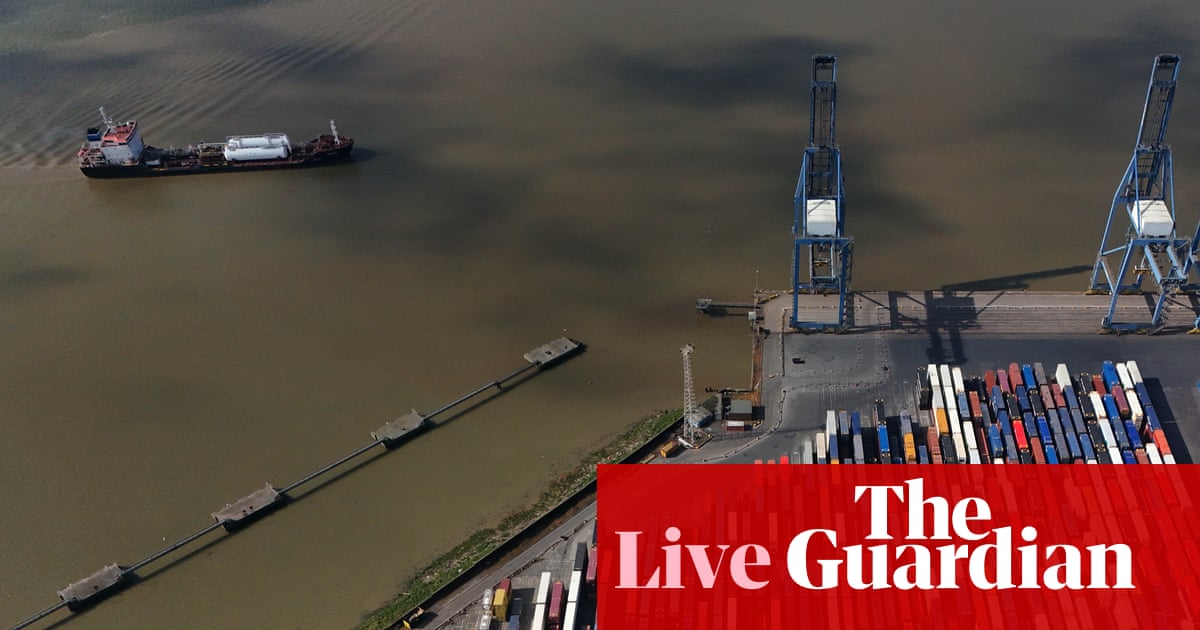 Oil price shock likely to ‘push the UK economy into recession’ after GDP stagnates in January – business live
theguardian.com
Oil price shock likely to ‘push the UK economy into recession’ after GDP stagnates in January – business live
theguardian.com
UK GDP was flat in January, and economists are now openly modelling an energy-driven recession as the Iran war pushes oil and gas costs higher. The Office for National Statistics reported zero monthly growth, while analysts cited in the Guardian warned that the price shock could tip an already weak economy into contraction.
The timing matters. A stagnant January print means the UK entered the Middle East escalation without momentum, while households and firms were still digesting tight monetary policy and fiscal consolidation. Tomasz Wieladek of T. Rowe Price told the Guardian that the shock is likely to hit consumer spending and lift inflation, with bond-market moves tightening financial conditions further. The Evening Standard, citing the same ONS data, notes that private housing new work fell 5.6% in January, the weakest since the onset of the Covid pandemic—an early sign of how quickly interest-rate sensitivity shows up in the real economy.
What governments can do in such a moment is mostly accounting and timing. Strategic reserves can smooth headline prices for a period, but they cannot create supply, and they do not change the insurance and freight premia that appear when shipping lanes are treated as contested. When risk is repriced, the cost lands through wholesale energy, transport, and credit spreads, and then through everything priced off them. The political instinct is to buy time—release stocks, delay tax rises, stretch subsidy schemes—because voters feel petrol and heating bills immediately, while the budget cost arrives later.
Central banks then inherit the contradiction. Wieladek argues the Bank of England faces a choice between leaning against inflation and cushioning a downturn, and suggests holding rates while emphasising the 2% target to reduce inflation risk premia. But a war-driven energy spike behaves differently from a domestic demand boom: higher rates do little to produce more oil, yet they can still suppress hiring and investment. The result is a policy mix where credibility is defended with tight money while the fiscal side is pressured to compensate households—effectively shifting the bill from consumers to taxpayers.
The UK is also structurally exposed. As the Evening Standard notes, investors see Britain as more vulnerable than some peers because of weak growth, stretched public finances, and reliance on imported gas. That combination turns external shocks into domestic political events, with limited room to absorb them without either higher borrowing costs or visible cuts elsewhere.
The ONS’s January figure was exactly zero. The war-driven price surge arrived after the economy had already stopped growing.