
US KC-135 refuelling aircraft crashes in Iraq
CENTCOM says incident occurred during Operation Epic Fury in friendly airspace, tanker loss exposes how air campaigns run on scarce logistics
Images
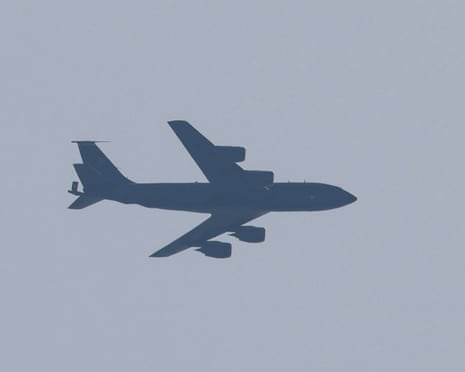 A KC-135 refueling aircraft went down in western Iraq, officials said. Photograph: Jack Guez/AFP/Getty Images
theguardian.com
A KC-135 refueling aircraft went down in western Iraq, officials said. Photograph: Jack Guez/AFP/Getty Images
theguardian.com
A US Air Force KC-135 refuelling aircraft crashed in western Iraq on Thursday during what US Central Command called Operation Epic Fury, with rescue efforts under way, according to Reuters. CENTCOM said the incident involved another aircraft that landed safely, and that it was not caused by hostile or friendly fire. The crash comes as Washington has surged aircraft into the Middle East for operations connected to the US-Israeli war with Iran.
In a campaign built around long-range sorties, the tankers are not a support function so much as the enabling constraint. A KC-135 is the airborne plumbing that turns a fighter’s “combat radius” into something commanders can plan around; remove one aircraft and the effect is not just one tail number missing from a spreadsheet, but fewer refuelling brackets, tighter timing windows, and more aircraft forced to loiter or divert. That in turn changes how many strike aircraft can be launched per day, how far they can range, and how much margin exists when weather, maintenance, or air-traffic deconfliction goes wrong.
The public messaging is already shaped by that reality. CENTCOM’s emphasis on “friendly airspace” and “not hostile fire” is aimed at keeping the loss in the category of accident rather than escalation, at a moment when Iran-linked attacks and air-defence frictions are being priced into everything from oil to shipping insurance. But the operational consequences are paid regardless of the label: replacement tankers must be repositioned, crews rotated, and maintenance intervals pulled forward as remaining aircraft fly harder.
Those costs do not stay inside the Pentagon. More tanker hours mean more fuel burn, more spare parts, and faster wear on an ageing fleet that is already in the middle of a generational transition. The downstream bill shows up in supplementary funding requests, in higher operating tempo for airbases and contractors, and in the opportunity cost of assets tied to one theatre rather than training or deterrence elsewhere.
The crash also illustrates a quieter feature of modern expeditionary war: logistics becomes the most targetable and least replaceable point of failure even when nobody is shooting. A single mishap can force planners to trade off tempo against safety, or to concentrate scarce refuelling capacity into fewer, more predictable patterns—exactly the kind of regularity that makes adversaries’ planning easier.
CENTCOM has not said when the crew will be recovered or the aircraft removed from the crash site. For now, one of the most valuable pieces of equipment in the air campaign is a burning wreck in western Iraq.