
NASA targets April 1 for Artemis II launch
SLS helium-flow repair and earlier hydrogen leaks reset the schedule, moon return timeline depends on how often the same problems recur
Images
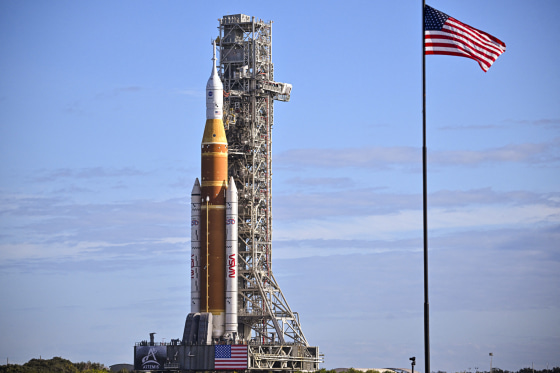 NASA's Artemis II Space Launch System rocket and Orion spacecraft
nbcnews.com
NASA's Artemis II Space Launch System rocket and Orion spacecraft
nbcnews.com
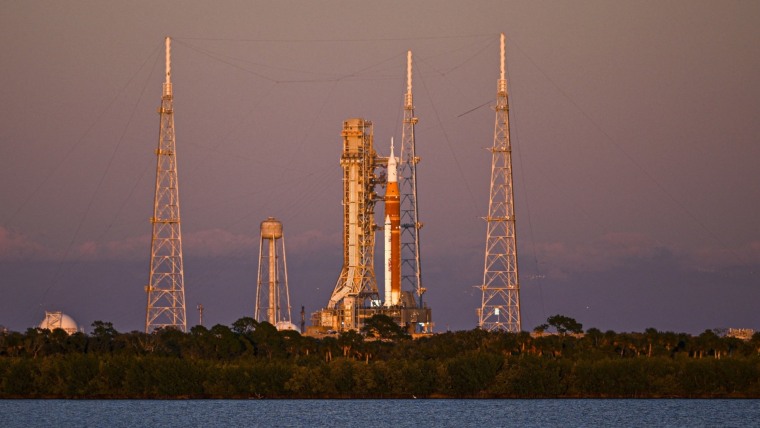 nbcnews.com
NASA has cleared its Artemis II moon mission for a launch attempt as early as April 1 after completing another round of repairs to the Space Launch System rocket. The 98-metre vehicle is due to roll back to the launch pad next week at Kennedy Space Center, carrying four astronauts on a 10-day lunar flyby—the first crewed trip toward the moon in more than 50 years, according to NBC News.
The immediate cause of the latest delay was not a dramatic failure but a string of small, schedule-killing issues that only show up when hardware is integrated and fueled. NASA’s wet dress rehearsal on Feb. 19 successfully loaded the rocket with more than 700,000 gallons of cryogenic propellant, NBC reports, but engineers later found a blockage in helium flow to part of the upper stage. The agency rolled the stack back to the Vehicle Assembly Building on Feb. 25, replaced a seal linked to the blockage, installed fresh batteries on the rocket and Orion spacecraft, and ran additional system tests.
This follows earlier hydrogen leak problems that disrupted February launch opportunities. The pattern matters because SLS is not a mass-produced product that improves by shipping hundreds of units; it is a bespoke system where each launch campaign becomes a high-stakes integration exercise. When the schedule slips, the cost is not only calendar time: NASA has a narrow early-April window before it must stand down until late April or early May, compressing decision-making around weather, range availability, and readiness.
Artemis II is also moving under a shifting program map. NBC notes that NASA’s new administrator, Jared Isaacman, recently announced an overhaul intended to reduce long gaps between missions, including adding an extra Earth-orbit practice flight next year and targeting one or two lunar landings in 2028. That pushes contractors to accelerate work on lunar landers and complex refuelling steps in Earth orbit—tasks that remain technically unresolved, as NASA’s inspector general has repeatedly warned in audits.
The contrast inside the Artemis architecture is increasingly visible. NASA’s government-run heavy-lift rocket and capsule must satisfy a process-heavy certification regime, while commercial partners are being asked to iterate quickly on landers and orbital refuelling under fixed milestones. The interface between the two is where delays accumulate: a late rocket forces downstream mission replanning, while an immature lander forces NASA to reshuffle mission numbering.
For now, the near-term milestone is simpler: NASA has replaced a seal, refreshed batteries, and booked a rollout date. The April 1 target depends on whether the same vehicle behaves the same way the next time it is filled with supercooled propellant.