
Ships struck near Strait of Hormuz
Oil jumps above $100 as IEA orders record reserve release, higher insurance and port security bills spread the cost beyond the Gulf
Images
 Middle East crisis live: Iran steps up campaign to disrupt energy markets as oil price spikes above $100 a barrel
theguardian.com
Middle East crisis live: Iran steps up campaign to disrupt energy markets as oil price spikes above $100 a barrel
theguardian.com
 newsweek.com
 US School Strike Is Iran’s Most Powerful Weapon
newsweek.com
US School Strike Is Iran’s Most Powerful Weapon
newsweek.com
 Donald Trump Gives Update on Oil Prices, Tapping Strategic Reserve
newsweek.com
Donald Trump Gives Update on Oil Prices, Tapping Strategic Reserve
newsweek.com
 Supreme Court Gets New ‘Emergency’ Petition from Trump Administration
newsweek.com
Supreme Court Gets New ‘Emergency’ Petition from Trump Administration
newsweek.com
 Pete Hegseth Spent Millions on Steak, Crab Legs and Lobster: Report
newsweek.com
Pete Hegseth Spent Millions on Steak, Crab Legs and Lobster: Report
newsweek.com
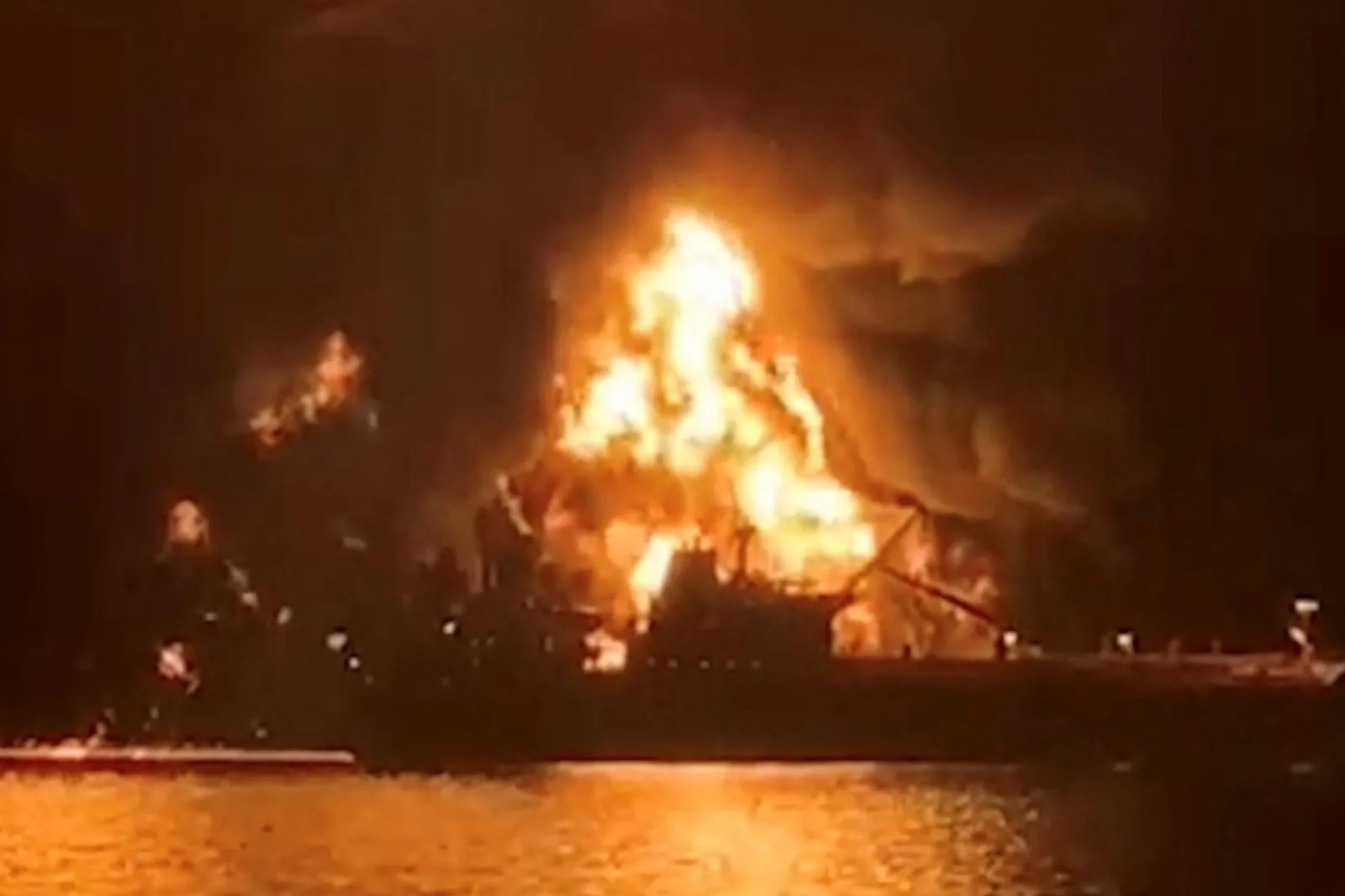
Three commercial vessels were struck in and around the Strait of Hormuz overnight, according to the UK Maritime Trade Operations office, after Iran vowed to disrupt oil exports from the Gulf. Two tankers near Iraq’s coast were hit by an “unknown projectile”, Iraqi authorities reported at least one death and fires onboard, and a separate container ship north of the UAE’s Jebel Ali port suffered damage, according to Newsweek’s summary of the UKMTO alerts.
The immediate market signal was crude: the Guardian’s live coverage reported Brent back above $100 a barrel, while the International Energy Agency ordered what it described as the largest coordinated release of government oil reserves in its history. The combination is familiar—physical risk in a narrow chokepoint meets an institutional promise to “stabilise” prices—but the mechanics of disruption now sit less in the volume of oil removed and more in the cost of moving what still flows. Shipping insurers reprice risk faster than producers can reroute; port operators tighten procedures; charter rates and bunker fuel costs rise; and every delay becomes a tax that travels through supply chains.
For North America, that tax arrives as imported inflation even when the barrels keep moving. US refiners and consumers are exposed not only to crude benchmarks but to the freight and insurance premia embedded in everything from plastics feedstock to fertiliser and containerised goods. The IEA release can cushion a short-term price spike, but it does not reduce the underlying exposure of global logistics to a handful of waterways, nor does it change the fact that private underwriters and shipowners ultimately decide what routes are worth taking.
The second-order effect is bureaucratic. When attacks shift from oil platforms to merchant shipping, the political response tends to expand beyond the military into domestic “security” regimes: tighter screening at ports, more surveillance of critical infrastructure, and new compliance costs for firms that handle energy and chemicals. These measures are rarely priced as part of the conflict, but they land as permanent operating expenses—paid by shippers, passed to consumers, and administered by agencies whose budgets grow with the threat narrative.
Iran’s campaign, as described by UKMTO incident reports and the Guardian’s account of strikes on energy facilities, is aimed at the friction points: ports, tank farms, and commercial routes that are difficult to defend comprehensively but easy to make expensive. The IEA’s emergency drawdown is a reminder that governments can sell stockpiles; they cannot sell insurance.
By Wednesday, Iraq had reportedly halted operations at its oil ports after attacks near tankers, while Oman moved vessels away from its main export terminal following drone strikes reported by Bloomberg and cited by the Guardian. The world’s most important shipping lane is still open, but it is being priced as if it might not stay that way.