
Pentagon puts Iran war cost above $11 billion in six days
Senators briefed on munitions replacement and operating spend, supplemental funding request forms before the final bill exists
Images
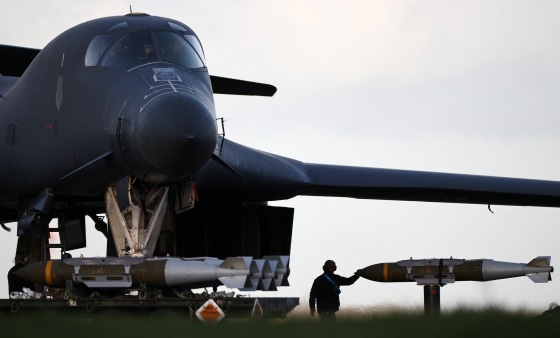 A soldier wearing earmuffs with one hand on a large missile is silhouetted against the sky.
nbcnews.com
A soldier wearing earmuffs with one hand on a large missile is silhouetted against the sky.
nbcnews.com
 nbcnews.com
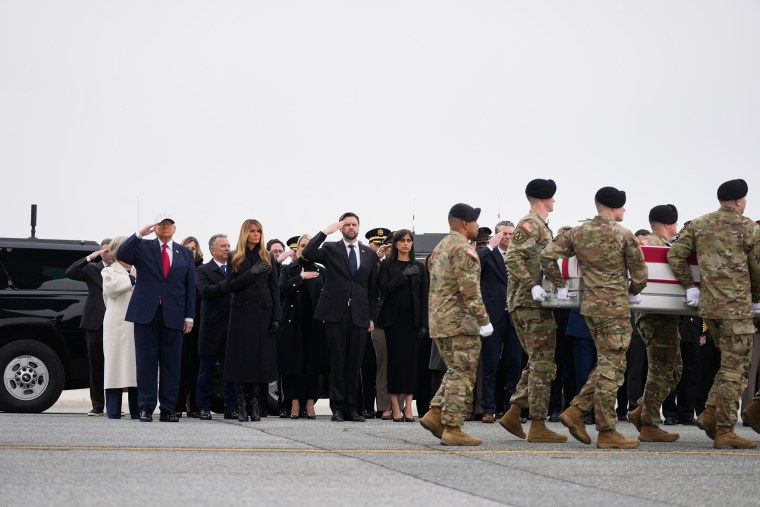 The dignified transfer of Army Reserve Sgt. Declan Coady, who was killed in a drone strike at a command center in Kuwait, at Dover Air Force Base, Del., last week.Mark Schiefelbein / AP
nbcnews.com
The dignified transfer of Army Reserve Sgt. Declan Coady, who was killed in a drone strike at a command center in Kuwait, at Dover Air Force Base, Del., last week.Mark Schiefelbein / AP
nbcnews.com
In the first six days of the Iran war the Pentagon estimated costs at more than $11.3 billion, according to NBC News, citing three sources familiar with a closed Senate briefing. Senator Chris Coons said the true figure was likely higher because early tallies did not yet capture every element of the operation, while a Pentagon spokesperson said the final cost would not be known until the mission ends.
The number puts a price tag on what is often described in slogans rather than line items: long-range strikes, air and missile defence, and the naval effort to keep shipping moving through the Strait of Hormuz. NBC reports the Trump administration is now weighing how much to ask Congress for in a supplemental funding bill, with appropriators expected to shape the request. Even before any new vote, the spending is already happening through existing accounts and replenishment orders for munitions and equipment.
The early estimate also reveals how quickly modern operations turn into procurement. Coons noted that if the calculation only covered replacement costs for munitions already used, the figure was “well beyond $10 billion,” implying that the bill is driven not just by personnel and fuel but by expended interceptors, precision weapons, and the logistics needed to sustain sorties and maritime patrols. In practice, the most immediate “battle damage” is to inventories that must be rebuilt, often on accelerated timelines.
The briefing comes as the war enters its second week. NBC reports hundreds of casualties across the region, including more than 1,200 deaths in Iran cited by the Iranian Red Crescent Society, deaths in Israel and the United Arab Emirates, and 570 in Lebanon cited by the Lebanese prime minister’s office. Seven US service members have been killed and 140 wounded, NBC reports.
President Donald Trump has offered shifting public signals on duration and objectives. NBC notes he said the war would end “very soon,” while also saying Defence Secretary Pete Hegseth’s description of the campaign as “the beginning” could be correct. Meanwhile, incidents around Hormuz have continued: NBC reports at least three ships have been attacked in the strait and that US Central Command said it had eliminated 16 Iranian minelayers and multiple naval vessels.
The fiscal mechanics are straightforward: the costs are spread across the federal tax base, while the political benefits of “doing something” in a crisis are concentrated in the executive branch and supportive lawmakers. The concrete output is equally straightforward: a figure in the billions after less than a week, and a supplemental bill being drafted before the accounting is complete.