
Container ship burns in Strait of Hormuz after suspected projectile strike
UKMTO reports crew evacuation and all accounted for, war-risk pricing moves faster than any formal blockade
Images
 Konteinerskip står i brann i Hormuzstredet
nrk.no
Konteinerskip står i brann i Hormuzstredet
nrk.no
 zerohedge.com
 zerohedge.com
A container ship caught fire in the Strait of Hormuz after being hit by a suspected projectile on Tuesday, prompting the crew to request assistance and begin evacuating, according to the UK Maritime Trade Operations (UKMTO) centre. The captain reported that everyone on board was safe and accounted for, while the extent of damage remained unclear. The incident adds to a growing list of attacks on commercial shipping since fighting escalated between Iran, the US and Israel.
For Europe, the point is not whether Hormuz is formally “closed” but how quickly uncertainty becomes a tax on distance. A single strike can push insurers to reprice war-risk cover, force shipowners to reroute, and tighten the availability of hull and cargo insurance—costs that then cascade into freight rates, inventory buffers, and ultimately consumer prices. That mechanism works even when traffic continues: ships can still transit while switching off transponders, sailing in convoys, or changing schedules, but each workaround has a price. The result is a market where the marginal tonne-kilometre becomes more expensive long before any government announces a blockade.
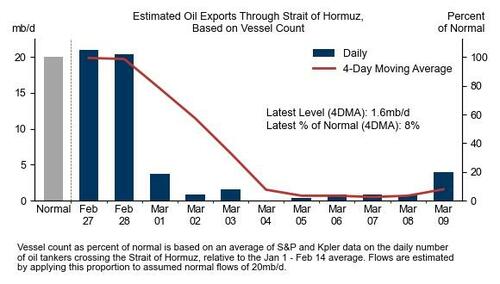
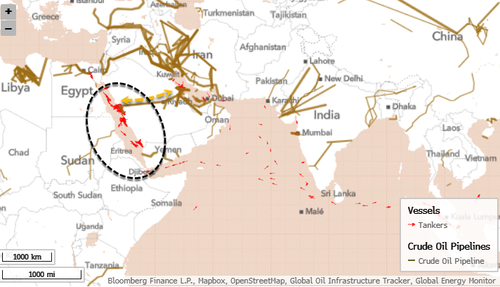
The same dynamic is visible in crude flows. Ship-tracking cited by Bloomberg and relayed via ZeroHedge suggests at least 25 tankers have diverted toward Saudi Arabia’s Red Sea export hub at Yanbu, while Saudi Aramco moves to maximise its east–west pipeline capacity of 7 million barrels per day. The UAE has leaned more heavily on Fujairah as an alternative outlet, with exports reportedly rising this month compared with recent averages. These workarounds are not free: they shift voyages, change loading windows, and concentrate risk in a smaller set of routes and terminals—exactly the kind of operational friction that underwriters translate into premiums.
Europe sits at the downstream end of this chain. The continent imports most of its oil and much of its gas, while the price-setting for shipping risk is concentrated in global insurance and reinsurance markets that respond to incident reports faster than governments can convene. When a ship burns in Hormuz, the first economic decision is not made in Brussels or Berlin but in a claims office and a broker’s inbox. The political debate then arrives later, packaged as “inflation” and “cost of living”, with the bill already embedded in freight invoices.
UKMTO said the crew of the stricken vessel requested assistance and began evacuating after the suspected projectile strike. By the time the ship’s damage is assessed, the cost of moving goods through Hormuz will already have been repriced.