
Airlines extend Middle East flight suspensions
Carriers price war risk into schedules months ahead, open-corridor rhetoric gives way to rerouting and repatriation flights
Images
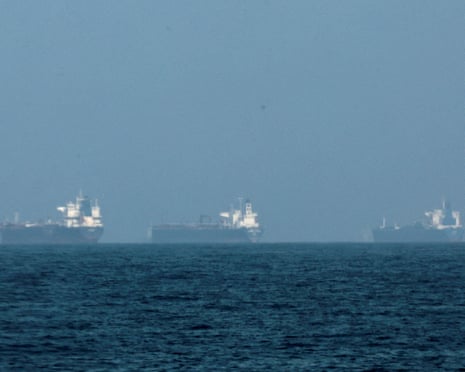 Tankers off the coast of Fujairah, UAE, amid the US-Israel conflict with Iran. Photograph: Amr Alfiky/Reuters
theguardian.com
Tankers off the coast of Fujairah, UAE, amid the US-Israel conflict with Iran. Photograph: Amr Alfiky/Reuters
theguardian.com
 How the Iran conflict could affect prices around the world – video explainer
theguardian.com
How the Iran conflict could affect prices around the world – video explainer
theguardian.com
British Airways has cancelled flights to Abu Dhabi until later this year and suspended services to Amman, Bahrain, Doha, Dubai and Tel Aviv until later this month, as airlines extend Middle East route cuts well beyond the first week of the US-Israel war with Iran. Air Canada has halted Toronto–Dubai flights through March 28 and Toronto–Tel Aviv through May 2, while Virgin Atlantic ended its seasonal Dubai service early and paused Riyadh flights for two weeks, according to Business Insider. Oman Air has cancelled a long list of routes through March 15 while adding extra flights from Muscat to alternative hubs.
The cancellations are not just a passenger inconvenience; they are a market verdict on what “open corridors” mean when the security provider cannot price or guarantee the risk. Dubai International Airport’s role as a connector between Europe, Asia and Africa turns a regional conflict into a global schedule problem, and airlines respond the only way they can: by shrinking exposure, rerouting and offering limited repatriation capacity. That behaviour mirrors what shipping has already done in the Strait of Hormuz, where operators change routes, reduce sailings and pay war-risk premiums rather than wait for political statements.
The Guardian reports that Saudi Aramco is warning of “catastrophic consequences” for oil markets if Hormuz remains blocked, after US strikes and Iranian threats drove tanker traffic down to single digits. Aramco says it can reroute about 70% of its usual crude exports via the east–west pipeline to the Red Sea port of Yanbu and draw on storage outside the Gulf, but it also concedes those workarounds are time-limited. The numbers underline the real constraint: not whether governments declare sea lanes open, but whether physical alternatives and inventories exist at scale.
Once airlines and energy exporters start treating the region as structurally unreliable, the costs travel quickly. Airlines lose aircraft utilisation and network connectivity; passengers and freight pay higher fares and longer routings; hubs built on frictionless transit lose volume. On the oil side, even partial rerouting shifts bottlenecks to pipelines and terminals, while the missing barrels are priced through by insurers, banks and commodity markets.
British Airways’ own guidance to customers—warning of scams and pointing to limited seats on repatriation flights from Oman—captures the new normal: ad hoc evacuation capacity replaces routine service, and the timetable is set by demand collapse and risk tolerance, not by diplomatic communiqués.
Aramco says it can push its east–west pipeline toward 7 million barrels a day “in the next couple of days.” Airlines are booking some Middle East flights again—starting in mid-April in one British Airways schedule view—but the route map now looks like a contingency plan rather than a network.