
Qatar warns Iran war risks global energy shock
Doha says missile attacks on Gulf infrastructure could trigger catastrophic spillovers, air-defence intercepts do not stop insurance pricing
Images
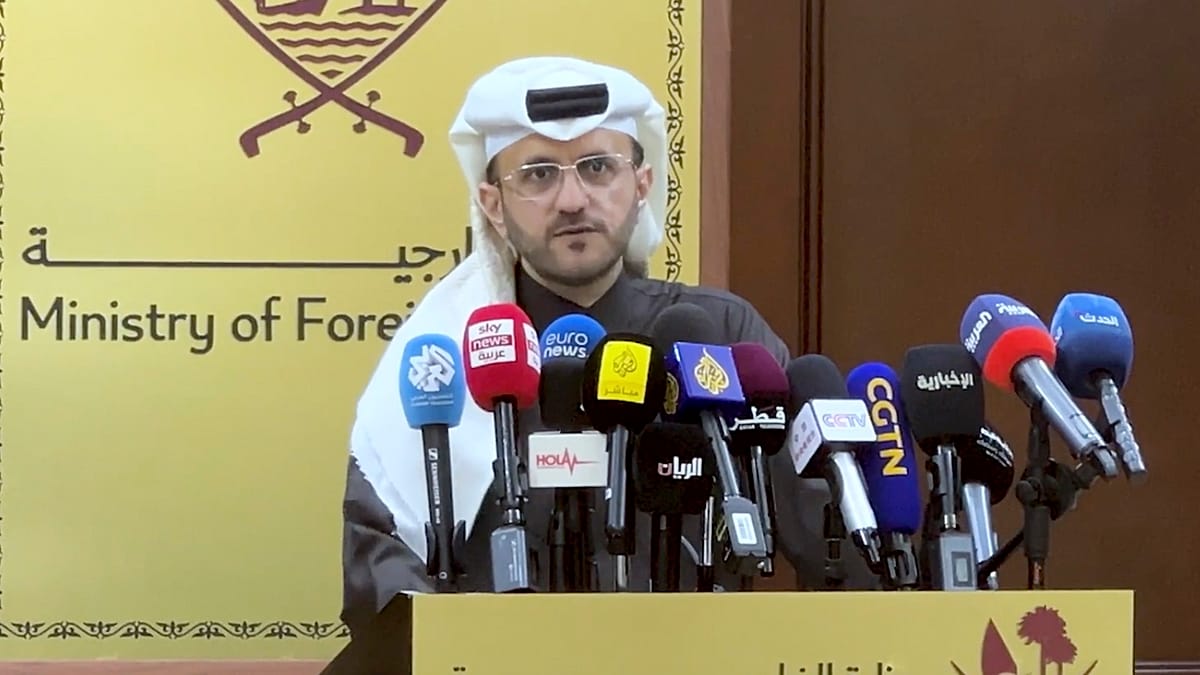 Qatar warns the world Iran war could yield 'catastrophic results'
euronews.com
Qatar warns the world Iran war could yield 'catastrophic results'
euronews.com
Qatar said it intercepted another missile over Doha on Tuesday, hours after Iran’s latest wave of strikes and just after a blunt warning from the Gulf state’s foreign ministry that attacks on energy and civilian infrastructure could trigger “catastrophic results” far beyond the region. According to Euronews, Doha cited Monday’s barrage of 17 ballistic missiles and six drones, and said its Patriot systems were operating “alongside our American friends and allies.”
The immediate military picture is narrow: intercepts, air-defence expenditures, and incremental damage to specific platforms and facilities. What changes faster is the commercial operating environment. Even without a formal closure of key sea lanes, the Gulf’s export system is priced as if it is one strike away from a sustained disruption: higher war-risk insurance, more conservative routing, longer voyages, and tighter credit terms for cargoes that used to move on routine schedules. Qatar’s warning is framed as humanitarian and diplomatic, but it is also a statement about the fragility of its business model: liquefied natural gas trains, desalination plants, ports and power grids are fixed assets that cannot be “diversified” away from geography.
That gap between military logic and trade logic is where the costs land. A missile intercepted over Doha still forces airlines to reroute, shippers to delay, and insurers to reprice; the economic penalty is paid repeatedly, not once. The Gulf Cooperation Council states, which host major US facilities, are simultaneously asked to be operational staging grounds and treated as neutral commercial hubs. Iran, for its part, has argued it is targeting US interests and has warned Gulf states that any regional support for Washington will be treated as hostile—a threat that, if acted on, turns host countries into co-belligerents in the eyes of markets regardless of their formal position.
The incentives created by this environment are uneven. Defence contractors and air-defence suppliers get steady demand; maritime insurers collect higher premiums; and energy traders profit from volatility. Import-dependent states, including much of Europe, pay the risk premium through higher fuel and freight costs, while Gulf states absorb the security spending needed to keep their export infrastructure credible. Qatar’s foreign ministry stressed ongoing coordination with European leaders and said the crisis reveals “the worth of the friendship and the partnership” with the EU—diplomacy as reassurance for capital.
Doha’s message was also a warning about escalation management. Once conflict moves “from negotiation rooms to battlefields,” as the Qatari spokesman put it, de-escalation requires not just ceasefires but a reversal of the commercial assumptions that set prices, credit and shipping schedules. Those assumptions harden quickly, because insurers and lenders change terms in hours while diplomats negotiate for weeks.
Minutes after Qatar’s briefing ended, air-raid alerts sounded again in the country, Euronews reported. The ministry’s spokesman said Qatar was “busy defending our country from Iranian missiles,” while the Gulf’s export economy continued to run on the same narrow strip of coastline that the missiles are now testing.