
European Commission backs small modular reactors
Brussels offers guarantee and faster approvals to pull private capital into nuclear build, first-of-a-kind risk still dwarfs public backing
Images
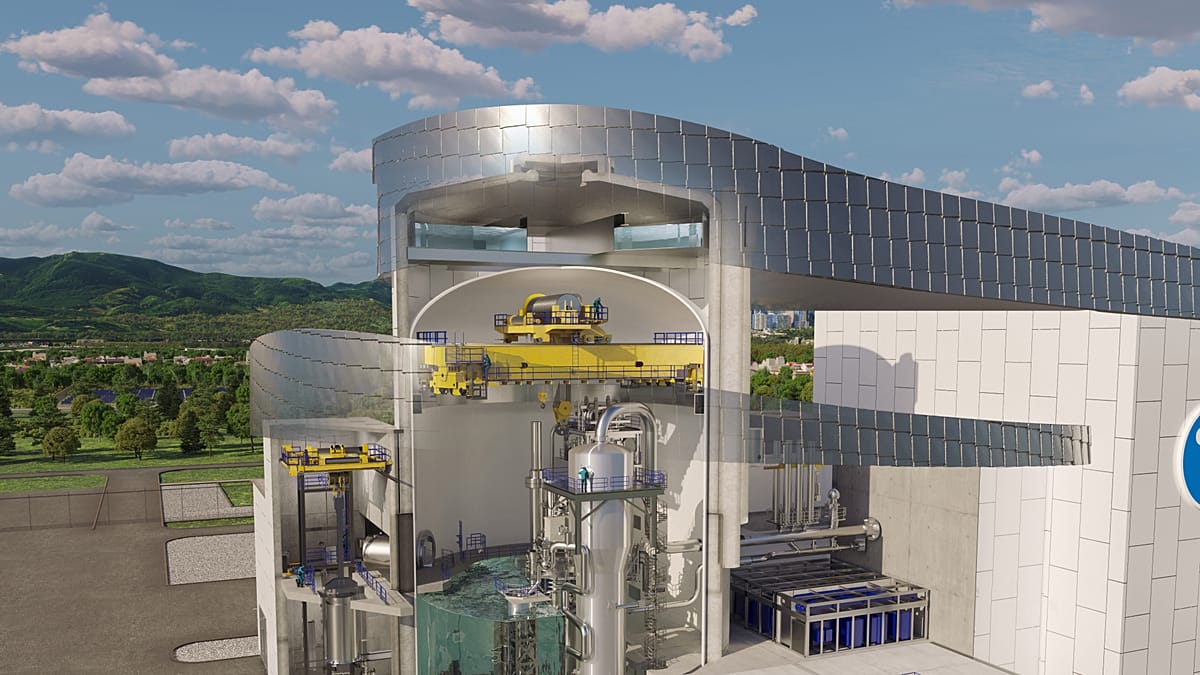 Brussels backs mini-nuclear power plants to secure low-carbon power
euronews.com
Brussels backs mini-nuclear power plants to secure low-carbon power
euronews.com
The European Commission on Tuesday endorsed a push to deploy small modular nuclear reactors (SMRs) across the bloc in the early 2030s, pitching them as a way to stabilise power supply when wind and solar output falls short, according to Euronews. Ursula von der Leyen used the Nuclear Energy Summit in Paris to argue that Europe’s retreat from nuclear power was “a strategic mistake”, noting that nuclear’s share of EU electricity has fallen from about one-third in 1990 to roughly 15% today.
Brussels is presenting SMRs as both energy policy and industrial policy. The Commission’s strategy describes factory-built reactors—small enough to ship by truck or barge and assembled on site—as a route to low-carbon electricity and process heat, including for steel and chemicals. It also calls for streamlined approval procedures and closer cross-border cooperation among regulators, an attempt to make licensing and oversight less fragmented across member states.
But the hard constraint is not rhetoric; it is who carries the risk. Conventional European nuclear projects have repeatedly shown how cost overruns, schedule slips, and regulatory resets land on someone’s balance sheet. SMRs are marketed as cheaper through standardisation and serial production, yet the first units would still be first-of-a-kind builds with uncertain construction timelines, untested supply chains, and open questions about long-run operating costs, waste handling, and insurance. Environmental groups and nuclear-sceptic governments—including Austria, Ireland and Portugal—argue the technology remains expensive and unproven compared with renewables, Euronews reports.
The Commission is already signalling what it thinks is missing: bankable revenues and de-risked capital. Von der Leyen unveiled a €200 million guarantee intended to back private investment in “innovative nuclear technologies”, according to Euronews. The document itself says success will “largely depend” on strong market demand and a “conducive business environment”—a polite way of saying that without predictable cashflows and clear liability chains, capital will price projects as political bets.
A coalition of member states has been laying the groundwork. Eleven EU countries signed a 2024 declaration calling nuclear an enabler of energy security and sovereignty and urging regulators to “fully unlock” nuclear’s potential while enabling financing conditions for life extensions of existing plants. Belgium, Bulgaria, Croatia, Czechia, Finland, France, Hungary, Italy, the Netherlands, Poland and Sweden were among the signatories.
Germany’s internal debate has also shifted. Chancellor Friedrich Merz has called Berlin’s nuclear phase-out under Angela Merkel and Olaf Scholz a “major error”, while conceding that dismantled plants cannot realistically be restarted. His preferred route back is SMRs—an admission that the political decision to exit nuclear did not remove the demand for firm power, it merely changed how that demand is paid for.
The Commission’s plan now hinges on whether “streamlined procedures” and partial guarantees can turn a technology pitch into projects that lenders, insurers and industrial customers will sign up to. The early 2030s timeline leaves little room for the kind of delays that have defined Europe’s recent nuclear buildout.
Brussels is asking member states to speed up reactor approvals while offering a guarantee measured in hundreds of millions, in a sector where a single delayed plant can burn through several times that amount.