
EU and Slovakia push Druzhba pipeline repair
Russian oil route through Ukraine becomes leverage in EU loan standoff, energy independence slogan collides with emergency financing
Images
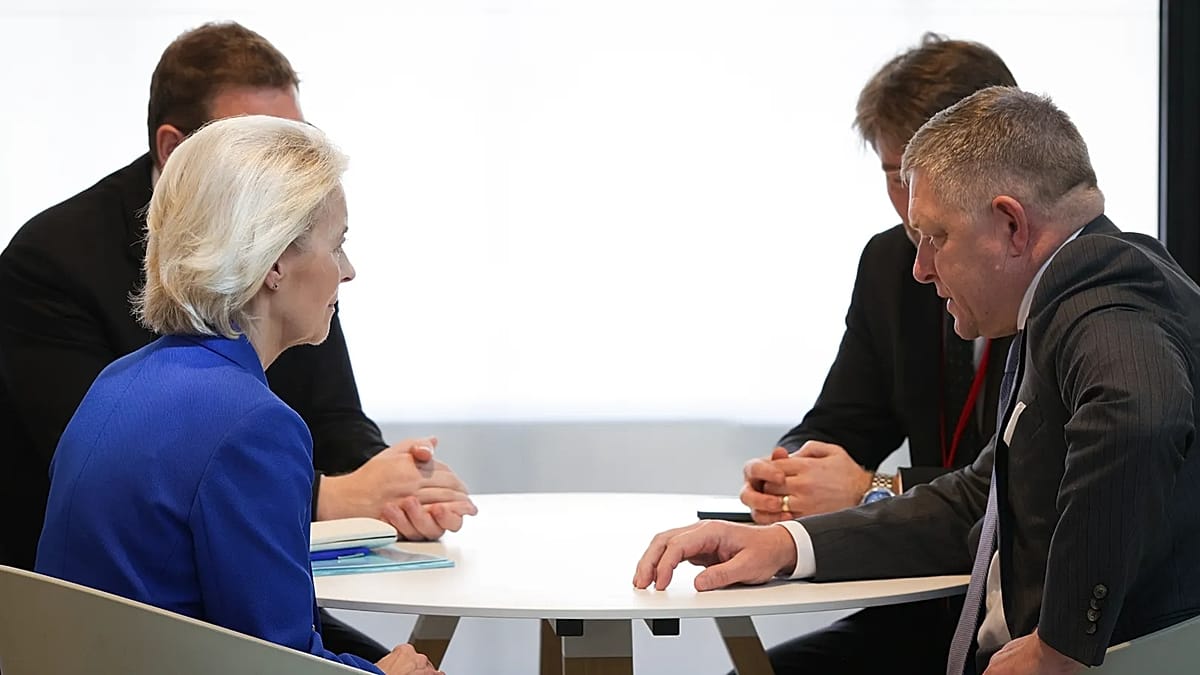 Fico and von der Leyen agree Druzhba pipeline must be restored
euronews.com
Fico and von der Leyen agree Druzhba pipeline must be restored
euronews.com
Slovak Prime Minister Robert Fico said on Monday that he and European Commission President Ursula von der Leyen agree the Druzhba oil pipeline “must be restored”, after meeting on the sidelines of the World Nuclear Forum, according to Euronews. The Soviet-era line, which carries Russian crude through Ukraine to Slovakia and Hungary, was struck by a Russian drone attack in late January and has not been repaired.
The damage has turned a physical bottleneck into a political lever across three capitals. Bratislava and Budapest argue that Kyiv is using the transit route as “blackmail”, while President Volodymyr Zelenskyy has openly questioned whether Ukraine should fix it at all, saying last week that he “would not repair it” without preconditions and that any work could take up to six weeks. The dispute has spilled into EU finance: Euronews reports that Hungary has blocked a roughly €90 billion EU loan package for Ukraine in response, and Fico has threatened to withhold EU financial support if the pipeline remains unrepaired.
Von der Leyen’s public messaging sits uneasily alongside the Commission’s offer of technical help and financing for repairs. In her own post after meeting Fico, she avoided the word “Druzhba” but framed the issue as “affordable energy prices” and “secure supplies” with “energy independence” at stake. That is the paradox the pipeline exposes: the EU’s declared goal is to reduce dependence on Russian energy, yet the immediate crisis management tool on the table is EU money to restore a route dedicated to Russian oil.
The economic incentives are straightforward. Slovakia and Hungary still have refineries and logistics calibrated to Druzhba flows; alternative supply routes mean higher transport costs, different crude slates, and new commercial risks that show up quickly in margins and pump prices. Ukraine, by contrast, carries the security risk of maintaining a transit corridor that is both a revenue line and a target, while also being asked to keep European energy markets stable during wartime. When the Commission offers financing, it socialises part of that cost across EU taxpayers, reducing the pressure on downstream beneficiaries to retool.
The second-order effects are already visible in the way unrelated dossiers are being tied together. Hungary’s veto on the loan package turns a repair dispute into a bargaining chip in a much larger negotiation over war financing. Fico’s warning that Slovakia could block support depending on Viktor Orbán’s electoral fortunes in April adds a domestic political timer to what is ostensibly an infrastructure fix.
Slovakia and Hungary have formed a joint expert group and requested access to the damaged site, Euronews reports, but Kyiv has not responded. The Commission says it wants the matter on the agenda at next week’s European Council summit.
For now, a drone strike in January has left Brussels arguing for “energy independence” while offering to pay for the restoration of a Russian oil pipeline through a war zone.