
Dog searches for dead owner in her old car
TikTok clip shows scent memory outlasting family routines, the passenger seat stays empty
Images
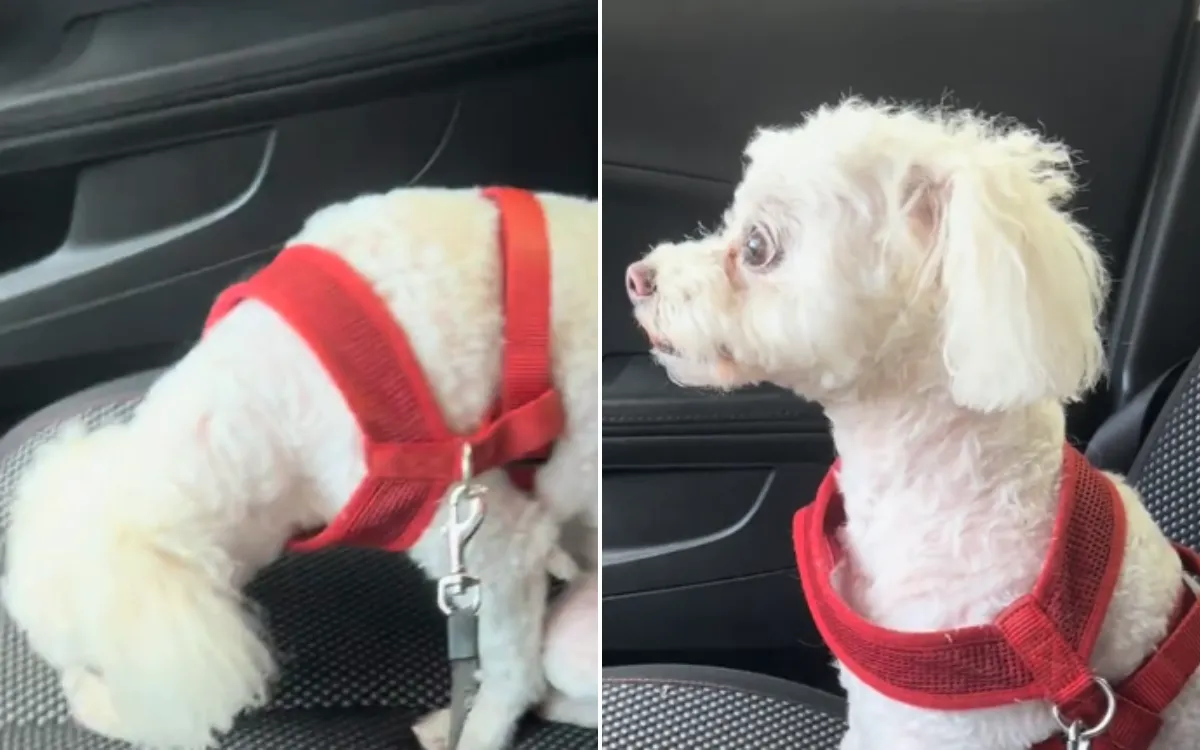 Coco sniffing her deceased owner's car.
newsweek.com
Coco sniffing her deceased owner's car.
newsweek.com
 American Farmers Dealt New Blow as Trump’s Iran War Escalates
newsweek.com
American Farmers Dealt New Blow as Trump’s Iran War Escalates
newsweek.com
 World Leaders Eye Oil Reserves, But Hold Off On Tapping Them
newsweek.com
World Leaders Eye Oil Reserves, But Hold Off On Tapping Them
newsweek.com
 Turning Point USA Chapter President Quits Over Racist Group Chat
newsweek.com
Turning Point USA Chapter President Quits Over Racist Group Chat
newsweek.com
 Fani Willis Suffers Legal Blow in Fight Against Trump
newsweek.com
Fani Willis Suffers Legal Blow in Fight Against Trump
newsweek.com
Dog Coco climbed into the passenger seat of a car she used to share with her owner, then stopped and stared, as if the routine had finally failed to produce the person it was built around. The moment was filmed by Stephany Acosta in Fort Lauderdale after her mother died in September 2024, and published by Newsweek as a TikTok clip of the nine-year-old Bichon processing a familiar space without its missing constant.
According to Newsweek, Coco had spent seven and a half years as Acosta’s mother’s “constant companion,” accompanying her to the beach, on trips and on errands. The car was part of that bond: a predictable sequence of smells, movements and destinations that, for a dog, functions as a kind of calendar. When Acosta retrieved Coco—after a relative had given the dog away without her consent and she spent six weeks away—she brought her back to the old car for what she described as a “final sniff.” Coco ran to the vehicle, explored the back seat, then moved to the passenger side where she normally sat.
The clip’s power rests on how little it needs to explain. Dogs navigate the world through scent more than language, and Newsweek cites UCLA Health estimates that a dog’s sense of smell can be tens of thousands of times more sensitive than a human’s, with up to 300 million scent receptors versus roughly 6 million in people. In that frame, the car is not nostalgia; it is a storage medium. A place can hold the residue of a person—old fabric, old air, old habits—long after the person is gone. When the cues don’t update, the animal is left with a mismatch it can’t narrate.
The story also sketches the social infrastructure around death that humans take for granted and animals cannot. A death certificate closes accounts and changes routines; for a pet, the first signal is often simply that the door opens and the person does not return. In Coco’s case, the disruption was compounded by human logistics: ownership decisions made by relatives, a temporary rehoming, and then a return to a different household where attachment shifts to a new caregiver and a child. Grief becomes a supply-chain problem—who feeds the dog, who decides where she lives, who inherits the daily responsibilities—and the animal experiences those decisions as sudden discontinuities.
Acosta told Newsweek that Coco has since grown attached to her daughter, the deceased woman’s only grandchild, and that the dog has helped her through mourning. The arrangement is practical as well as emotional: a dependent being forces a schedule, and schedules are what grief tends to erase.
In the video, Coco does not howl or panic. She pauses in a seat she remembers, in a car that still smells like outings, and the absence is the only new information. The clip ends where the routines used to begin: with an empty passenger seat and nowhere to drive.