
Trump weighs easing Russian oil sanctions
Putin call follows Hormuz shutdown and oil spike from Iran war, Europe absorbs the price signal first
Images
 U.S. President Donald Trump (right) looks on beside Russian President Vladimir Putin during a news conference following their meeting in Anchorage, Alaska, on Aug. 15, 2025.
japantimes.co.jp
U.S. President Donald Trump (right) looks on beside Russian President Vladimir Putin during a news conference following their meeting in Anchorage, Alaska, on Aug. 15, 2025.
japantimes.co.jp
 A solar farm in Nakai, Kanagawa Prefecture, in March 2016. Japan gets about a tenth of its electricity from solar panels despite having nearly no domestic production of photovoltaics (PVs).
japantimes.co.jp
A solar farm in Nakai, Kanagawa Prefecture, in March 2016. Japan gets about a tenth of its electricity from solar panels despite having nearly no domestic production of photovoltaics (PVs).
japantimes.co.jp
 Haruna Kambayashi stands by her newly purchased home on a street now lined with mostly empty lots.
japantimes.co.jp
Haruna Kambayashi stands by her newly purchased home on a street now lined with mostly empty lots.
japantimes.co.jp
 Imperial Hotel, Kyoto: Where hospitality traditions meet
japantimes.co.jp
Imperial Hotel, Kyoto: Where hospitality traditions meet
japantimes.co.jp
 Is the EU ready to handle the fallout of a U.S.–Iran war?
euronews.com
Is the EU ready to handle the fallout of a U.S.–Iran war?
euronews.com
Oil briefly became a domestic political problem again on Monday after Donald Trump spoke with Vladimir Putin about the Iran war and the state of energy markets, according to Reuters. The call—described by the Kremlin as their first this year—came hours after Putin warned that the world economy faced a “global energy crisis”, as the Strait of Hormuz remained effectively shut and Gulf producers cut output.
Reuters reports that the White House is weighing easing sanctions on Russian oil as part of a wider attempt to stabilise prices that spiked after the US-Israeli campaign against Iran began in late February. In the same conversation, the two leaders discussed Ukraine and Venezuela’s role in global oil supply—an unusually explicit reminder that Washington’s sanctions regime is not a moral constant but a valve that can be opened when prices threaten voters.
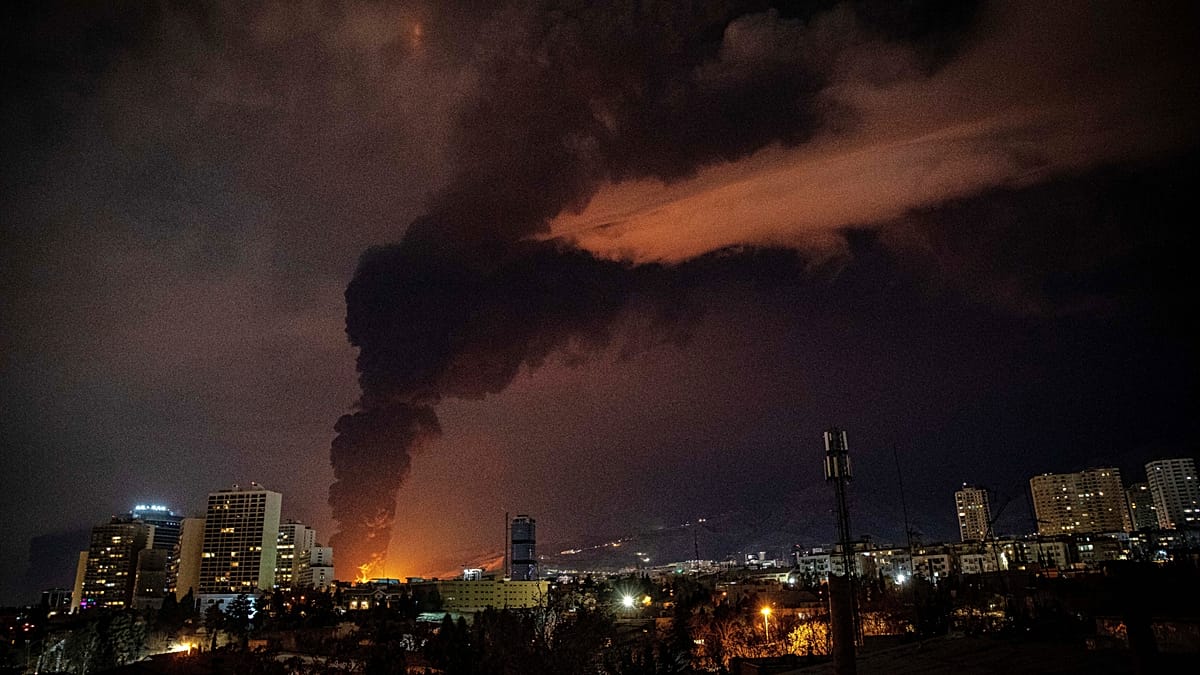
For Europe, the timing matters more than the rhetoric. Euronews notes that the Hormuz disruption has pushed European natural-gas prices up by almost 40% after Qatari LNG shipments stopped, while EU gas storage is lower than in previous years—about 46 billion cubic metres versus 77 billion in 2024. That leaves member states trying to manage an energy shock with fewer buffers, and with the same policy toolkit: emergency coordination mechanisms, talk of reserves, and a scramble to protect critical infrastructure.
The EU’s “Preparedness Union Strategy” is now being tested in real time, Euronews writes, as Brussels activates civil protection tools and prepares for cyber threats and potential displacement from Iran’s population of around 90 million. But the underlying constraint is simpler: Europe buys energy at world prices and insures shipping risk in global markets, while its ability to influence the conflict is limited. If Washington relaxes Russian oil sanctions to cool the market, the benefit is immediate for consumers—yet it also undercuts the premise of sanctions as a long-term instrument of pressure.
That dynamic has played out before: sanctions tighten when they are politically cheap and loosen when they collide with inflation, freight costs and household bills. The Iran war has compressed that cycle into days. A policy designed to punish adversaries has become a tool to manage fuel prices created by Washington’s own escalation.
The call with Putin happened as tankers continued to idle outside Hormuz and European capitals counted storage volumes rather than battlefield gains.