
Asian governments ration fuel as airlines brace for jet shortage
Bangladesh closes universities and Myanmar adopts odd-even driving while carriers plan groundings, price caps replace hedging as the region tests who gets to keep moving
Images
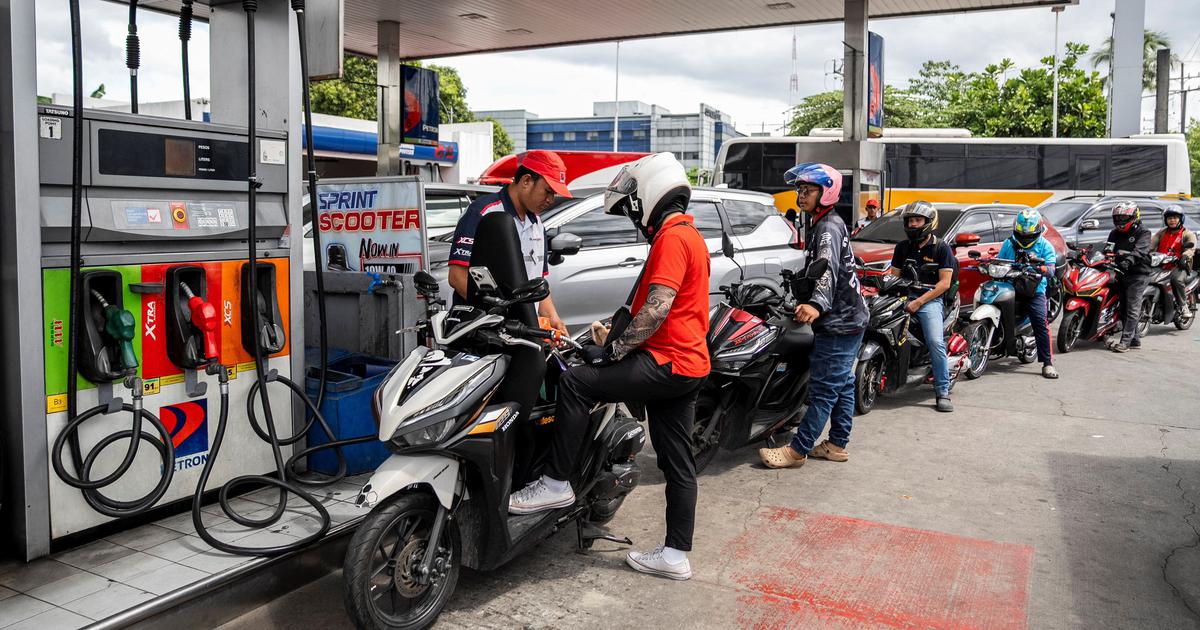 A worker fills up a motorcycle while drivers queue at a gas station as oil prices are expected to increase amid the US-Israel conflict with Iran, in Quezon City, Metro Manila, the Philippines, March 9, 2026.
|
Lisa Marie David/Reuters
scroll.in
A worker fills up a motorcycle while drivers queue at a gas station as oil prices are expected to increase amid the US-Israel conflict with Iran, in Quezon City, Metro Manila, the Philippines, March 9, 2026.
|
Lisa Marie David/Reuters
scroll.in
 Cathay Pacific Airways aircraft on the tarmac at Hong Kong International Airport
japantimes.co.jp
Cathay Pacific Airways aircraft on the tarmac at Hong Kong International Airport
japantimes.co.jp
 A solar farm in Nakai, Kanagawa Prefecture, in March 2016. Japan gets about a tenth of its electricity from solar panels despite having nearly no domestic production of photovoltaics (PVs).
japantimes.co.jp
A solar farm in Nakai, Kanagawa Prefecture, in March 2016. Japan gets about a tenth of its electricity from solar panels despite having nearly no domestic production of photovoltaics (PVs).
japantimes.co.jp
 Haruna Kambayashi stands by her newly purchased home on a street now lined with mostly empty lots.
japantimes.co.jp
Haruna Kambayashi stands by her newly purchased home on a street now lined with mostly empty lots.
japantimes.co.jp
 Revitalizing rural Japan, one step at a time - Paul Christie
japantimes.co.jp
Revitalizing rural Japan, one step at a time - Paul Christie
japantimes.co.jp
Indian airlines have raised long-haul fares by about 15% and are drawing up contingency plans that include grounding aircraft if jet fuel becomes too expensive or hard to source, according to Bloomberg. Vietnam’s state media has warned that airfares could rise by as much as 70% because the country relies on imported jet fuel, while carriers across the region face a problem their European and US rivals have spent years paying to avoid: thin fuel-price hedging.
That private-sector scramble is arriving alongside a very different response from governments. Bangladesh has closed all universities and brought forward Eid holidays to cut fuel and electricity use, Reuters reported via Scroll.in, after imposing daily caps on fuel sales following panic buying and hoarding. Myanmar’s military government has introduced an odd-even system for private vehicles, with exemptions for electric vehicles, while the Philippines has directed civil servants to work four days a week to reduce fuel consumption. Elsewhere, governments have moved to suppress the price signal rather than ration through price: South Korea has announced a cap on local fuel prices, Taiwan has limited weekly increases, and Thailand has promised a temporary diesel cap.
The pattern is familiar in energy shocks: sectors that can pass costs through quickly—aviation, shipping, export manufacturing—move first, while states try to postpone household pain with administrative controls. But caps and quotas do not create supply; they reallocate it. Bangladesh’s decision to divert scarce gas from fertiliser plants to power generation is a direct admission of triage, shifting the cost into future food and import bills. Myanmar’s number-plate rules and Bangladesh’s closures also create immediate workarounds: extra vehicle registrations, informal fuel trading, and priority lanes for those with the right paperwork or connections.
Companies respond to prices because they go bankrupt if they misjudge them. Governments respond to queues because queues appear on television. Airlines that are not hedged must either raise fares, cut routes, or cancel flights; governments that cap prices must decide who gets fuel when stations run dry. In that environment, “essential services” becomes a political label, not an economic description.
Oil prices have already jumped sharply since the conflict escalated, and fear of disruption through the Strait of Hormuz—through which roughly a fifth of global petroleum liquids consumption passes—has moved from analyst scenario to policy driver. The immediate question for Asia is not whether fuel is expensive, but whether rationing is done by price, by paperwork, or by proximity to the state.