
Leeds bus fare coin identified as Carthaginian-era issue
Museum attribution relies on iconography and typology without excavated context, provenance gap outlasts the object’s new display case
Images
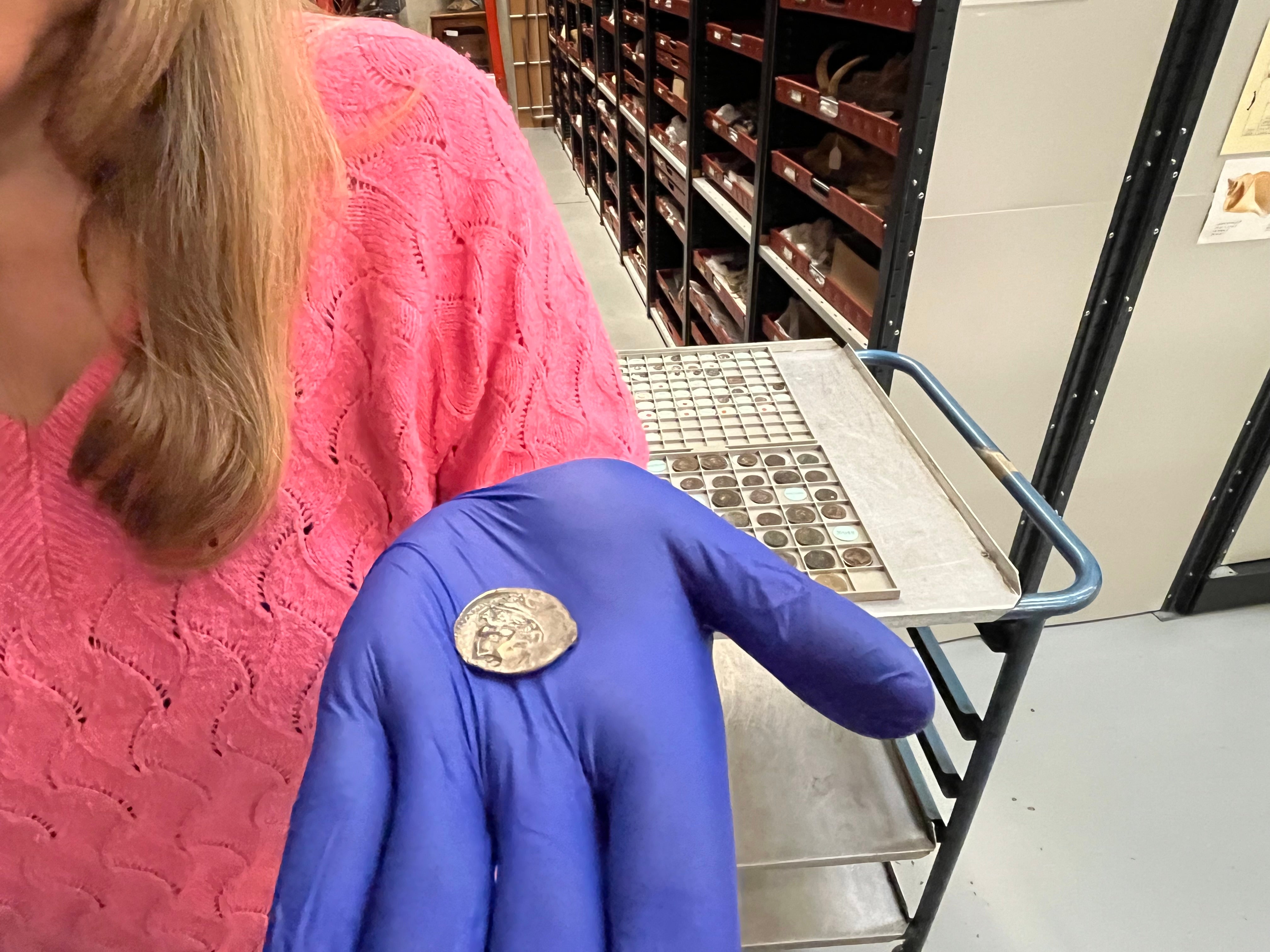 Ancient Phoenician coin carrying Greek imagery (Leeds City Council)
Leeds City Council
Ancient Phoenician coin carrying Greek imagery (Leeds City Council)
Leeds City Council
A coin used to pay a bus fare in Leeds in the 1950s has been identified as roughly 2,000 years old and linked to Carthaginian-era Cádiz in southern Spain, according to The Independent. The coin was kept by a Leeds City Transport cashier after it turned up in daily takings, then passed to his grandson, who stored it for decades before donating it to Leeds Museums and Galleries.
The story is a neat illustration of how ancient objects can surface in modern circulation without any archaeological context—exactly the condition that makes confident labels harder, not easier. In this case, the identification rests on numismatic reading: imagery, inscriptions, and typology. The Independent reports that the coin shows the god Melqart, rendered in a style resembling the Greek hero Herakles with a lionskin headdress, a common cross-cultural visual shorthand in the western Mediterranean.
What is missing from most popular retellings is the chain of inference. “Carthaginian” can mean a broad cultural sphere, a minting authority, or simply an iconographic tradition copied by others. Without an excavated findspot, the usual triangulation—stratigraphy, associated material, and documented provenance—does not exist. Museums therefore lean heavily on comparative catalogues and specialist judgement, and may supplement that with material analysis: non-destructive X-ray fluorescence (XRF) to estimate alloy composition, or more precise lab methods such as ICP‑MS when sampling is possible. Composition can help distinguish ancient silver or bronze mixes from modern replicas, but it rarely pins down a specific city on its own.
Wear patterns and edge damage can also mislead. A genuine coin that spent centuries in soil can be cleaned and reintroduced into collections; a modern “souvenir” can be artificially aged; and a coin brought back by a soldier or traveller can look convincingly circulated despite spending most of its life in a drawer. The Independent quotes the owner speculating that postwar soldiers may have returned with foreign coins, a plausible pathway that does not require any elaborate story of long-distance circulation.
For museums, the practical problem is that banal provenance creates permanent uncertainty. The object can be catalogued, conserved and displayed, but the most valuable information—where it was found, with what, and when—has already been lost. Leeds Museums has added the coin to its Discovery Centre collection, where it will sit as an artefact with a date range and a best-fit attribution rather than a fully documented find.
The coin entered a bus fare box in Leeds; it left as a museum accession with a label that depends on typology rather than context.