
AI reconstructs grainy video from mouse visual cortex activity
Infrared laser recordings paired with model inversion to match neural signals, validation hinges on what the algorithm adds when data are ambiguous
Images
 Central to the study is an AI program which predicts how electrical activity in the visual cortex of the mouse brain changes depending on what the animals are seeing. Illustration: Maximilian Buzun/Alamy
theguardian.com
Central to the study is an AI program which predicts how electrical activity in the visual cortex of the mouse brain changes depending on what the animals are seeing. Illustration: Maximilian Buzun/Alamy
theguardian.com
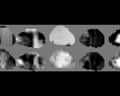 Movie reconstruction from mouse visual cortex activity
theguardian.com
Movie reconstruction from mouse visual cortex activity
theguardian.com
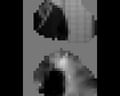 Researchers used AI to reconstruct movie clips from mouse brain activity
theguardian.com
Researchers used AI to reconstruct movie clips from mouse brain activity
theguardian.com
Researchers have reconstructed grainy “movie clips” from the activity of neurons in mice as the animals watched short videos, using an AI system trained to predict patterns in the visual cortex. According to The Guardian, the experiments recorded neural firing with an infrared laser while mice viewed 10‑second clips, then iteratively altered a blank video until the model’s predicted brain activity matched the recorded signals.
The key technical claim is not that the system “reads minds”, but that it can invert a mapping between stimulus and measured neural activity in a tightly controlled setting. The study begins with a forward model: given a video, predict how activity in the mouse visual cortex changes. The reconstruction step runs that model in reverse: search for an image sequence that would plausibly produce the observed activity. That inversion is where interpretation becomes slippery. A reconstruction can reflect the stimulus, the brain’s internal representation of it, or simply the model’s own preferred solutions—especially when many different images could yield similar predicted activity.
The Guardian describes the output as pixellated and “pinhole” in scope, reflecting both the mouse’s limited visual acuity and the constraints of the recording. The research team expects sharper reconstructions with better data and models, but the limiting factor is not only resolution. It is identifiability: how much information about the stimulus is actually present in the recorded neural population, and how strongly the algorithm’s priors steer the final video when the data are ambiguous.
That makes validation the central question. A robust demonstration would show that reconstructions generalise to unseen clips, not merely to the distribution the model was trained on, and that they degrade in predictable ways when the input is perturbed (for example, by scrambling frames, changing contrast, or presenting control stimuli designed to separate low-level visual features from higher-level semantics). Without that kind of out-of-sample testing, “looks like what the mouse saw” can collapse into “looks like what the model tends to output when uncertain.”
The work also sits on a fault line between animal neuroscience and human neurotechnology. Joel Bauer at University College London tells The Guardian that human applications raise privacy risks if systems move from reconstructing perception to reconstructing imagination. For now, the mouse study is a reminder that the most persuasive part of these demos is often the video itself—while the hardest part is proving what, exactly, the pixels correspond to.
The reconstructed clips come from 10-second videos of sports such as gymnastics and horse riding, and the method depends on matching model-predicted activity to the signals recorded from the visual cortex.