
European retailers brace for new energy price shock
Oil climbs above $100 as Iran war widens, governments talk reserves while margins absorb the hit
Images
 A man shops in a supermarket in Chanverrie, France, on Oct. 16, 2024. When prices of food and other essentials rise, the first thing people cut spending on is fashion, says consultancy Simon-Kucher.
japantimes.co.jp
A man shops in a supermarket in Chanverrie, France, on Oct. 16, 2024. When prices of food and other essentials rise, the first thing people cut spending on is fashion, says consultancy Simon-Kucher.
japantimes.co.jp
 A solar farm in Nakai, Kanagawa Prefecture, in March 2016. Japan gets about a tenth of its electricity from solar panels despite having nearly no domestic production of photovoltaics (PVs).
japantimes.co.jp
A solar farm in Nakai, Kanagawa Prefecture, in March 2016. Japan gets about a tenth of its electricity from solar panels despite having nearly no domestic production of photovoltaics (PVs).
japantimes.co.jp
 Haruna Kambayashi stands by her newly purchased home on a street now lined with mostly empty lots.
japantimes.co.jp
Haruna Kambayashi stands by her newly purchased home on a street now lined with mostly empty lots.
japantimes.co.jp
 Imperial Hotel, Kyoto: Where hospitality traditions meet
japantimes.co.jp
Imperial Hotel, Kyoto: Where hospitality traditions meet
japantimes.co.jp
 independent.co.uk
 independent.co.uk
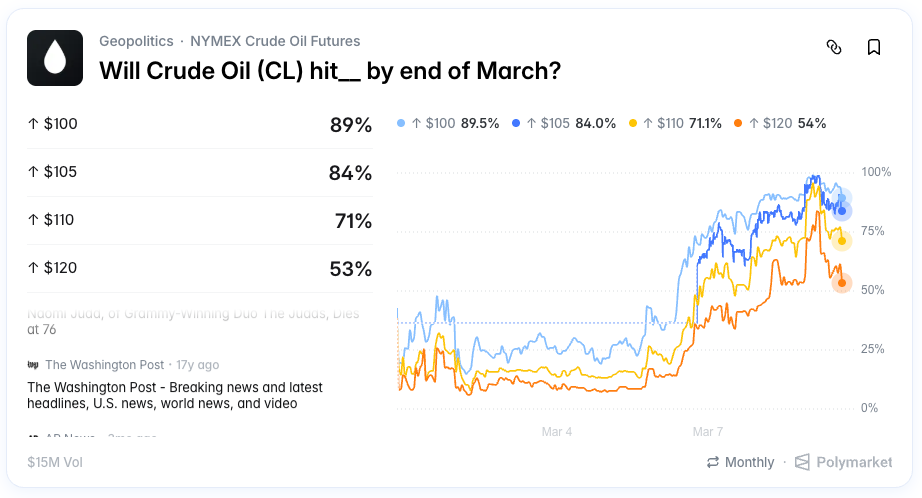 Bets made on Polymarket about the price of crude oil (Polymarket)
Polymarket
Bets made on Polymarket about the price of crude oil (Polymarket)
Polymarket
 independent.co.uk
 independent.co.uk
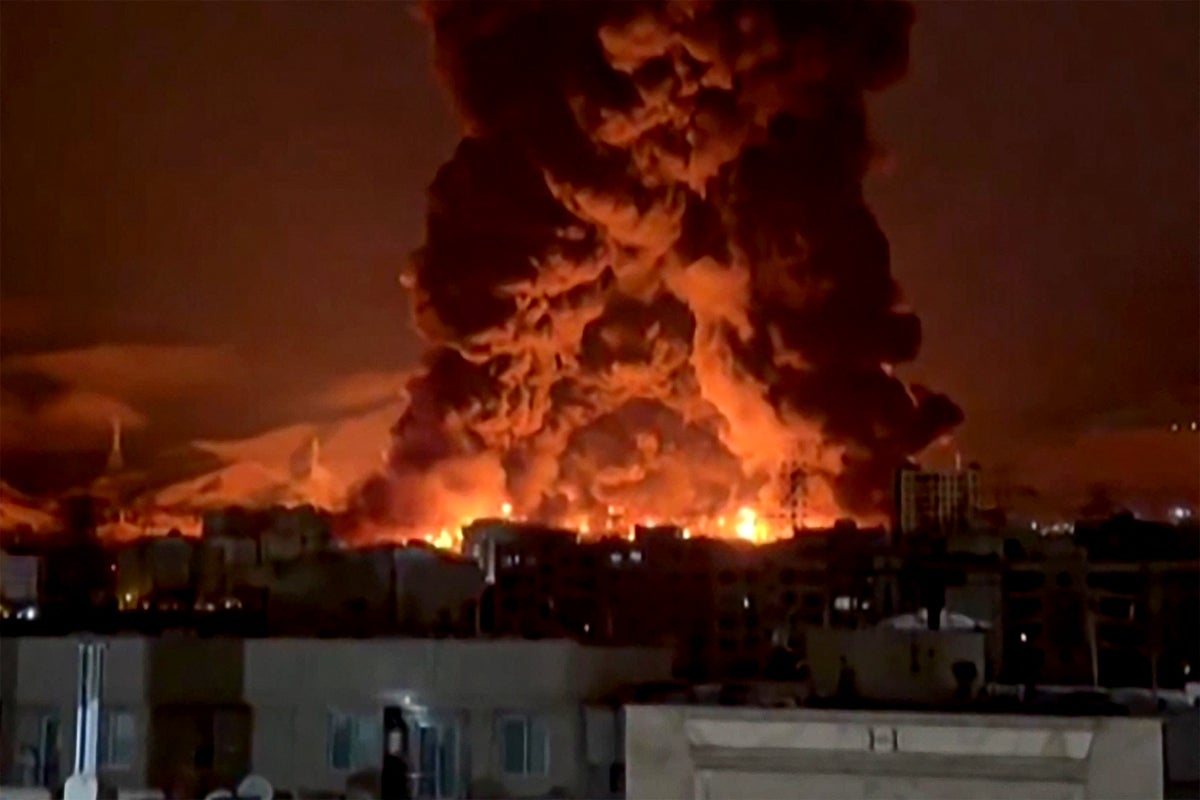
European retailers were hit by another energy-driven selloff on Monday as oil and gas prices jumped after the US-Israeli war on Iran widened, pushing crude above $100 a barrel for the first time since 2022. According to Reuters, shares in companies from Zara owner Inditex to Marks & Spencer fell as investors priced in higher transport, heating and financing costs for a sector that has barely stabilised after the 2022 gas shock.
The problem is not just that energy is more expensive; it is that retail sits downstream from almost every cost line that rises in a crisis. Food producers and supermarkets can pass on some of the increase, but only by testing demand that is already weak after two years of inflation. Clothing and household goods are even more exposed: when essentials rise, discretionary spending is the first category households cut, Reuters notes, citing consultancy Simon-Kucher. With the eurozone and UK economies “barely growing”, the last cycle’s playbook—raise prices, protect margins, wait for demand to recover—looks less available.
Governments are already signalling “support” rather than allowing prices to do the rationing. In London, chancellor Rachel Reeves said she was ready to back a coordinated release of oil reserves through the International Energy Agency, warning in parliament that recent market moves were likely to push inflation up in coming months, according to the Independent. Prime Minister Keir Starmer framed the risk as duration-dependent: the longer the conflict, the more likely the hit to the domestic economy.
That kind of intervention tends to shift risk rather than remove it. If reserves are released or bills are cushioned, retailers still face the same underlying squeeze—higher input costs meeting consumers who have less room to absorb them—while lenders and landlords adjust terms to reflect a more uncertain environment. The firms that survive are typically those with the balance sheet to finance larger inventories and higher working capital, while smaller chains absorb the shock as delayed insolvencies.
For Europe’s retail sector, the energy shock arrives as a second-order tax: paid not at the pump but through freight rates, supplier pricing, and the cost of credit. On Monday, investors treated it as a reminder that the inflation cycle can return without wage growth—simply by turning up the cost of keeping shelves stocked.
Oil traded back above $100 a barrel, and European retail stocks moved first.